


Hey Everyone!
I’m trying something new today.
Travis Neville Author is a coach, educator, and author who has spent years thinking about what it takes to raise a son in a culture that has largely forgotten how. He is also generous, thoughtful, and willing to answer hard questions head-on, which is why I sent him seven of them.
You may not agree with every line and, of course, that’s okay. Given the disastrous breakdown in family structure, and the screen-ification, pornification and weed-ification of our environment, there are no easy answers for how to navigate this kind of soul-crushing, vitality-draining, degenerate culture.
One area we didn’t touch on was the impact of economic factors - mass immigration that competes for our sons’ jobs, the flight of manufacturing to Mexico and China forcing those without college degrees into waiting tables instead of high-paying union jobs, and inflation that makes buying a car or home much more difficult than it was for we GenXers.
My husband was born in Italy and he speaks often about how European adult children often live with their parents indefinitely because there is no affordable housing or fair-paying jobs, and interest rates keep everyone in real estate their family has owned for generations. Are we turning into Europe? There are still affordable cities in the U.S., but an economy that forces children to leave their hometowns and never return, permanently severing young parents from the family structures that make economic survival and children’s flourishing easier is not quite the American Dream as advertised. And is it only getting worse as AI’s devastation is only starting to transform the job market?
Or maybe this is all just sophisticated excuse-making, with my maternal empathy undermining the hero’s journey for my son and everyone’s son. Unclear. But the need for the father’s voice to push the bird out of the nest and learn to fly has never been more urgent.
What I love about this piece is that Travis said “yes” to a real conversation, and that is exactly the kind of exchange AllBetter is down for.
Read it. Consider it. Argue with it. These are the dialogues we can’t afford to stop having.
But first - a note from Travis:
I recently had the opportunity to work with Katy Talento ND ScM. While most people who seek to tap into my expertise throw softballs, Katy did not. She fired questions at me like Nolan Ryan fastballs: precise, relentless, and impossible to dodge. I had to think, dig deep, and work harder than usual to respond.
I loved every second of it.
Her insight and creativity are extraordinary. While I asked questions that required reflection, she responded with a beautiful, experiential art form that revealed her depth and perspective. You can check out that article here. She has a rare ability to challenge while inspiring, to push you without making you defensive, and to make even the most difficult conversation feel electrifying.
As part of our effort to understand the world we are trying to improve, here are her questions and my answers. This is the kind of work that truly matters.
Enjoy,
Travis
The Interview:
1. Is it too late for a family that is in the classic masculinity death spiral - they’re letting their early-20s son live in their basement while he works a minimum wage job he doesn’t like and doesn’t respect himself, and he smokes weed and plays video games - is it too late for them to turn things around and there’s no other option but to just kick him out? If the answer is yes, are there situations where the answer changes (trauma history, mental illness, suicidality)?
Short answer is yes. It is too late for parents to have a marked impact on a young man if he’s already at that stage. The most formative time has certainly passed. There is good news, thankfully. Massive and meaningful changes are still possible. The difference is that a young man is going to have to choose to make changes on his own.
Though the active parental influence has largely gone away, the passive and lasting influence remains. The teaching of right and wrong, the boundaries, the structure, the worldview, they’re all still in there. This is the time when he must go out into the world and try his own version of life (maybe that’s what you taught him, maybe he wants to try his own deal) and see if his worldview works. He will make mistakes. The more rebellious among us will make LOTS of mistakes. This is good! Those mistakes are how we learn the right and wrong of the world. The structure of our culture. The boundaries of life.
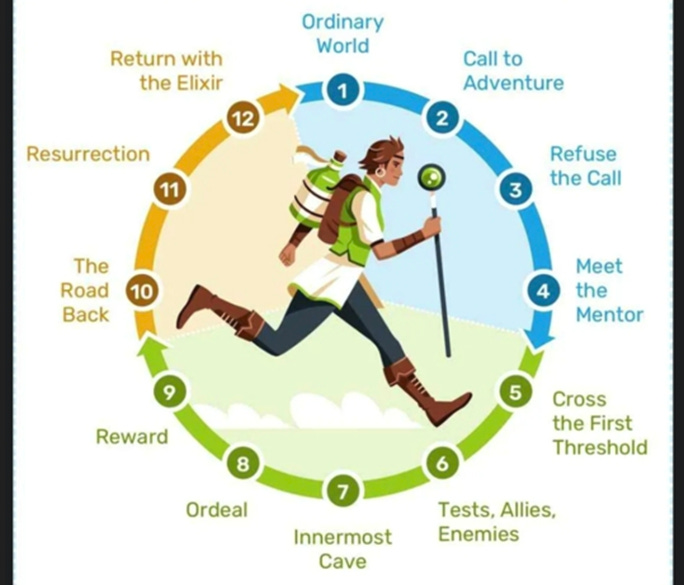
Men are built genetically to conserve their energy for battle. This is why men are so good at ‘vegging out.’ If things are easy, men will want to enjoy that, since battle can pop up at a moment’s notice. This being the case, forcing the lethargic young male to leave the nest and make his own way is the only answer here. Unless your long-term plan is to have him at home indefinitely, he’s got to go. It’s better if it’s his idea, but it’s necessary either way. (note #3 below) He must undertake the hero’s journey, for better or for worse. To some extent, you’re hindering that by providing comfort. And that’s regardless of underlying factors.
2. There seems to be a resurgence of young conservative families arguing for keeping their sons in the home in young adulthood rather than the tough-love, kick them out, sink or swim approach we all used to take. Do you think that’s wise, dangerous, a countercultural cope, or excuse-making?
I rarely give my opinion on topics like this, but here I agree wholeheartedly with the research. Parents are keeping their sons at home, and the reason is not the sons. It is the parents.
Modern parenting has swung so far toward comfort that it has lost its balance. Everything is softened, cushioned, and extended. The kind of firm, fair fathering that once pushed young men toward independence has faded so much it is almost unrecognizable. In many cases, parents are choosing what feels easier emotionally instead of what actually prepares their children for reality.
Because yes, independence is hard. Work is hard. The world will knock you down. But that is not new. The same parents enabling this situation did not grow up living indefinitely in their own parents’ basements. So what changed?
At some point, good parenting requires discomfort. When there is nothing pulling young people forward, there has to be something pushing them out. That tension between challenge and opportunity is what drives growth.
You can run toward something, or you can run away from something. Historically, young people have done both. They move toward opportunity and away from stagnation. When neither force exists, they stay exactly where they are.
That is not a failure of the child alone. It is a failure to launch, and the launchpad matters. Tough love is your savior here. He won’t like it, but you don’t need his permission to want your home back. He will thank you when he has his own family.
3. Given that fatherlessness is so epidemic now, what do you recommend to the single mom with sons to help them get “fathered” and mitigate the damage? The answer used to be Boy Scouts, but…
Go back to the Hero’s Journey and look at step four. A boy does not become a man on his own. He is shaped by men who demand something from him. It starts with his father. That is the standard setter. Later, the world reinforces it through other men or institutions like the military, police, or fire service. They do not coddle him. They correct him.
That is where alignment happens. When his actions match his values, he becomes dangerous in the right way. Focused. Disciplined. Reliable. When they do not, he turns into a contradiction. All talk, no spine. He knows what is right and still avoids it. That kind of man stays stuck, blaming everything except the gap between what he says and what he does.
Now remove the father.
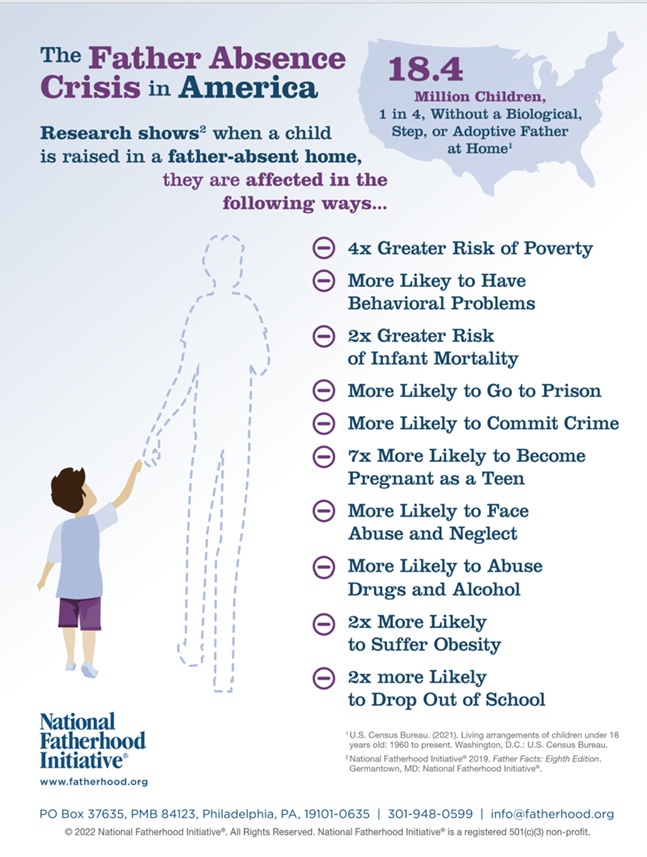
You do not get the same outcome. You get confusion. You get delay. You get a young man who has never been forced to carry weight, never been checked hard enough to grow. The data backs it, but you do not even need the data. You can see it. Direction drops. Discipline drops. Accountability disappears.
This is where people get uncomfortable, so they lie about it.
A single mother cannot replicate a father. Not with love. Not with effort. Not with sacrifice. Those are not the same thing as pressure, example, and authority from a man who has already walked the path. When that is missing, something critical is missing. That gap does not magically fill itself.
And yes, choices matter. Removing a father from the home is not a neutral act. It is a decision with predictable consequences. Pretending otherwise is not compassion. It is denial.
If the damage is already done, then the only option is to patch the hole with whatever structure you can find:
· Male coaches who demand discipline
· Male teachers who do not lower standards
· Male clergy who hold the line
· Male neighbors who correct behavior
· Uncles who step in and stay consistent
· Older brothers who force accountability
These are substitutes, not solutions. They can help, but they cannot fully replace what was supposed to be there from the beginning.
And let’s be honest about one more thing. Mom’s new boyfriend is not the answer. It is instability. It teaches confusion, not discipline. It creates more problems than it solves. And the statistics on Sexual Assault from a step parent are staggering.
None of this is complicated. Hard truth rarely is. If you remove structure, you get chaos. If you remove accountability, you get drift. If you remove the father, you make the path harder and the odds worse.
You can ignore that. A lot of people do. Reality does not care.
4. What is the most powerful thing a mother can do or say to her son at age 10? 15? 20?
At ten years old, a boy needs a few simple things. I love you. You are safe. I believe in you. That is the foundation. To some extent, this is the best mothering for the duration of his life.
After that, words start to matter less. What he watches matters more.
How his mother treats his father becomes one of the most important lessons he will ever absorb. Not what she says about respect, but what she shows him every day. Boys do not learn relationships from lectures. They learn from patterns.
By the time he reaches high school, the concrete is hardening. At that point, his father becomes the primary model for masculinity. Not theory. Not slogans. Behavior. Discipline. Restraint. Responsibility. Whether the father is perfect or not does not matter. The example is still being taken in.
And the mother is still teaching, whether she realizes it or not.
Because how she treats the father becomes the blueprint. That is what her son will recognize as normal. That is what he will tolerate. That is what he will expect from a woman later in life.
Respect shown becomes respect expected. Disrespect shown becomes disrespect accepted. You do not get to opt out of that lesson. It is happening whether anyone acknowledges it or not.
5. What are your thoughts on the decline of sperm count worldwide, reportedly half what it was in 1970 and dropping by one percent a year? Causes? Solutions?
I have read the work of Dr. Anthony G. Jay, and none of this is coming out of nowhere. Hormonal imbalance is part of it. A culture that centers everything around comfort and approval is part of it. Plastic plays a role. Hormonal birth control in the water supply is a factor. Sedentary habits and garbage diets are part of it. Fatherlessness is the biggest part of it.
And here is the reality people do not want to admit. None of these exist in isolation. They stack. They reinforce each other. Weak inputs create weaker outputs, and then people act surprised by the result.
You do not get strong, disciplined, grounded men out of an environment that avoids hardship, rejects structure, and replaces standards with excuses. That is the bad news.
The good news is even simpler, and it is why there are no real excuses left. Every single one of these factors is, to a large extent, controllable. You can fix what you eat. You can move your body. You can reject passive consumption and build something instead. You can seek out discipline, even if it was never given to you. You can find male mentors, even if your father was ejected from your life.
None of that is easy. That is the point. The environment may be working against you, but it is not absolute. At some point, it comes down to a decision. Stay shaped by it or start pushing back against it.
6. I recently wrote an article on the effects of school on young men. Do you think boys should go to school? If so, what kind? If not, how should they learn whatever you think is minimally necessary?
I’ve written lots of articles on this myself, as you know. My degrees and much of my adult life are rooted in education. I am not guessing about this. I have seen it up close as a teacher, coach, school board member, and mentor.
There are school structures that engage boys, challenge them, and actually produce results. Not just for boys, but for girls too. The difference is they demand something. They build discipline, ownership, and competence instead of managing behavior and calling it success.
Look at what Apogee Schools is doing. Look at Matt Beaudreau. He is proving, in real time, that boys respond when expectations are high and excuses are not tolerated. I’m proud to know this guy. He’s crushing it, and public education is ignoring him right into their own obsolescence.
So this is not a mystery. It is a choice.
Public education, as it stands, is outdated and heavily tilted toward compliance over challenge. It rewards passivity, punishes risk, and then wonders why boys check out. Call it what it is. It is a system that has been softened to the point where many boys do not recognize themselves in it.
And when boys disengage, people blame the boys instead of the structure that failed to reach them. At some point, that excuse falls apart.
There are models that work. There are people doing it right. The only difference is they are willing to step outside a system that refuses to adapt.
And for the young man who did not get the fathering he needed, this matters even more. Because now he is not just learning academics. He is trying to build a foundation that should have been laid years earlier.
That is a harder road. But it is still a road. The question is whether he is placed in an environment that demands he walk it, or one that quietly lets him sit still.
When it comes to what a man actually needs, hoping he “figures it out” in a culture that avoids discipline and rejects structure is not a plan. That is neglect. Boys are no longer guaranteed the guidance they once had. Habits, standards, and real-world skills are no longer absorbed by osmosis.
That is why I wrote my second book in 2022, Ideal Man: Reviving Masculinity. It is a direct, comprehensive guide of time-tested habits every young man should pursue. Clear expectations. Real standards. Practices that build competence, discipline, and self-respect.
This is not optional. The young men who embrace it will separate themselves from the drift of entitlement and passivity. Those who ignore it will continue to struggle in a world that rewards readiness, not excuses.
7. What is the role of spirituality on the development of men? Is the answer different if the question is religion instead of spirituality? Is there a danger of feminization of faith on the souls of men?
No man can reach his potential without something larger to serve. It is built into him. Purpose beyond self is what shapes action, discipline, and endurance. Without it, strength becomes aimless and drive becomes frustration.
There is a clear difference between faith and religion, and that distinction matters. My own experience in this area may be unusual, but I own it. It has shaped me, and I am proud of it. I even recorded on this solo some time ago, exploring that tension.
Spirituality is personal, but its effect is universal. When a man aligns his actions with something greater than himself, everything else (habits, choices, resilience, etc.) falls into place. Without it, all the skills and discipline in the world remain partial, unfocused, and incomplete.
Final thoughts
Thoughtful discussion is how communities actually think. Travis showed up, answered every question without flinching, and gave us something real to work with.
Thank you, Travis, for the generosity of a full-throated answer.
Now it’s your turn. Tell me where he’s right. Tell me where he’s wrong. Tell me what I missed. Tell me what you think of this format. The comments are open.
Thanks for reading,
Katy
The greatest disservice I did to my son was to be a single parent. It was the most thoughtless thing I have ever done and he's still suffering 35 years later. It's difficult not to beat myself up. I can only stumble onto interviews like this and counsel our growing family on the importance of active fathering. Appreciated this very much.
Lots of truth in this.
Sometimes I wonder how my brother was able to turn into an emotionally healthy man despite the aggressive, narcissistic example set by our Dad. This spoke to that. So many boys deserve better role models than they get. I would argue that a single mom is better than a psychologically abusive father being present.
How about _hunting_/fishing instead of _battle_? I don't think all cultures were forced to engage in war. 🤔