


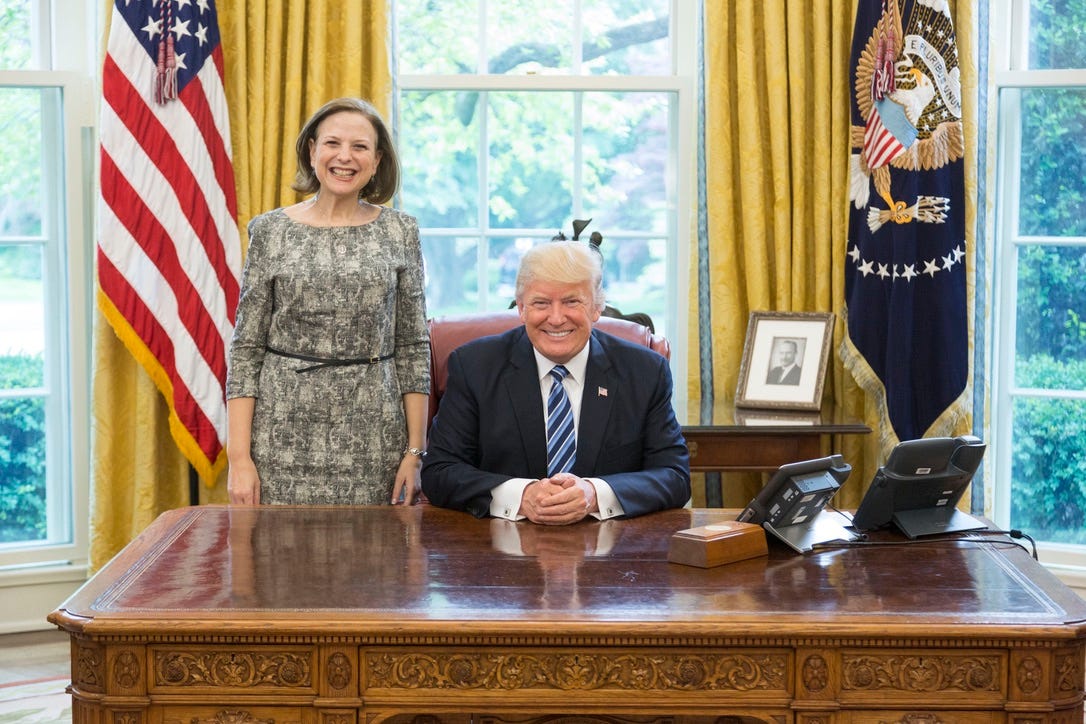
Price transparency is working. Not how most people expected. Better actually.
But I’ll have much more to say about that soon.
In the meantime, let me explain how it all kicked off with this price transparency business.
Back in the day, there were only a few supporters for ending secret health care prices inside the first Trump administration.
And I mean a VERY few (like count-on-one-hand few).
My first boss in the White House, and his boss, the president, were all in on price transparency.
They knew it was a bipartisan, 90 percent polling issue (that’s what we call #winning in politics). It also happened to be the right policy for reasons I’ll get to below. But, as it happens, my first boss abandoned me to become a fancy ambassador to… somewhere. Wherever. Not in the White House, having my back.
His successor, unfortunately, insisted that I convince a group of naysayers from various quarters within the building and from other agencies.
That group included a handful of free-marketeer bros with PhDs in economics, who looked pretty askance at this non-PhD, non-economist, must-be-a-lib chick. I had already earned their scorn the prior year by hand-wringing about the mid-term politics of trying to burn down the ACA.
So I did what one does to win over the ivory tower… I started a journal club.
We met weekly to discuss the academic literature about whether or not health care was the unicorn industry that would disprove the normally ironclad rule of economics: price competition lowers prices.
It felt silly — like trying to convince physicists that gravity is a thing.
Nevertheless, apparently this was controversial and the meetings dragged on, with the clock ticking loudly on the president’s term (little did we know just how short the window would be, with COVID-apalooza about to eat all other policy agendas).
I realized that something had to give, because I was outnumbered and the policy was stalling out.
Political appointees at the Department of Health and Human Services (HHS) had written a memo about why a price transparency Executive Order was crazy-talk.
Since my supportive boss left, the policy was on life support.
There was also this one study that kept coming up in the journal club and of course, in the hostile media, such as the Pharma-shilling Wall Street Journal. It was a study of the Danish cement industry — yes, Danish cement — that showed that when the government forced price transparency into the industry, prices for cement actually went up.
My allies on the Senate committee that oversees public health were so annoyed by the repeated and desperate citing of the stupid Danish cement canard that they had t-shirts made and sent one over to me, their sister in eye-rolling.
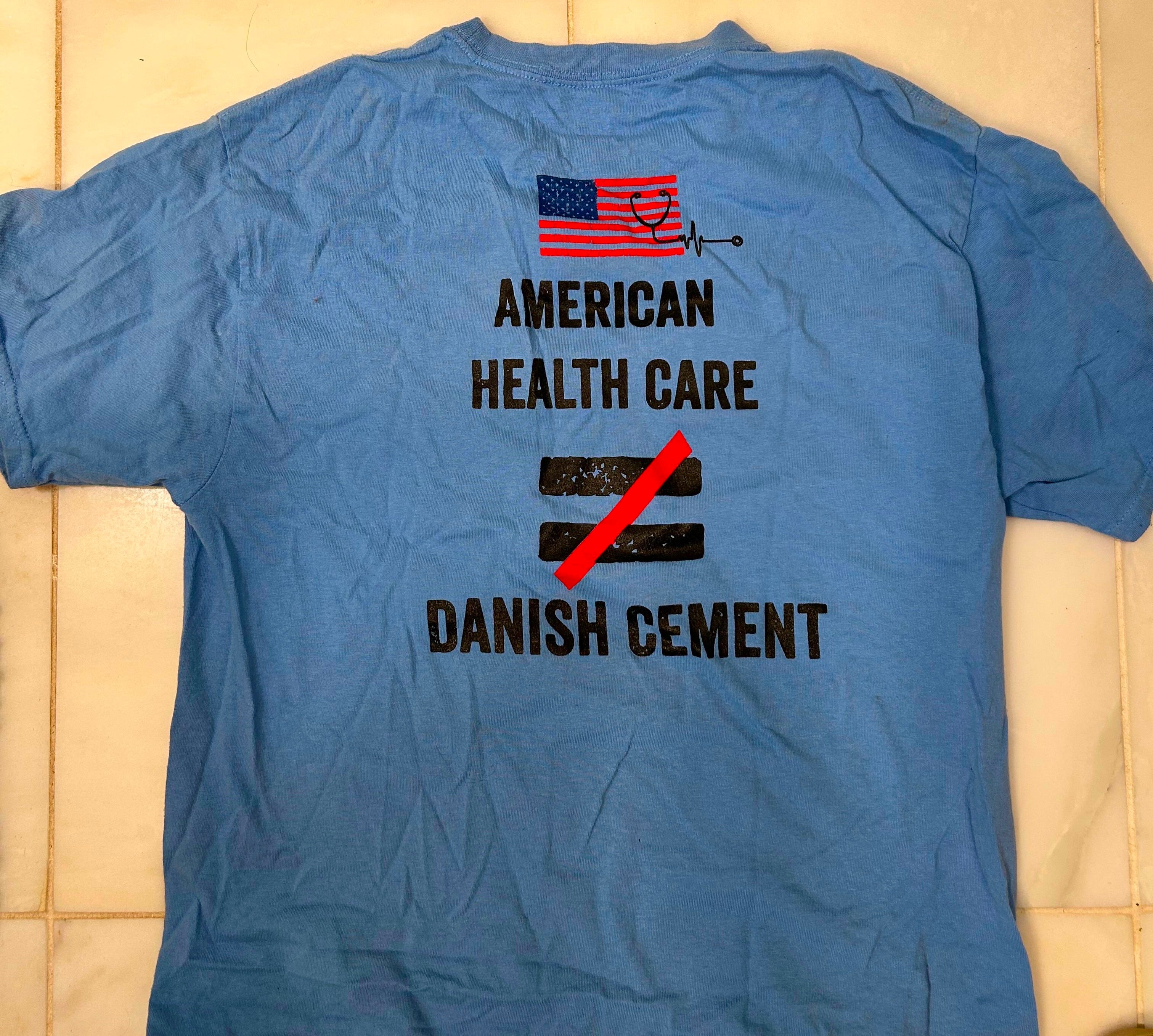
Given the aforementioned New, Less-Supportive Boss (NLSB), I knew my time was not much longer in the White House and things had to get rolling on this Executive Order. Despite the navel-gazing journal club and the WSJ industry shillery, I already knew the president loved the policy, and decided to make an end-run to get it into the State of the Union speech.
My thinking was that his word would be final and would put an end to the palace intrigue.
I managed to get a few paragraphs inserted into the draft a few days before the speech, announcing the policy, and arranged for an amazing guest to be acknowledged during the speech.
Her name was Wanda Brooks.
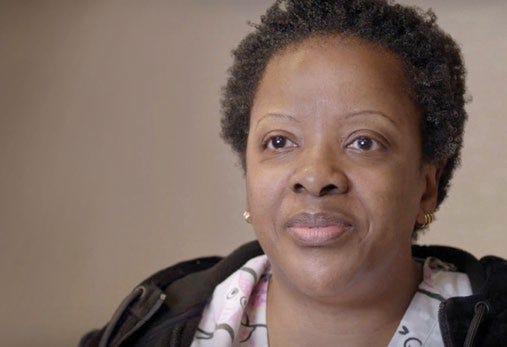
Wanda was a nursing home employee whose surprise $8,000 ER bill at Mary Washington Hospital in Fredericksburg, Va, had become a case study in predatory hospital billing. Wanda’s story was brought to my attention by Dr. Marty Makary (then Johns Hopkins surgeon and policy researcher and now FDA Commissioner).
Unfortunately, the next draft of the speech that I saw had stripped all the price transparency stuff out — likely the work of the NLSB and the aforementioned economist caucus (I’m guessing, anyway).
Game on.
At that point, I put out the bat-signal for Cynthia Fisher.
Side-note about Cynthia Fisher, the zillionaire owner of Boston Beer Company, health care CEO, and fearless transparency advocate. Cynthia was the one who actually got me to take price transparency off the To-Do-At-Some-Point list and onto the Do-Right-Now list. Knowing how hard it was to get frenzied, over-scheduled staff to take a meeting, she played hard-ball. She brought my former boss, the incomparable Senator Tom Coburn, MD, then-retired but still feisty, to the party, knowing there was no way I’d be able to say no to him. When I worked for him, we had bickered like an old married couple, but the mutual affection and loyalty was unbreakable.
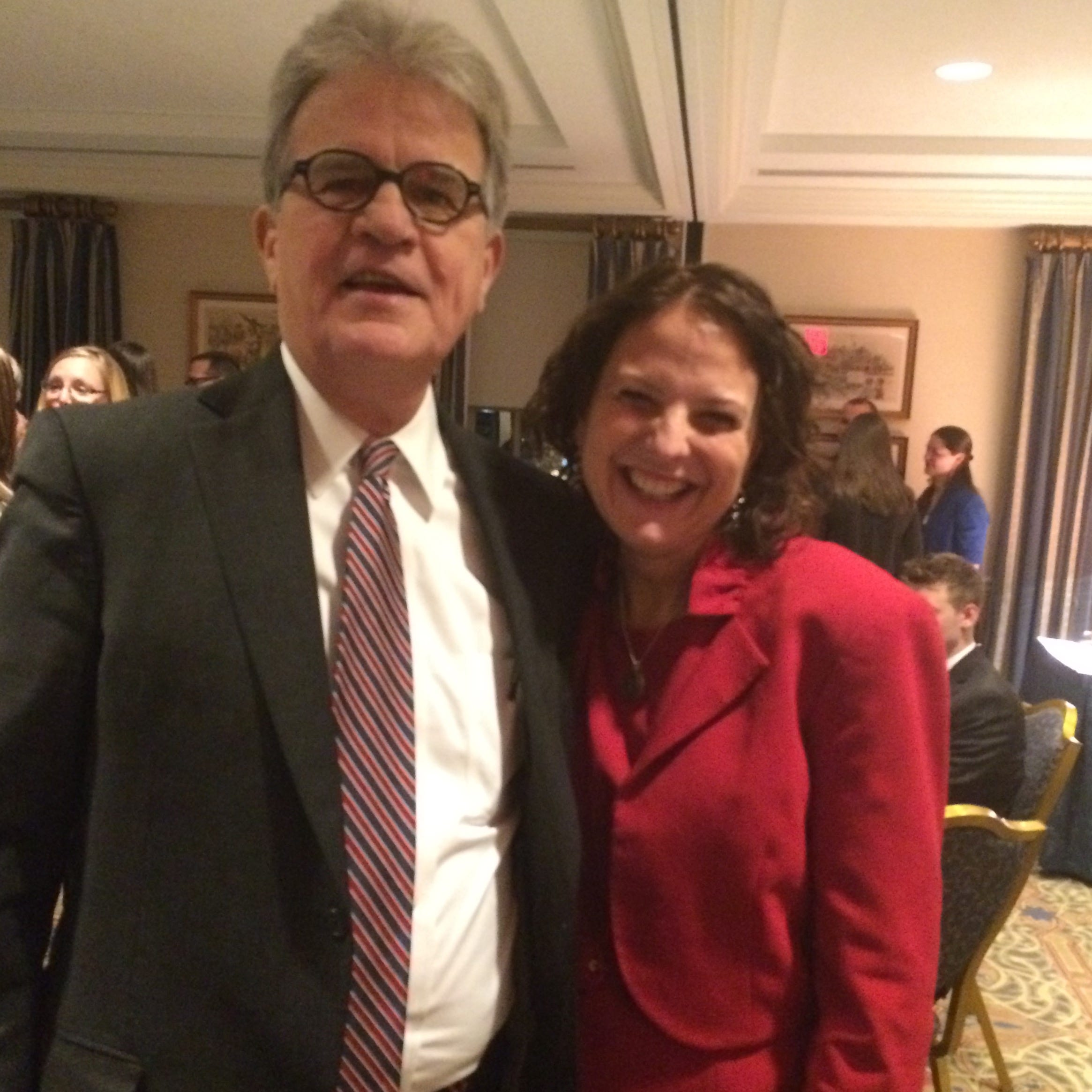
I spent the first half of the meeting doing what all staff always do in every meeting - I mentally rehearsed how I’d say no to the ask. The perennial problem of having way too much on our plate means we almost always say no to even the best ideas.
Then, halfway through the meeting, some switch inside my head flipped, and I said to myself: “You know this is the right thing to do. Why don’t you stop saying no and figure out how to get to a yes?”
And we were off to the races. Cynthia was and is a force of nature.
Cross her and she will bombard your email, your constituents, and the billboards in your Congressional district with compelling pro-transparency advertising, replete with Hollywood A-listers and heartbreaking stories from patients done dirty by surprise medical bills.
She never gave up — to this day — and she often seemed to have the president on speed-dial. She was FAFO before FAFO was a thing, and always with a winsome smile.
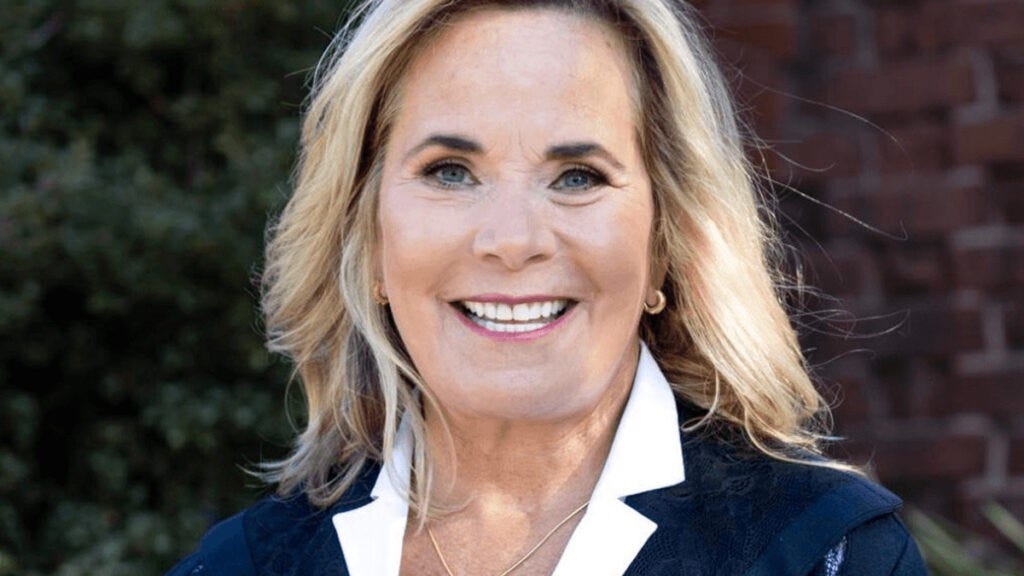
After HHS sent their price-transparency-is-stupid memo over to the White House, Cynthia found herself invited to an intimate dinner for business leaders with the president. When her turn to speak came up, she went all in on ending secret health care prices. The president, as we knew he would, loved it and told his team to get it done. Gladly! (What an amazing idea!)
So that’s why, months later, when I saw that my detailed take-down of secret health care prices and my call-out to Wanda had been stripped from the speech draft, I pulled out all the stops — Cynthia was my first call. I knew that her rolodex was more powerful than mine.
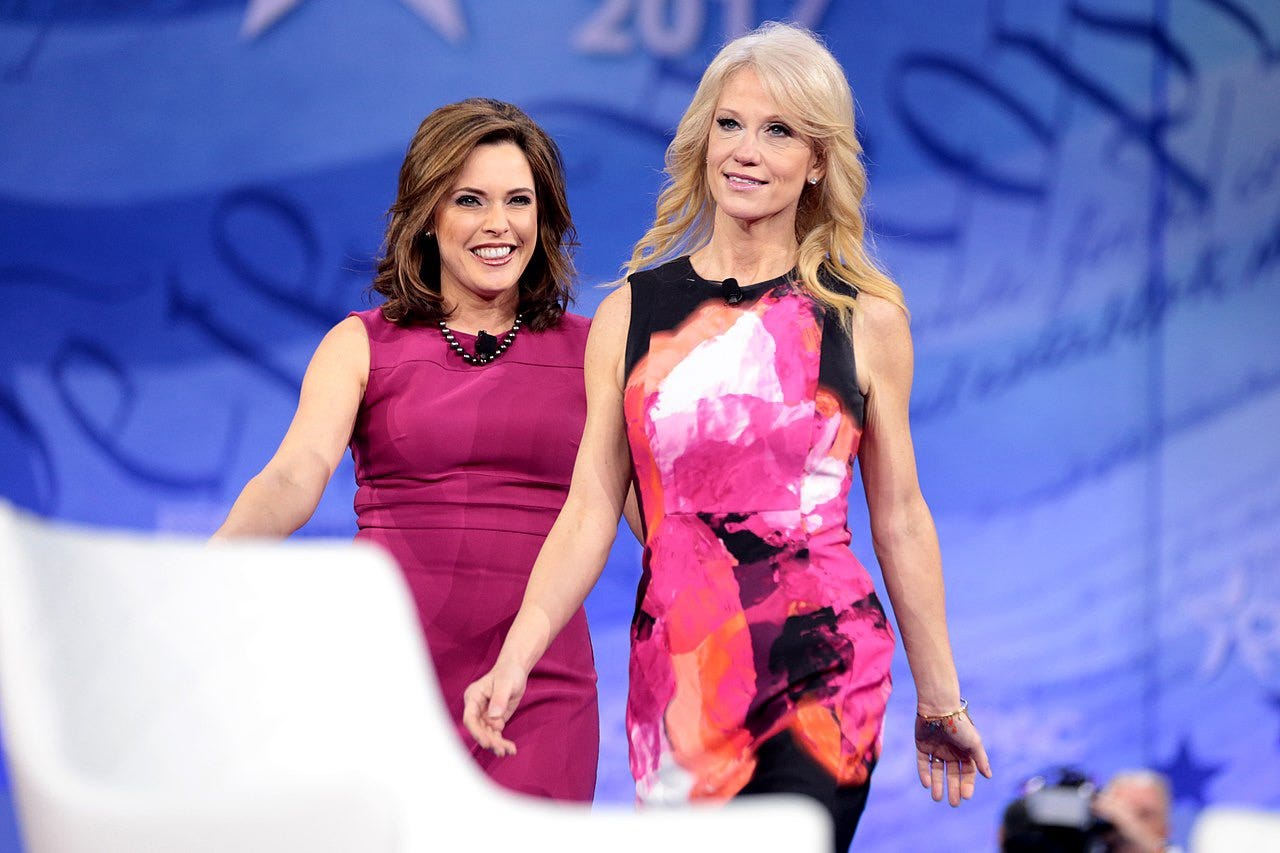
For my own part, I ran around the West Wing, cozying up to the more politically savvy types who understood the populist appeal of ending secret health care prices, like Kellyanne Conway and Mercedes Schlapp.
The speechwriters were holed up with the president, inaccessible to my harassment. So I pleaded with Derek Lyons, who wielded incredible power as Staff Secretary, possibly the littlest-known, most powerful role in the White House. The Staff Secretary’s office controls the flow of paper (including speeches) in the building and synthesizes all the edits everyone makes to that paper before it goes to the president or the public.
If Derek was persuaded, he could put his thumb on the scale in the draft.
Meanwhile, the New, Less Supportive Boss kept walking by these offices I was in (the building is much smaller than most people realize). He would do a double-take as he saw me, probably wondering what I was up to.
I waved and pretended to be casually chit-chatting.
When I saw the final speech, it had ONE sentence in it on price transparency.
There was no callout to Wanda and no fiery diatribe about the Health Care Swamp — but it was enough.
I knew that ONE sentence by the president of the United States would be powerful enough to move mountains, and would put an end to (at least the overt) internal opposition to price transparency going forward.
Not for nothing, a grateful nation should truly honor Cynthia for her heroic efforts, along with Dr. Marty Makary.
Marty’s book, The Price We Pay, is a classic for anyone learning the basics of health insurance and its actual impact on real people, the perverse incentives it creates and potential hacks of the corrupt system.
I sent all the naysaying political appointees around the government a copy of the book, which laid out — in the plainest English — the problems in our current insurance system — the so-called ‘free market’ that Republicans thought existed, but didn’t.
A lot of their attitudes softened toward price transparency and the rest of the president’s populist health agenda after that.
As I had predicted, the president’s speech mention was the jet fuel the policy needed.
I eventually left the White House later that year, and to their everlasting credit, the colleagues I left behind, including the previous naysayers, were the ones who pulled price transparency over the finish line.
Policy, like politics, is a team sport.
We did it.
You’re welcome, America.
P.S. If this resonated, hit subscribe. And consider sharing. Let’s make some noise.
Wow! I had no idea you were a part of this!
We definitely have a long way to go, but people are becoming more and more aware of the scam that is the Healthcare system thanks to people like you!
There is still a long way to go concerning transparency. Most hospitals aren’t compliant. Machine Readable Files can only be read by machines, not your average consumer. There’s been some good progress in the area of surprise billing getting claims data remains nearly impossible. Baby steps