


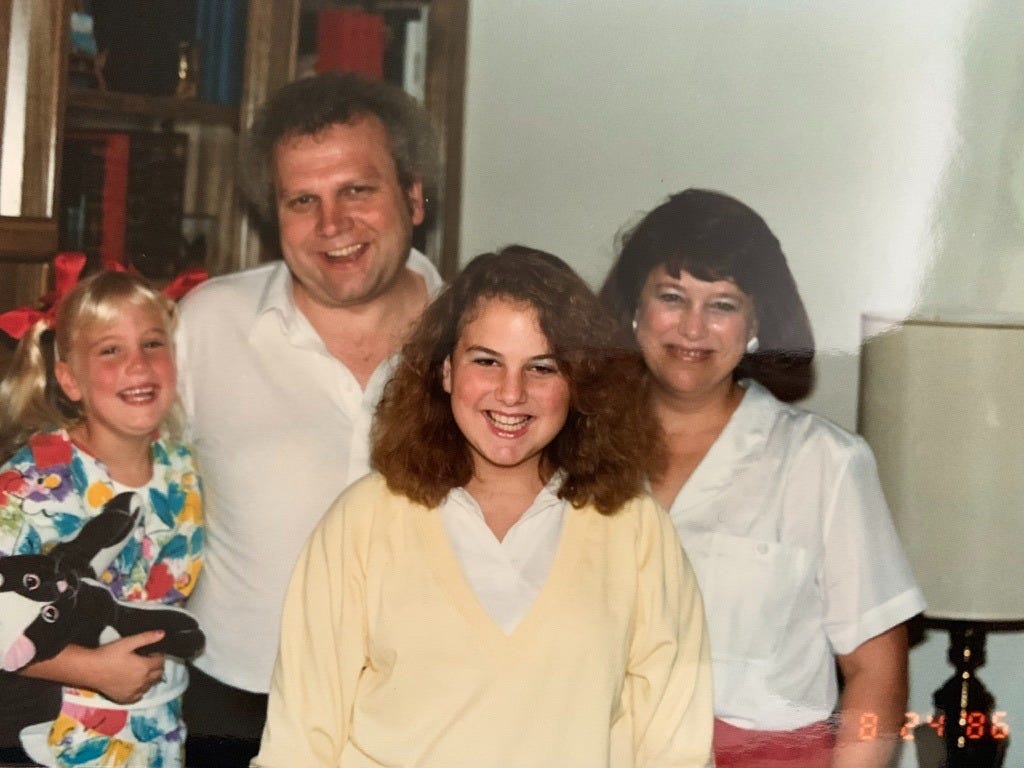
I was eleven the first time my uterus tried to kill me.
That’s how it felt, anyway, curled up on the bathroom floor and bargaining with God. The cramps came every month for the next forty years, along with a stabbing pain on one side every time I ovulated, which I assumed was just one more fun feature of the model. I ate Advil like Tic Tacs. My doctors got very worked up about it. They weren’t alarmed by a girl in so much pain she couldn’t stand up. They were alarmed about my liver.
Then came the solution. The pill, the universal elixir for all lady-parts problems. It worked, sort of.
I needed (a little) less Advil. Sometimes my periods disappeared altogether, which everyone treated as a bonus. All I had to do was show up every year for a pap smear so they’d renew the prescription, a racket I have previously described and won’t relitigate here.
So when two studies landed this summer suggesting the pill might be making women fat, I had feelings. Most of them weren’t about fat.
What the New Studies Found
The first one comes from Kelly Klump’s eating-disorder research team at Michigan State, published in JAMA Network Open in June. They tracked 422 women ages 15 to 30 on combined oral contraceptives every day for 49 days. Combined pills come in a pack with three weeks of active hormone pills and a week of sugar pills, which gave the researchers a clever natural experiment: each woman could serve as her own control. They compared her eating on hormone days to her eating on placebo days.
Emotional eating was higher on the active-pill days. The pattern held across two full pill cycles, and it held in a subgroup of women with diagnosed binge eating. It held after the researchers accounted for mood, which means the women weren’t just eating because they felt bad. Something about the hormones themselves seemed to be turning up the appetite dial. (Note: it could also just be that women don’t eat as much when they’re menstruating, which is the placebo week. But we don’t know.)
The second study is a monster, courtesy of the Danes, whose national health registers are the envy of every epidemiologist alive (hi, it’s me). Researchers took 22,694 Danish women who started semaglutide - that’s Ozempic and Wegovy - and matched each one to ten women of the same birth year who had never used a diabetes drug. Then they looked back at everyone’s contraceptive history, going back to age 12.
Every pattern of hormonal contraceptive use was associated with a higher likelihood of later starting semaglutide.
For women who used combined pills, the adjusted hazard ratio was 1.42, meaning roughly 42 percent higher. For progestin-only IUDs it was 1.63. Women who had cycled through two or more types of hormonal birth control had up to 2.11 times the likelihood. Adjusting for BMI weakened the association but didn’t erase it.
So: the pill might be associated with more emotional eating while you’re on it, and with more weight-loss shots later in life - get the joke? The pharmaceutical industry has built its own little conveyor belt. Pill at fifteen, shot at thirty-seven.
So, Is It Making You Fat?
We don’t know. The reason we don’t know should make you mad.
The Cochrane Collaborative reviewed 49 trials of combination contraceptives and weight. The conclusion you’ll see quoted as reassurance is that the evidence was “insufficient to determine the effect of combination contraceptives on weight,” though no large effect was evident.
Now check the fine print.
Only four of those 49 trials had a placebo or no-hormone comparison group. The other 45 compared one hormonal contraceptive to another hormonal contraceptive. That design can tell you whether Brand A packs on more pounds than Brand B. It can’t tell you whether the hormones pack on pounds, because every woman in the study is on hormones. The Cochrane authors said so themselves: trials to evaluate the link “require a placebo or non-hormonal group.”
If this sounds familiar, it should. In 2013, the Institute of Medicine reviewed the safety of the childhood vaccine schedule and found that the schedule as a whole had never been studied against kids who got a different schedule or none at all. “We haven’t looked” got translated into “it’s been proven safe.” Same playbook here. Absence of evidence, laundered into evidence of absence.
Here’s where I land, holding this to the same standard I held that ivermectin cancer study to a few weeks ago. The four placebo-controlled trials didn’t find a link. The pill has been on the market since 1960. Someone should have run the study by now.
Fat Is a Bodyguard
Think about who takes the pill, and why.
The first group is women like me, prescribed the pill for some combo of symptoms: crippling period pain, heavy bleeding, acne, irregular cycles. These are girls who have spent years learning that their bodies are a monthly torture device, and many of them have learned to hate the whole business of being female. That’s chronic pain plus a chronic grudge against your own body. Your nervous system doesn’t care that the threat is coming from inside the house. It registers the threat.
The second group takes the pill primarily for contraception. Plenty of these women are married, and I’m not talking about them. But on average, a woman who has outsourced her fertility to a daily pill may also be having more casual or non-committed sex than her beautiful feminine heart was built for.
I know that’s an unfashionable sentence.
Here’s a data point anyway. A study that followed 483 first-year college women for a year found that hookups (sex with a casual partner) went along with clinically significant depressive symptoms in the same time periods. Sex with a romantic partner showed no such link. The researchers couldn’t establish which came first, and they were careful to say so. But the bodies in that study were telling a story.
Now here’s what the body does when it decides it’s unsafe. Elissa Epel’s team at Yale showed in 2000 that women who stored fat around the middle, even lean women, secreted more cortisol under stress, felt more threatened, and kept pumping out more cortisol after the stressor repeated. Mary Dallman’s lab at UCSF went further in 2003 and proposed that comfort food cravings are the body’s attempt to put the brakes on chronic stress. Eating calorie-dense food dampens the stress response. The belly fat that results is, in Dallman’s model, part of the self-medication.
If you read my piece on the baby and the bear, you know where I’m going. A body that feels hunted stores fuel and shuts down reproduction. Fat is a bodyguard. Emotional eating is a material body trying to soothe its immaterial soul.
So I suspect at least some of the association in these studies runs through stress.
The women in pain (and thus often at war with their femininity), and the women in situations their hearts didn’t sign up for are both carrying a heavy load, and the eating and the fat may be how the body handles that load. The Klump study suggests the hormones also have a direct effect (remember, the eating bump held after mood was accounted for). Both things can be true. The pill can nudge your appetite and the life circumstances surrounding the pill can put your body on high alert.
And then there’s menopause (raising my hand here), which is the body’s own way of turning off fertility. The Study of Women’s Health Across the Nation has followed women for nearly two decades, and it found that during the transition to menopause the rate of fat gain doubled while lean muscle declined, with the extra fat heading straight for the middle. If switching off ovulation reliably reshapes a woman’s body at 50, I’d like someone to explain why we’re so confident that switching it off with a pill at 15 does nothing at all.
That’s a hypothesis, not a conclusion, but the study that would settle it hasn’t been done, and I’d love to see someone try.
The Pill’s Real Problem Is Fatter Than Fat
The pill doesn’t fix the reason behind the period pain so much as just hides it.
In 2011, a team led by Charles Chapron in Paris published a study in Human Reproduction that should be required reading for every pediatrician and OB-GYN in America. They looked at 976 women who had gynecologic surgery, some with confirmed endometriosis and some without. Women who had taken the pill in the past for severe period pain had 5.6 times the odds of having endometriosis. For deep infiltrating endometriosis, the worst kind, where the tissue burrows into other organs, the odds were 16.2 times higher.
The authors were careful about what this means, and so am I.
They didn’t claim the pill causes endometriosis. They hypothesized that severe period pain treated with the pill is a marker for women who already have it. Which is exactly my point. The girl on the bathroom floor was waving a giant red flag, and the medical system slides prescriptions under the door to her and walks away.
How long does the flag wave before someone looks?
A 2026 French study of nearly 7,000 women with endometriosis or adenomyosis found an average diagnostic delay of about 10 years for endometriosis and 11 for adenomyosis. Two details from that study make my blood friggin boil. First, women with severe period pain before diagnosis waited longer, not shorter, by almost a year. Second, the delay is getting worse over time, by about a third of a year for each later year of diagnosis.
Ten years. That’s a girl from fourteen to twenty-four. Her whole first decade of womanhood, on a drug that keeps the symptoms mitigated just enough that no one goes looking for the cause.
I was in my very late thirties when a doctor first said the word “endometriosis” out loud - 28 years after my first awful period and monthly ibuprofen overdosing, and about 20 years of being on the pill for it all.
By then I’d also been told I was infertile, on the basis of one monitored cycle in which a follicle didn’t release an egg. One cycle. My husband and I didn’t dig further for reasons I can’t explain now, we adopted two older children, and our kids are now grown and wonderful, churning out grandkids and I wouldn’t trade a minute of it. But I’ve spent a long time wondering what a curious doctor when I was eleven might have achieved.
What the Pill Does Upstairs
The pill works by shutting down the conversation between your brain and your ovaries. That’s the point of it. But that conversation happens in a part of the brain that also runs your stress response, your mood, and your appetite, so it’s fair to ask what else changes when we turn it off.
Some early answers:
Brain structure. A small 2019 MRI study presented at the Radiological Society of North America found that pill users had significantly smaller hypothalamus volume than non-users, the hypothalamus being the brain’s command center for hormones, appetite, and stress. Smaller volume was associated with more anger and depressive symptoms. Fifty women, preliminary, needs replication. But it’s the hypothalamus.
Stress response. A 2025 study in the British Journal of Psychiatry found that pill users had a blunted cortisol response to a lab stressor, but their heart rates ran higher. The body was stressed. The usual hormonal signal was muffled.
Mood. A 2016 Danish study of more than a million women in JAMA Psychiatry found that hormonal contraception was associated with a higher risk of a first antidepressant prescription, with the highest relative risk in teenagers.
The hangover. A 2006 study found that sex hormone binding globulin (the protein that soaks up free testosterone and other sex hormones) stayed elevated in some women months after they stopped the pill.
None of these is a smoking gun. Together, they describe a drug that does a lot more than prevent pregnancy, prescribed to girls whose brains are still under construction.
Period Pain Is Not Normal
Every woman reading this was told at some point that bad cramps are just part of being a woman. Depending on the study, somewhere between half and 90 percent of menstruating women report painful periods. It’s common. That doesn’t make it normal, any more than tooth decay is normal because most American kids have cavities.
Ordinary period pain is driven largely by prostaglandins, inflammatory compounds that make the uterus contract. Severe pain is a sign that something is inflamed, out of balance, or growing where it shouldn’t. It’s a symptom. It’s information. And we have spent two generations medicating the information away instead of asking what’s breaking our girls’ and women’s hormones in the first place.
I have my suspects, and you’ve heard me on them before: artificial light and wrecked sleep, ultra-processed food, endocrine-disrupting chemicals, chronic stress, and a culture that treats the female body as a malfunctioning machine. Living like a human, with morning sun, real food, movement, sleep, prayer, and people who love you, is the boring answer. I keep giving it because it keeps being true.
“Sorry, Kid. You’re a Woman Now.”
Here’s one more thing that we don’t count as health care, but I think it is.
Most traditional cultures marked a girl’s first period. There were ceremonies, gatherings of women, songs, gifts, instruction. The message was some version of: you have joined the line of women who carry life, and we’re glad you’re here. Your feminine curves, your softness, your bleeding, your tiredness during this phase of the cycle - they all deserve reverence and love.
What do our girls get? A pamphlet in fifth-grade health class, a box of pads under the bathroom sink, and the general vibe of “sorry, kid, you’re screwed - you’re a woman now.” Also, “get up and get dressed for school, or the library to study for finals, or the locker room for practice and stop whining like a little bitch. You’re setting the Girl Boss movement back with every tear.”
Then, a few years later, a prescription.
Lately I’ve been spending time with what I lovingly call my hippie women’s festival crowd, and something is happening there that I just love. They’re holding “maiden blessing” ceremonies. Mothers, grandmothers, aunts, friends and younger girls gather around a girl at the threshold of womanhood and welcome her into it. They tie her into the red thread that runs back through every woman in her family line and forward to the daughters and granddaughters she may someday carry.
You might think that’s just lovely and has nothing to do with cramps. I’m less sure. The story a girl believes about her body shapes how her nervous system responds to it. Back in 1977, the psychologist Diane Ruble ran a study in Science in which she told women they were either premenstrual or not, regardless of where they actually were in their cycle. The women who were told they were premenstrual reported more premenstrual symptoms. Expectation shaped experience.
If we can teach a girl’s brain to brace for her period like an assault, maybe we can teach it something else. Initiating our daughters into womanhood as a blessing instead of a sentence won’t cure endometriosis. But it might change what her body learns to expect from being female, and a body that feels safe behaves very differently from one that feels hunted.
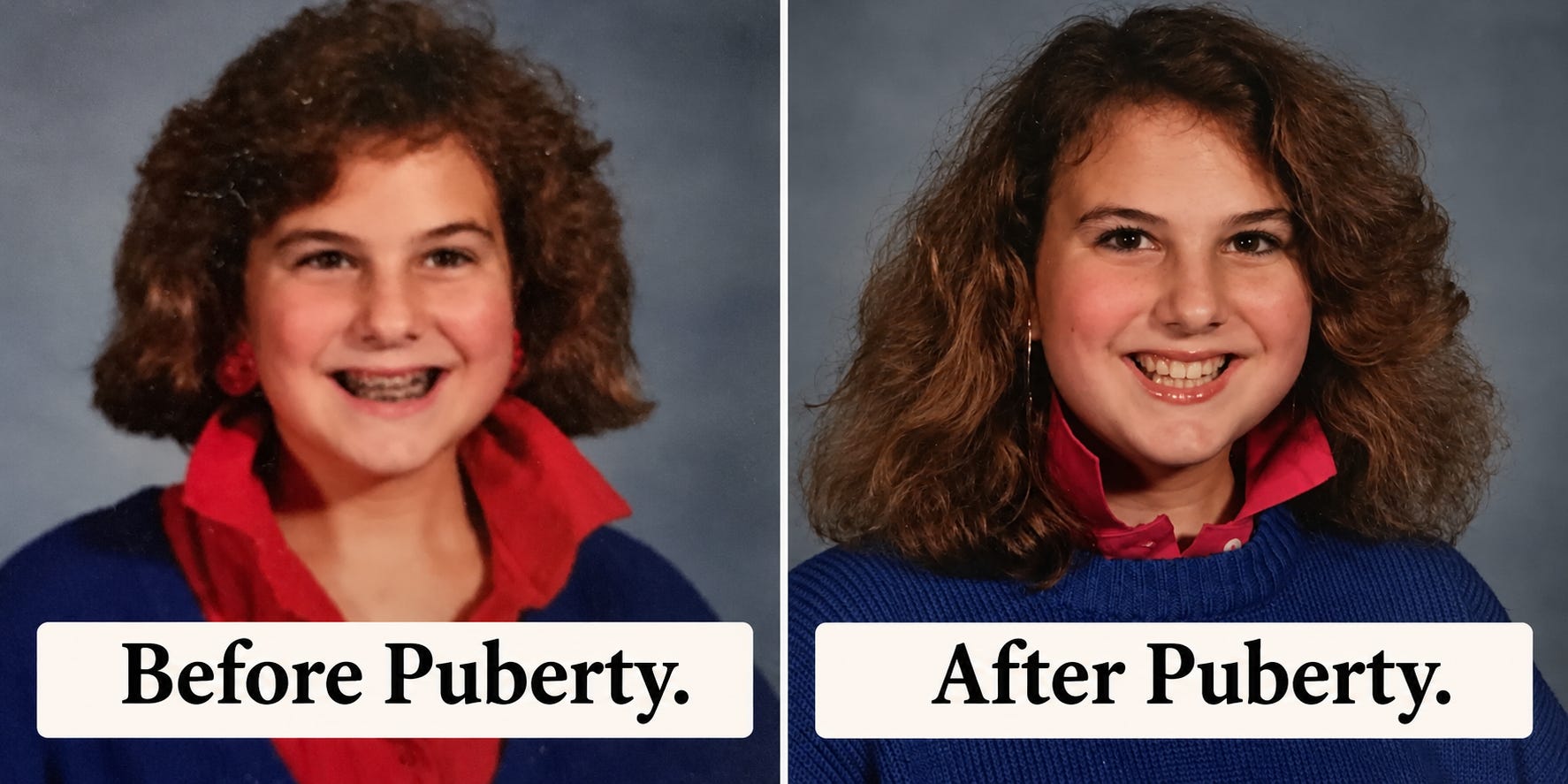
For the Girls and Their Moms: Before the First Prescription
If your daughter is in pain, or a doctor is already reaching for the prescription pad, here’s what I’d want you to know:
Treat severe period pain as a five-alarm fire. Ask the doctor directly: “What could be causing this, and how would we find out?” If the answer is the pill and nothing else, walk out and keep digging with different experts (like here) or become your own expert.
Find out what the pill is for. If it’s for symptoms, ask what the plan is to investigate the cause, and when you’ll reassess. The pill should never be the end of the diagnostic road.
Chart before you medicate. Track her cycles, pain, mood, and energy for three months. This is real data, and it’ll make every conversation with a doctor better.
Get labs done. At specific intervals throughout the month to see what’s happening hormonally. An expert in Restorative Reproductive Medicine can help.
Ask about mood. Teenagers had the highest relative risk of depression in the Danish data. If she has any history of anxiety or depression, that conversation belongs in the exam room.
Start with the basics. They’re radically simple, but also radically hard to do in our modern hustle and bustle. But Make. It. Happen: morning sunlight, real food, regular sleep, movement, and fewer screens at night all affect hormones. They’re cheap, and they never require a refill.
Know that “normal” is way too low a bar. A period that keeps her home from school or curled up on the floor is not one she should be told to live with.
Mark the moment. Whether it’s a full maiden blessing with body paint, drumming and crowns of flowers, or a dinner and gifts with the women who love her, tell her she’s been welcomed into something beautiful.
Women aren’t born with a Loestrin deficiency. Our daughters aren’t either. The pill may or may not be making her fat. But a system that hands a hurting girl a pill and walks away is missing the point: biology is brilliant. Her body is on her team. Let’s start acting like it.
Wow, this is so interesting! I was lucky and barely had cramps and no changes at menopause but I read this anyway and wish every mom and teen could read this. You're such a helpful writer with this blog. Thank you! The idea of celebrating girls hitting puberty is fantastic. On a funny note, I used to call my period "laying eggs"...I was laying eggs like a chicken. Made it more fun :) Also do you think that some of the light fat gain during puberty could be that a woman stores a bit of extra fat to prepare for having a baby? Thanks again!
Yay for the hippie women's festival crowd!
I've never been on the pill, and I've always gotten plenty of sun and exercise. My health is far from perfect, but it appears to be better than that of most women my age (late 40s).