


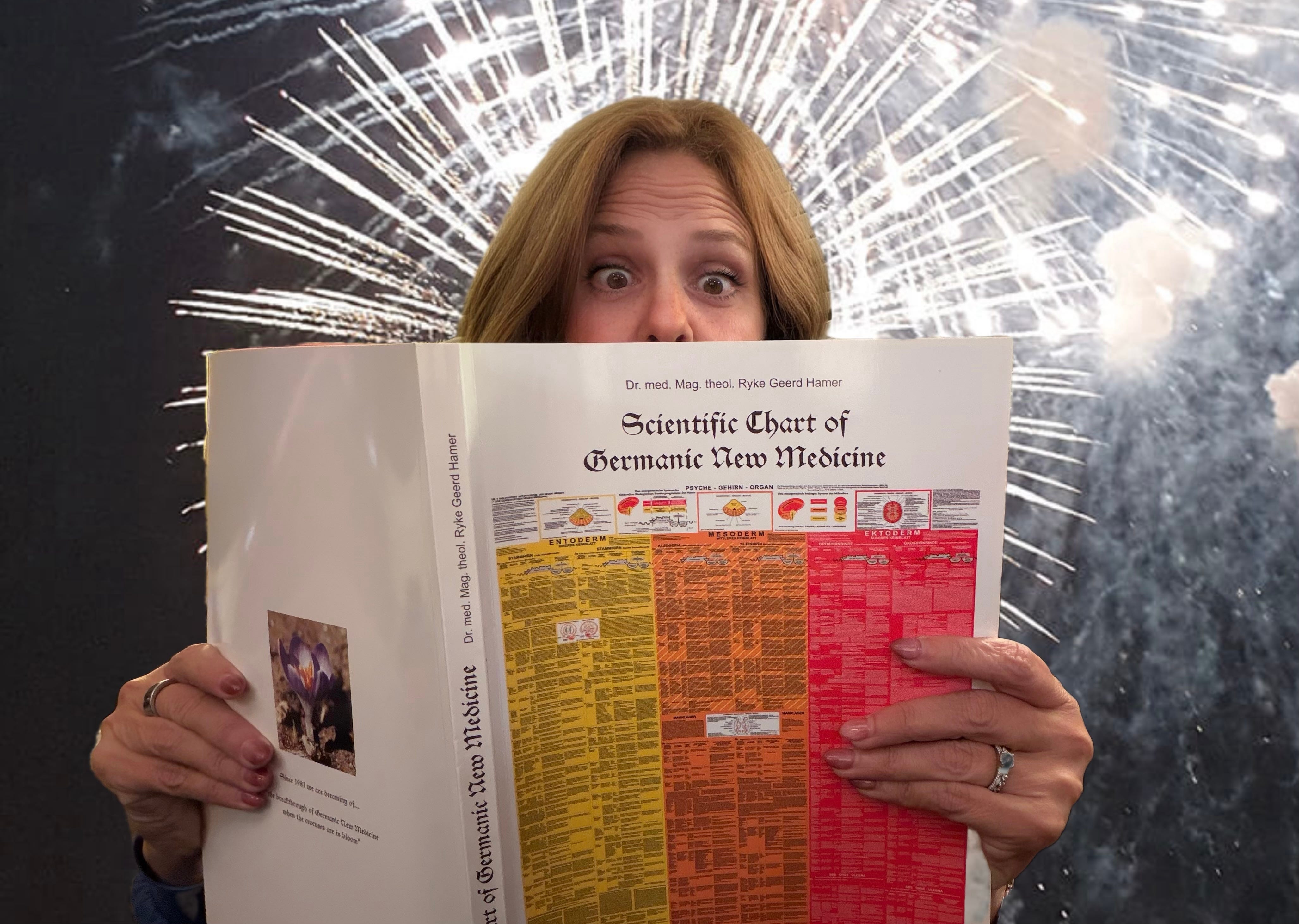
The bullet went through the hull of the boat and into the leg of the sleeping nineteen-year-old.
The year was 1978. A group of young aristocrats had gathered on an Italian island near Corsica for some fun in the sun. The former Miss Germany, Birgit Hamer, had just met them while her family vacationed in nearby Sardinia. She’d been invited on a day-trip by boat, and she’d brought along her 19-year-old brother Dirk to join them.
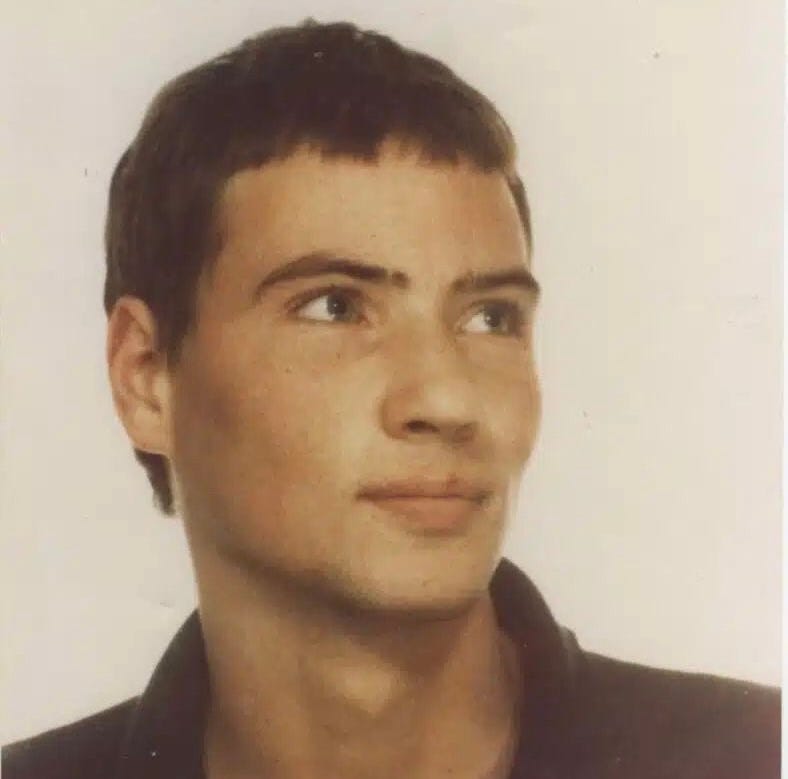
They didn’t make it home that night. They were stranded on the island due to nasty weather. Around three in the morning a drunken argument broke out among the others.
Someone had borrowed a dinghy without asking. It belonged to Vittorio Emanuele of Savoy, son of Italy’s last king. Vittorio came across the water with a carbine (allegedly, reportedly), screaming that he was going to kill them all. Two shots went off. (The deep dive into these events is the subject of a 3-part Netflix documentary called The King Who Never Was.)
Dirk was asleep in a cabin on another boat. A round seared through the hull and opened up his femoral artery.
He struggled to live for the next four months, in hospitals in Ajaccio, Marseille, and finally Heidelberg. They took his leg. They took a kidney. And after nearly twenty operations, his remaining kidney failed, and he died in the arms of his father, Ryke Geerd Hamer, MD.
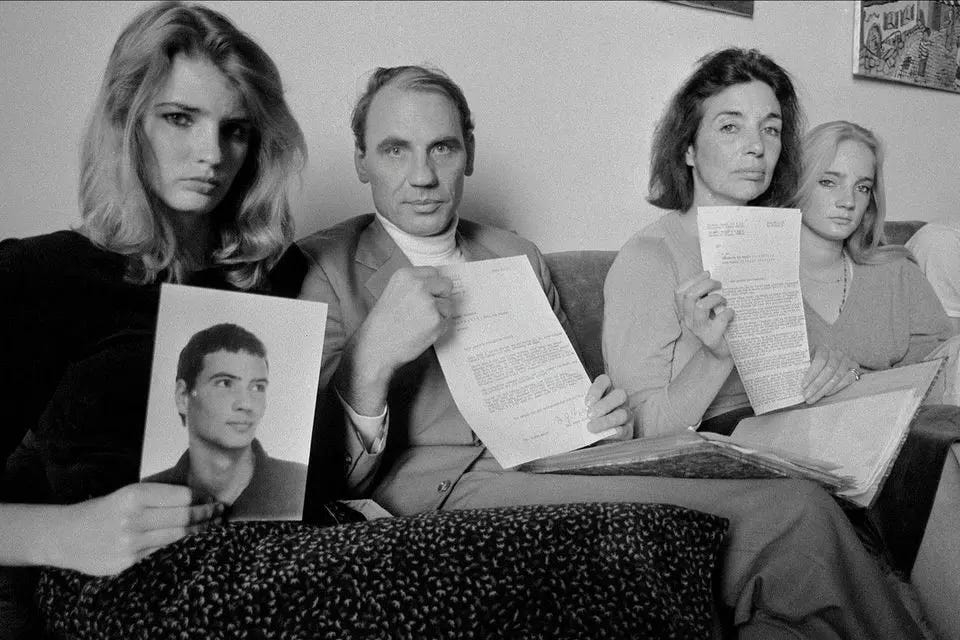
Dr. Hamer, an internist who took care of cancer patients in Tübingen, was diagnosed with testicular cancer two months after his son’s death. Because he’d been so healthy throughout his life, and because of the timing, Hamer hypothesized that the cancer might have been related to his son’s death somehow. Given his daily access to the clinic’s oncology patients, he started systematically interviewing them and asking about their own stories.
He started in the gynecological clinic. All the women with certain types of cancers - breast, ovarian, cervical - told a similar story of a particular type of psychological shock or conflict that preceded their diagnosis. This alone was remarkable, but what was even more extraordinary was that the type of shock corresponded with the type of cancer.
Mammary duct cancer showed up in women who’d lost someone they experienced as being “ripped from their breast” - not just any separation, but the kind that felt like a nursing infant torn away.
Mammary gland cancer followed a different shock: not a loss, but deep anxiety about someone in the immediate family - an argument, financial trouble, a mental health crisis, usually someone in the same house.
Cervical cancer traced to sexual trauma: unwanted sex, sexual rejection, a partner’s infidelity, or even some escalation in “daddy issues.”
Ovarian cancer traced to a profound loss - a child, a close friend, even a beloved pet. That same conflict, it turned out, showed up in the men he later examined with testicular cancer, himself included.
It gets even weirder.
Around this same time, CT technology was coming onboard mainstream medicine. The inventors received the Nobel Prize in 1979, and scanning machines had made their way into prominent hospital systems a few years later when Hamer was sleuthing around about cancer.
He started looking at the brain CT scans of his cancer patients, and found that every single case had a ring, or concentric rings, in the exact section of the brain responsible for the organ that had developed cancer. Rings on a 2-D image are the signature of a sphere rippling outward. How sharp or fuzzy the rings were let him timestamp the event precisely, like a tree - sharp rings meaning recent, fuzzy meaning distant - and the age of the rings lined up, not with the cancer diagnosis, but with the exact moment of the psychological shock he was starting to suspect had caused it.
In other words, when people got a shock in their lives - a terrible argument, a death, a betrayal, the suffering of a loved one, a sexual assault - at that same moment, there was a mini earthquake in their brain, right around the section that controlled the organ that later developed cancer.
Every time.
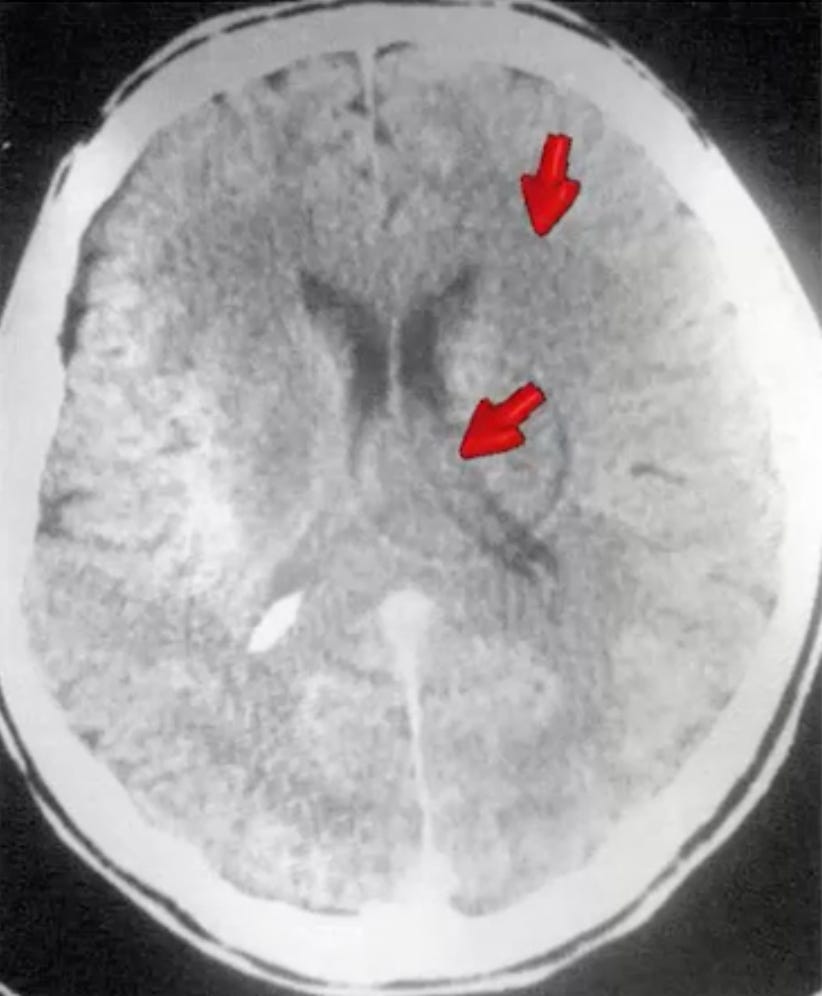
Hamer’s colleagues were skeptical - CT artifacts from the machines could look like rings, they said, probably just noise. But an artifact wouldn’t correlate with the location in the brain linked to the exact organ affected, every single time, while a real signal would. So they tested him blind: CT scans of patients he’d never met, and asked him to name the diagnosis. He always got it right.
Every time.
Hamer had discovered a pattern so consistent and predictable that he named it the “Iron Rule of Cancer.” It became the first of what he later developed into his Five Biological Laws.
As Hamer branched out into more and more disease conditions beyond cancer, the pattern held. A shock, trauma, or as he called it, a “conflict,” of a certain type was associated with symptoms or pathology of a certain type.
Liver inflammation, cirrhosis or cancer: “starvation” conflict - a loss of a job or a spouse who was sole breadwinner, or fear of chemo-induced vomiting.
Skin conditions? “Separation” conflict.
Bone/blood conditions such as anemia, cancer, or osteoporosis? Severe “self-devaluation” conflict.
Blindness, myopia, cataracts? A conflict related to seeing something you didn’t want to see.
Deafness? Something you didn’t want to hear.
The rings appeared around whatever part of the brain controlled the organ that got sick, timed to the moment the patient first experienced the shock. The conflict didn’t have to be objectively awful, just perceived as awful by that patient - which meant a schoolyard insult could set off disease in a child as easily as a cruel word from a spouse could in an adult.
Hamer’s findings shook the foundations of everything medical students are taught about pathogenesis.
Naturally, he had to be silenced.
At first, management just told Hamer to stop spouting this nonsense - especially to patients. Then the government authorities who controlled his license gave the same order. When he couldn’t un-see what he’d seen, and refused to un-say what he was saying, they chased Dr. Hamer to the ends of the earth for the next 20 years. They stripped him of his medical license, and arrested him multiple times in Germany and France - officially for not following “protocols,” but in reality, for telling patients what he’d found. After the license was gone, and he was hounded for practicing without one, his followers excised the word “medicine” from the name of his discovered framework. Heretofore called German New Medicine (GNM), and then renamed as Germanische Heilkunde, roughly translated as Germanic Healing Knowledge (GHK) - which sounds more woo-woo than it actually is. The more straightforward GNM is still used by most enthusiasts.
Despite the smear campaign, desperate patients, who had been failed by mainstream medicine, continued arriving at Dr. Hamer’s door. This only further infuriated “The Authorities” intent on delegitimizing him. Sound familiar?

His method was largely to inquire about their symptoms, identify the “conflict” associated with those symptoms in the affected organ/tissue, obtain a CT scan to confirm, and then work with the person to identify a way to resolve the conflict.
While in exile or on the run, Hamer kept refining the patterns behind the conflict shock that turns on disease. To count, from the patient’s own perspective, a conflict has to be acute and dramatic, unexpected, and isolating - the sense that no one can save you in that moment.
It happens in an instant: discovering your cheating wife, a termination notice, a fight with a neighbor, a punch from the bully at recess.
What’s more - different people experience the exact same event differently, and turn on different disease programs, or none at all. One woman whose husband dies might feel it as a starvation conflict (”who will bring home the bacon?”) and develop liver disease. Another might feel him ripped from her breast and develop mammary duct cancer. A third might feel nothing but relief, because she hated him - or maybe she killed him herself, so it wasn’t exactly unexpected!
Based on how the person experiences that conflict, the brain rattle occurs right at that moment - creating the sharp concentric rings around the exact spot in the brain that controls the organ or tissue that is simultaneously turning on the disease process.
After the initial conflict shock, there are two phases: while the conflict is still active, and after it resolves. In the active phase, your body runs on fight-or-flight - you might have trouble sleeping, racing thoughts, cold hands and feet.
At the organ level, one of three “programs” runs - tissue loss, tissue growth, or functional loss - depending on which embryonic germ layer the affected tissue came from: endoderm, mesoderm, or ectoderm. Tissue loss is the sneakiest: you usually don’t realize it’s happening, as with anemia, until it’s already severe.
This only turns off when the conflict is truly, permanently resolved - so resolved it no longer produces any emotional charge when you think about it. For the cheated-on spouse, that might mean a new love. For the fired worker, a better job. Reconciling with the neighbor. Beating the schoolyard bully.
Once you resolve the root cause, your body goes into the healing phase: the affected area of the brain gets filled with fluid to heal the impact zone from the mini-quake, and then that fluid is eventually pushed out about halfway through the healing phase (though the rings remain forever, fuzzy now on the scan). Dr. Hamer, and the disciples who learned from him, could look at someone’s CT and read back their own trauma history.
I had my own CT read by one of these experts, and it was uncanny - every major negative experience of my life, projected backward with almost creepy precision: a rejection around age 5 that showed up in the part of the brain that controls the cervix, a bully at age 12 created a ring around the brain region tied to bones, heartbreak a decade ago circled the brain region for my left ovary, unresolved anger from five years back was marked on the part of the brain controlling the teeth. Each one matched a symptom I remembered or was still living with, because I hadn’t resolved it. Most of us are running at least ten active conflicts by the time we’re adults.
At the organ level, the healing phase reverses whatever happened during the conflict phase. Endoderm-derived growth gets broken down again, often with the help of microbes; mesoderm and ectoderm tissue that was lost gets rebuilt. Both processes are what actually cause most of your symptoms - inflammation, fever, pain, fatigue. Your body is a demolition or construction zone, and it needs rest.
For the tissues that lost function during the conflict phase, such as vision loss or pancreatic function, that function can be restored in some cases. In other cases, it can’t be restored, but the loss stops.
By the way, this framework isn’t just for humans.

It happens throughout the animal kingdom too, though animal conflicts are more tangible: a predator, a lost territory fight, exile from the pack. In the wild, the conflict is over quickly, one way or another. Humans are the only species that go back to work with the predator every day, or marry the territory-encroacher, rehashing the same rejection for years instead of ever resolving it. That’s what turns a survival mechanism into cancer, osteoporosis, or diabetes.
Alternatively, we can start the resolution process, and then talk ourselves into or get triggered by others right back into the conflict again, back and forth, which essentially puts us into what Dr. Hamer called a “hanging healing.” Perpetual inflammation. Recurrent UTIs. Autoimmunity. Arthritis. Allergies. These too can become dire or deadly.
He was also a master at helping people resolve a conflict once its root was identified - if it was a hanging healing from childhood, he might have the patient re-enact the drama with an alternate ending. The therapeutic side of GNM often overlaps with other mind-body medicine, trauma healing, homeopathy, and practices like deliverance prayer or family systems work.
The framework kept getting refined over tens of thousands of patients, plenty of whom couldn’t remember their original conflict until Hamer patiently interviewed them, sometimes over several sessions, until he found it. His students have carried it forward since, and schools teaching his method have sprung up worldwide, churning out new practitioners by the thousands each year. Though Dr. Hamer died in 2017, the elaborate mind-body map he uncovered lives on.
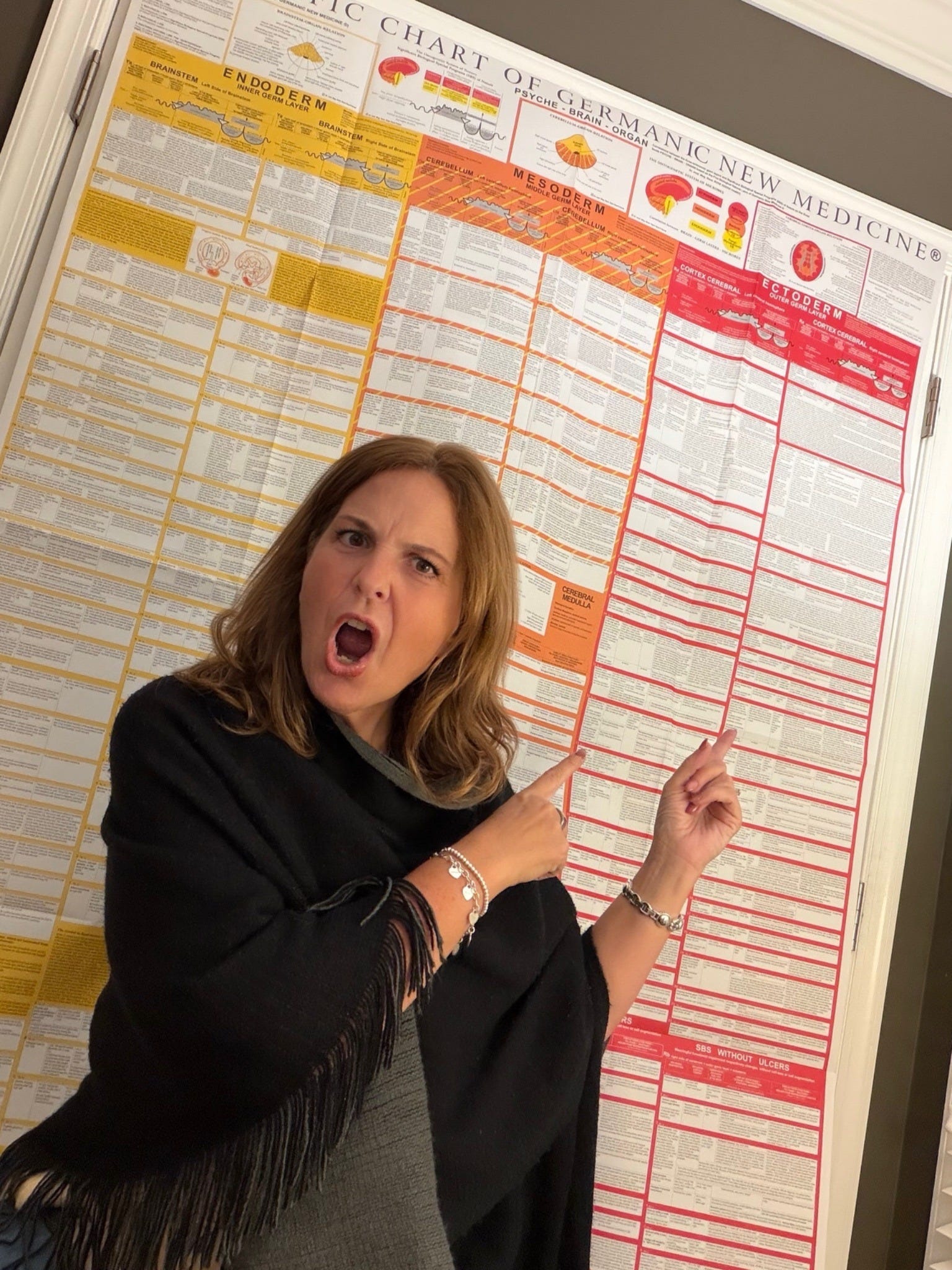
GNM is so complex, it takes a lifetime to truly master. Your humble correspondent has been diligently studying for years, and once you learn the pattern, you can’t un-see it - it’s almost impossible not to start asking, of any symptom, “what was going on in my life when this started, and is it still going on?”
Biological ecosystems don’t just go off the rails.
The most beautiful principle that Dr. Hamer outlined is the last of his Five Biological Laws: the tissue growth/loss cycle associated with conflicts has a critically adaptive purpose. Your body isn’t a machine that randomly breaks down from bad luck or wear and tear like a Goodyear tire. Even a UTI has a purpose: the urethra widens through cell loss during a territory fight so an animal can mark territory better, then rebuilds, with the help of inflammation and microbes, once the fight is over. Conventional medicine calls it an infection. Nature calls it survival of the most adaptive.
Our symptoms are a message that the body is adapting to something, trying to make us stronger. Because we’re overthinking humans instead of reactive animals, we can keep those conflicts running long past their biological usefulness. That’s GNM’s whole view of chronic illness.
One note: GNM intentionally excludes malnutrition, injury, and poisoning from this framework. If Tonya Harding’s boyfriend takes a police baton to your knee to keep you out of the Olympics, the resulting inflammation and pain isn’t a psychological conflict working through a healing phase - it’s just a baton to the knee.

There’s a live debate inside the GNM community, too: purists who insist “it’s not the food,” against the more MAHA-minded adherents who think garbage food and pesticides are their own form of poisoning and the diseases that follow aren’t therefore governed by GNM principles - or at least may make a conflict response worse.
You Can’t Teach a Drowning Man to Swim
Every GNM teacher I’ve studied under says some version of the same thing, usually with a sigh: “you can’t teach a drowning man how to swim.” We’re all marinated from birth in mainstream medical dogma, and the day you’re diagnosed with stage 4 anything is not the day to start unlearning it.
GNM itself doesn’t pretend otherwise. It has always made room for conventional medicine, especially when the body’s own rescue attempt becomes the thing that might kill you. A hanging healing that’s dragged on for years can turn into disease severe enough to need a scalpel or a drug, not a conversation about your mother.
The healing phase has its own dangers built in - the microbe overgrowth that helps break down a tumor can spiral into sepsis. The heart attack that shows up when a territorial-loss conflict finally resolves is a real heart attack, capable of killing you. Hamer never denied any of this.
He built it into the framework from the start.
The terrified patient who’s just been handed a diagnosis that sounds like a death sentence is often surrounded by family who love her and are just as scared. Everyone in the room is looking to the doctor as the only source of hope in the building. For most people, that’s the moment of peak compliance, understandably so.
Which is exactly why the useful place to build awareness of the GNM mind-body map is way before that moment, far from a hospital bed. It’s at home, with a toddler, years before any of this is life-or-death. It’s the skin rash that shows up on the two-year-old who can’t stand being left behind when Mommy goes to work. The hay fever that flares the same week a kid gets scared by something out in the grass. Watching your own gut answer anger with constipation and forgiveness with its opposite, and actually noticing it. The sinus infection that hits a teenager three days after he is grounded by his parents - because let’s be honest, that stinks (yup, there’s a “stink” conflict), and his body agreed.
None of that is high stakes, and none of it asks you to distrust your oncologist someday. But a household that notices these small, unremarkable things out loud, with wonder rather than alarm, is teaching a kid to listen to his own body instead of fearing it. That’s a skill you build over a lifetime of small, safe practice - not something you can start in the crisis. If it ever matters later, in a moment that’s actually serious, it’ll already be there.
Hamer’s Revenge
Functional and holistic medicine got there first, and conventional medicine is catching up fast: chronic stress and unresolved trauma are finally being taken seriously as real drivers of disease, as the insulin-inflammation-metabolic cascade and the associated low-grade (or high-grade) fight-or-flight syndrome is being recognized as underlying everything from Alzheimer’s to infertility. Meanwhile, Hamer wrote about this in the 1980s, while being stripped of his license for it.
GNM is the union of the immaterial mind and the material brain and organ - all changing in an instant, in sync together.
The best practitioners I know, MDs, DOs, chiros, NDs, are the ones who’ve absorbed this the most, whether or not they’ve ever heard of Hamer. They dig deeper in the exam room, asking what was actually happening in a patient’s life around the time the symptoms started - the divorce, the layoff, the years of caregiving for a dying parent. They treat the body as an ecosystem working its way back toward balance, and read its symptoms as information and adaptation rather than malfunction.
Meanwhile, the GNM movement is going gangbusters. The MAHA moms, the freebirthing hippies, the homesteading, homeschooling homeopaths, the wellness podcast circuit, the COVID skeptics - everywhere I go, someone’s talking about him, whether whispering or shouting from the rooftops.
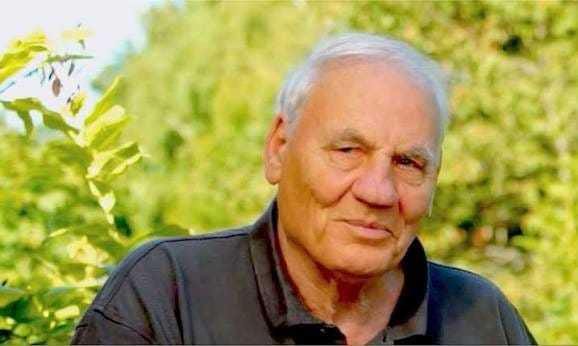
The German doctor in exile - with an engineer’s mind and a father’s broken heart - is finally being vindicated.
I had never heard of GNM. So intriguing. Thanks for writing this.
Oh my God. I have got to see someone in this field right now. How do I follow up? I live in CT somewhat near NYC. The first search result trashed the field. Which directory of the many are any good?
This article reminds my of the book Love Medicine and Miracles.