



I am grateful to Travis Neville Author for publishing my latest piece for his audience. Travis’ work is deeply paternal - part coach, part drill sergeant, part philosopher, and all with the heart of a lion. I commend it to all of you. This article was born of questions he sent me after reading my article on boys and young men. His questions were about cultural/societal issues related to women, modernity, feminism and such. They were reasoned, linear, logical… masculine. My answers, try as they could, showed up markedly different, as this article. Thanks, Travis, and hope you all enjoy the reprint!
“EARTH, SWALLOW ME WHOLE.”
The 13-year old had been dancing in her basement to a Go-Gos record, cranked up to 11, holding her hairbrush-microphone, singing her heart out (as one does) - fantasizing about adoring crowds, wishing they could be as radiant and famous as she was, and singing along to the words they’d memorized.
And then she heard it. The snickering. She froze at the sight of their laughing faces. And then, they ran away to tell the world.
The neighborhood boys - the meanest ones - had been watching her performance. The basement window near the ceiling was ground-level outside the house, and provided a perfect view into her daydream.
Little did she know that one day she would sing in acappella groups and recording studios, dance at salsa conventions in Puerto Rico, get paid to sing at weddings and funerals and professional sports matches. She never could have imagined that she’d give keynotes, appear on podcasts (what are those?), or fly on Air Force One. That she would be confident in her own skin one day, with nothing to prove.
No. All she knew was that the entire neighborhood was laughing at her now. Her cheeks on fire with humiliation, the sweat beads forming on her forehead, she searched for any closet she could curl up into and never emerge again.
“Earth, swallow me whole!”
Up to that point in my life (you knew it was your humble correspondent, right?), I had already learned pretty well to suppress the girlish tendency to twirl in pretty dresses and coquettishly cry out “look at me!”
I blamed my body for why that universal feminine instinct had to be smothered.
I was pudgy. I had fat cheeks and freckles. Thin, mousey-brown hair that, without the spiral perm I was sporting, would have been neither curly nor straight. And even if I looked cute in girly, pretty clothes, which I didn’t, there weren’t any such clothes in a decade filled with neon colors, shoulder pads and stiff raised collars.
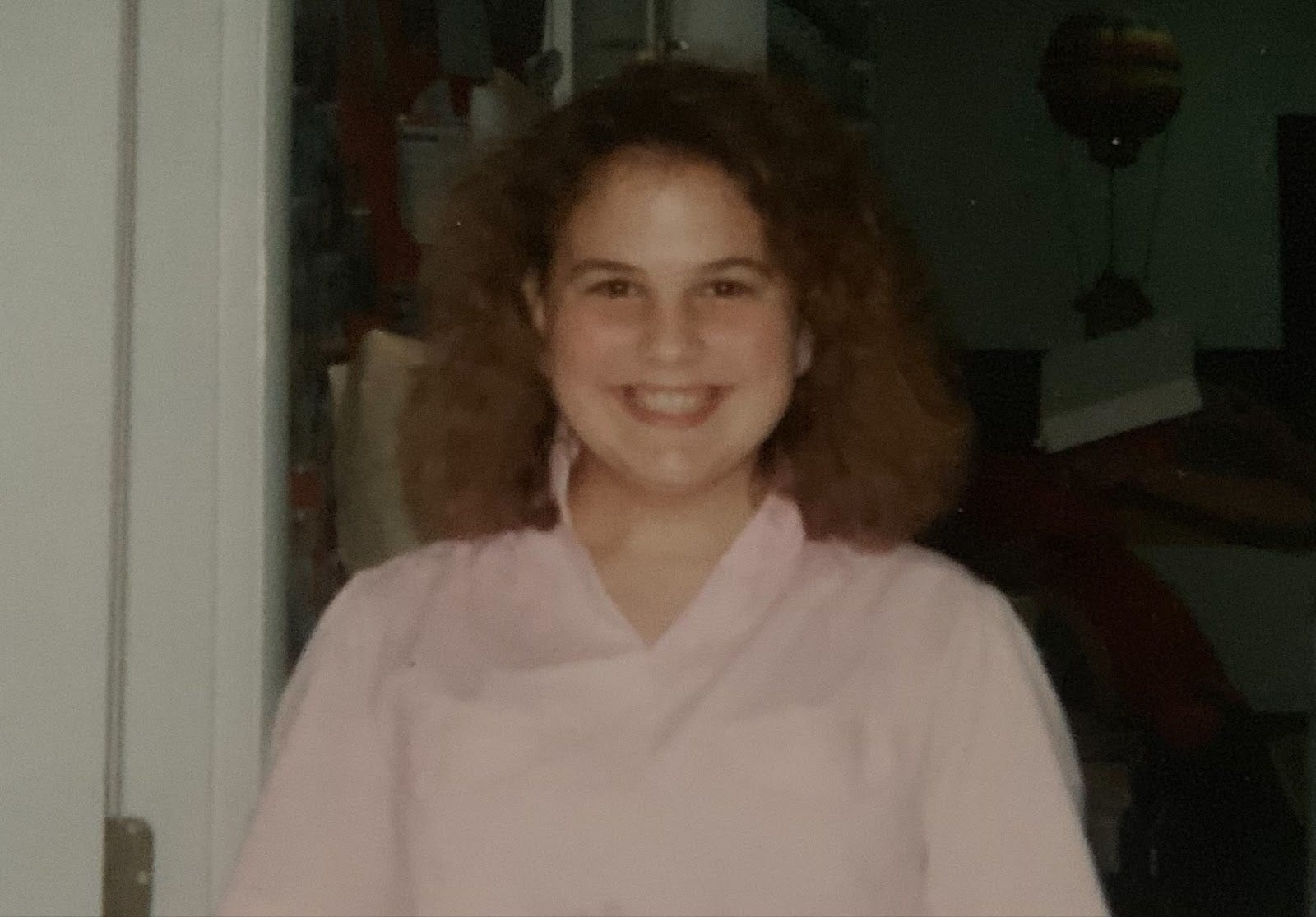
I wasn’t nearly the ogre that I thought I was, I mean, apart from the perm. But after years of being picked last on the team, called fat, never being the object of anyone’s junior high crush, I had concluded that being feminine wasn’t in the cards for me. No one would ever stop at the sight of my beauty, climb up a castle tower to rescue me, draw his sword to defend my honor, bring me flowers, buy me diamonds, or any number of other things I thought happened to girls who were better at being girls than I was.
So I took whatever feminine impulses nature had cruelly planted in me and I tied them up and shoved them down into the cellar of my soul. I only took them out for a walk (or a dance) when I was alone (or so I thought) in the cellar of my house with the Go-Gos.
And that’s how I found myself curled up in a shame-spiral that day. Because boys had seen me trying to be feminine. Twirling prettily in a sparkling outfit on a stage that only I could see. Receiving the admiration of crowds conjured up only in my mind.
And that was the last of her that anyone ever saw again. Feminine Katy.
The cope had already started before that moment, of course - be smart enough or funny enough to distract anyone who might otherwise be tempted to make fun of or reject me for not being good enough in the feminine ways. Now the cope was all there was.
It didn’t help that all of society was out to kill the feminine too. This was the era of Gloria Steinem and Geraldine Ferraro, of Sandra Day O’Connor and Margaret Thatcher. Anything men could do, we could do better. The war on womanhood in my basement was merely the micro to the macro narrative playing out around the world.
Femininity was weak. Femininity was vulnerable. Femininity was dangerous. Femininity went underground - in my life and in the culture, for the next few decades.
Other girls played things differently. I thought I was ugly, so I went the direction of suppressing the feminine so that it wouldn’t get crushed by rejection.
Other girls went the other way - putting a stake in the heart of their own femininity by distorting it into crass materialist promiscuity. Perverting the icon of Woman as the pursued and desired beauty, baring their bodies, taking fleeting comfort in the boners that followed and outwardly scoffing at the idea of lasting love the way a soldier would on R&R in the red light district.
Whether it was the solitude of my camp or the abortion rate of the other camp, all of us rejected and reinvented womanhood in ways that felt safer than actually embracing our femininity and offering it up to the world where it could be rejected or violated.
And so, femininity was dead.
But this week every year, we are reminded that not all dead things stay dead.
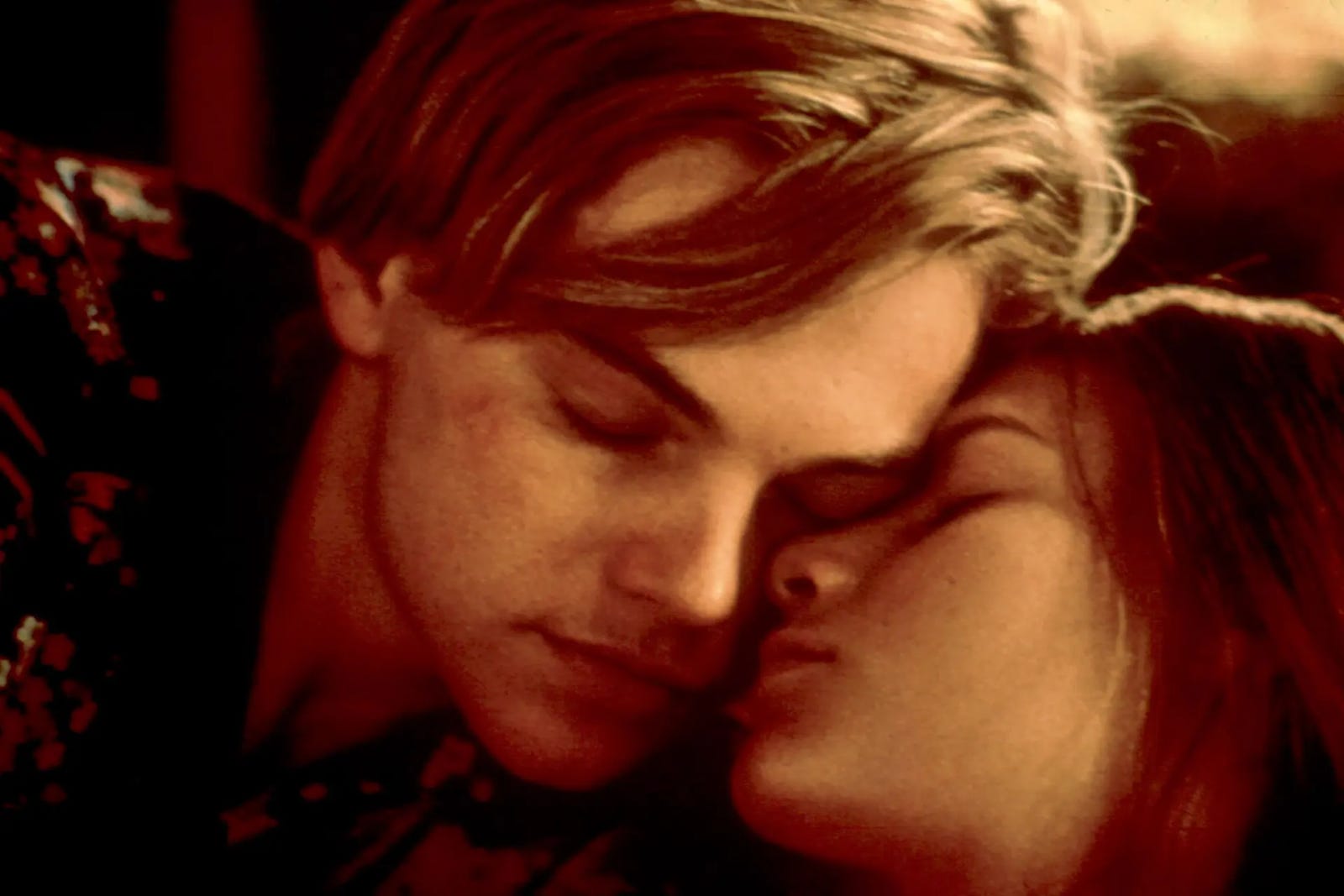
There were signs of life that tried to emerge.
I was drawn to beauty like a moth to a flame. When I first moved to Washington, I used to sit on the steps of the National Cathedral after work each day and play my guitar by a fountain like it was Woodstock. That impulse reached full flower as I was drawn into Catholicism by its beauty - the stained glass, the candles, incense, the Latin, the martyrs. I was so entranced by the beauty of a group of nuns in their bright blue veils, I became one of them for a few years, thinking that if I put beauty on the outside of me, the inside might improve as well. It didn’t take.
When I returned to my life in politics, it felt so familiar and comfortable. Walking around again in the Hart Senate Office Building felt like returning to the high school in your home town.
By that time, I was a “leader.” I was Management in any office I worked in. I made a lot of decisions, hired, fired, had an impact, made a difference. I declared the wars. I negotiated the peace. My career was a battlefield that felt familiar but always unsafe. I was still the little girl who wanted someone to protect her. Every woman is.
A lot of talk these days centers around women like this. We get scolded for letting our ovaries wither while we recklessly and selfishly push our careers to center stage.
But that’s not at all what we’re actually doing - not most of us.
We’re not prioritizing career over marriage and motherhood. We didn’t choose to be single. We’re just trying to pay our bills while we desperately - DESPERATELY - search for and hope for Prince Charming to come save us. Not all of us admit this openly. But we all admit it in our hearts. If we had found him at 19, 25 or 35, most of us would have dropped our careers in a flash and followed him to the ends of the earth.
Being raised with feminism in our blood and on our lips, sometimes by our parents, but always by the culture, we had fortunate opportunities to become good at things that are useful in the economy. That freedom made it easier to pay those bills when Prince Charming was dallying. So we advanced. We got raises, titles, PhDs. We weren’t doing it because we preferred this path. We were doing it because we were good at what we did and it paid the bills and you’re not going to turn down promotions and opportunities when no one else is offering to pay your rent.
Some fields are easier to advance in without becoming a warrior. Most aren’t.
As women advance: more responsibility, more demanding problems, bigger egos everywhere, more on the line, vicious competition, higher stakes.
It all translates to warfare.
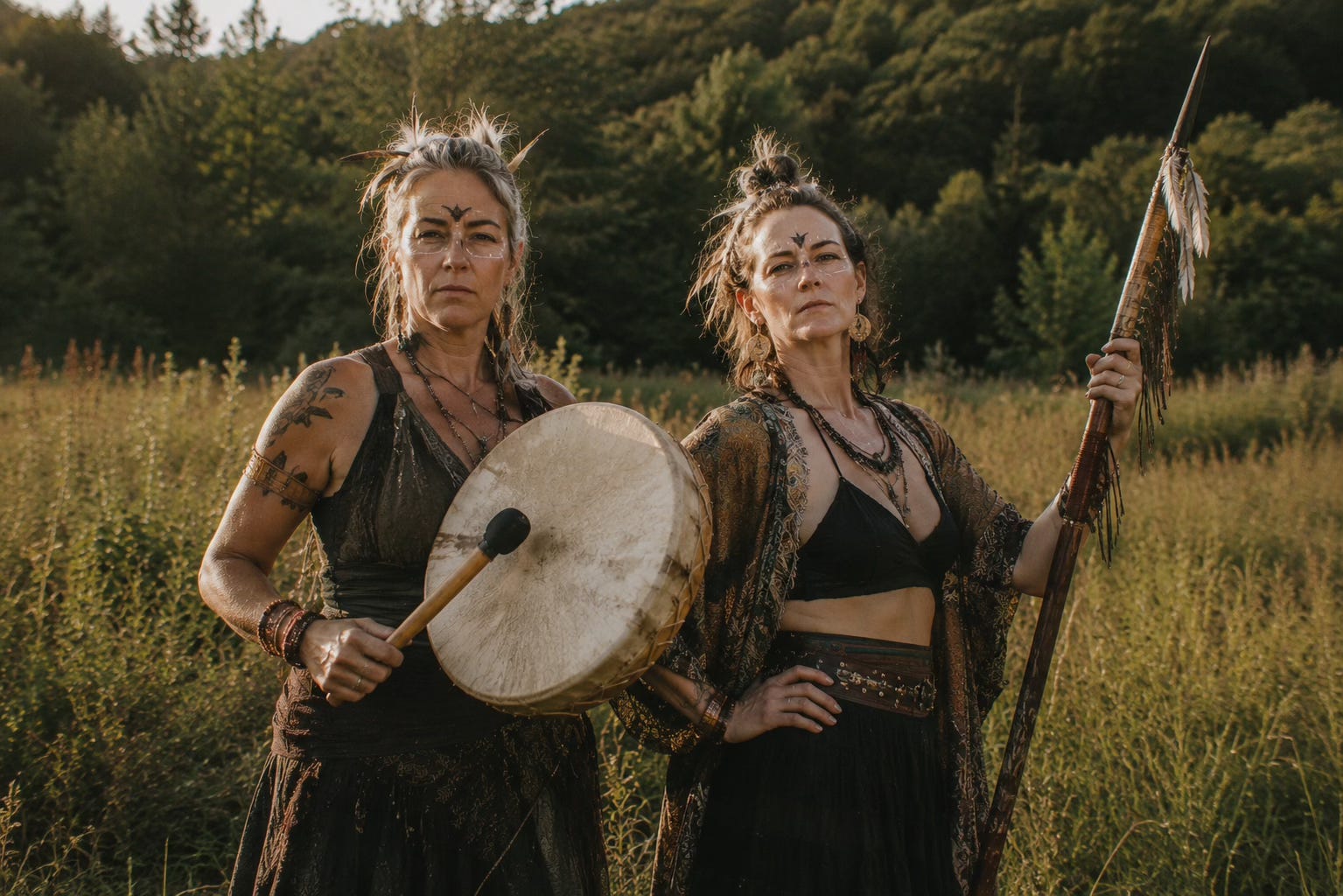
Every workday - at a certain stage in a moderately successful career, usually between age 30 and 50 - is a battleground. Whether it’s sales or science, the stock market or social media - all jobs have an adversarial or competitive edge. That’s the nature of the modern workplace.
To continue providing for ourselves, women have to succeed in this battlefield. As we succeed, we take on the nature and culture of battle: jaded, profane, calculating, cynical, shrewd, results-oriented, single-minded, competitive. You know, like men.
The longer this goes on, the more we repel actual men. It doesn’t help that half of us are on birth control just to control the agonizing hormonal chaos twisting our uterus every month and the other half are on birth control to make sure that the soul-crushing hookups each weekend don’t destroy anyone else’s life but our own.
These are lives unfit for human women.
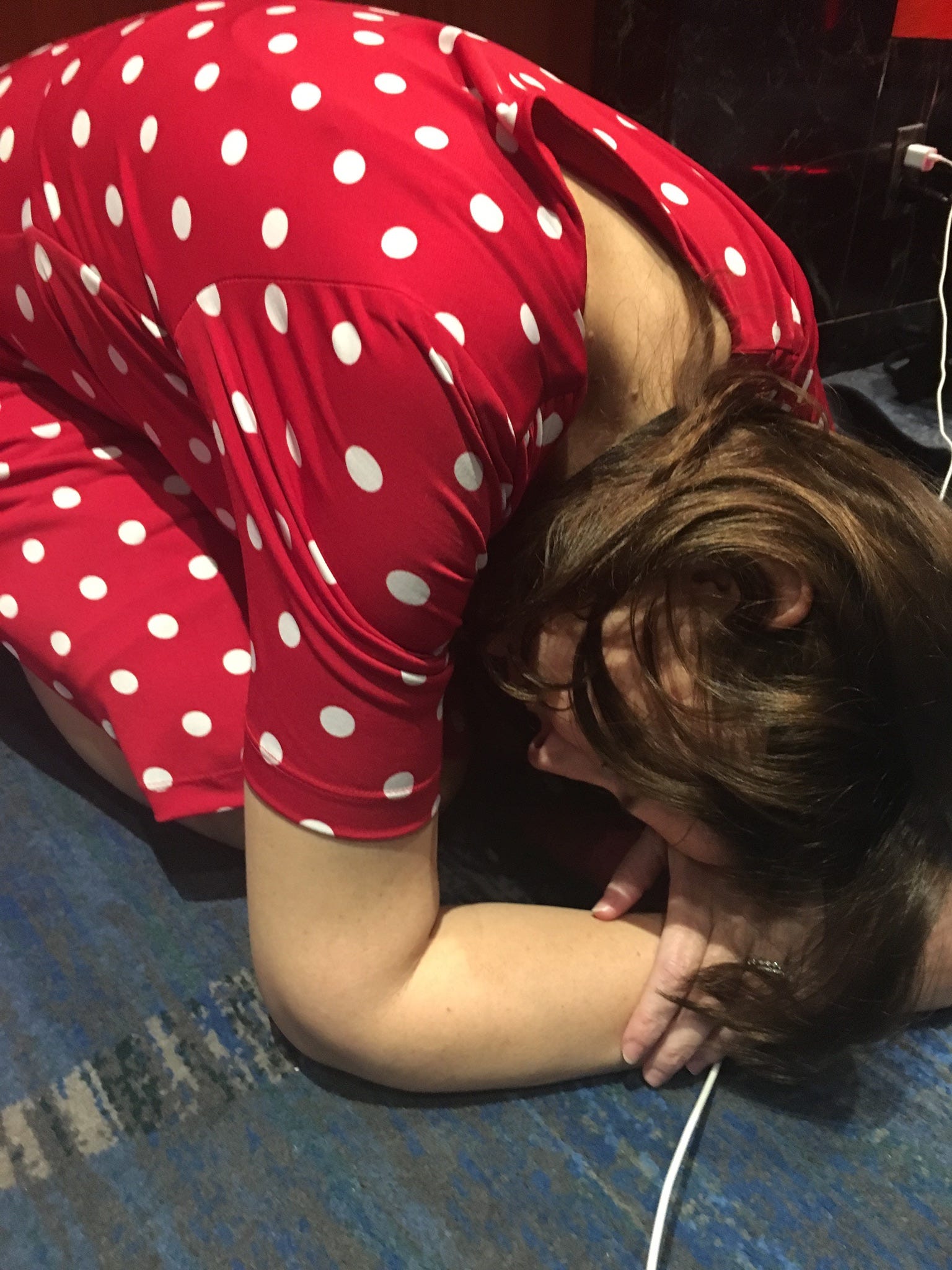
Women are not made for battle. Even if we’re good at it.
I am very good at battle, as my resume attests. I’ve lived on the cortisol-spiked fumes of warfare for most of my adult life. Most successful women in traditional careers have. By “traditional career,” I mean leaving home each day, toiling under fluorescent lights in a sterile, beige, impersonal, climate-controlled box of sameness, competing for accolades, accomplishments, sales, awards, advancement, money in a professional culture built for and by men, generations ago. Even in workplaces where women outnumber men, they still operate under the rules and rituals built when men were the primary ones living and working this way. This is not how human females flourish.
The rush we feel when we win at work? Cortisol.
The panic we feel when we lose at work? Cortisol.
The racing heart at the sound of the alarm in the morning? Cortisol.
The to do list scrolling as we try to get to sleep? Cortisol.
Elevated cortisol was my boyfriend.
Many of us succeed, appearing to thrive, in these workplaces. We sit in traffic before the sun rises and after the sun sets, and we tell ourselves stories, real or imagined, about necessity, scarcity, pride, passion, contribution, intellectual satisfaction.
The story behind those stories? Security. Solidarity. Purpose.
We don’t have security the way biology intends - through a community of men who defend us, provide for us, look at us with wonder, and stabilize our crash landings.
We don’t have solidarity the way biology intends - through a community of other women who co-create beauty with us, who validate our feelings, who rub our backs and understand us.
We don’t have purpose the way biology intends - through a community of children who take us outside of ourselves, make us laugh until we cry, who give us a reason to live and a reason to die.
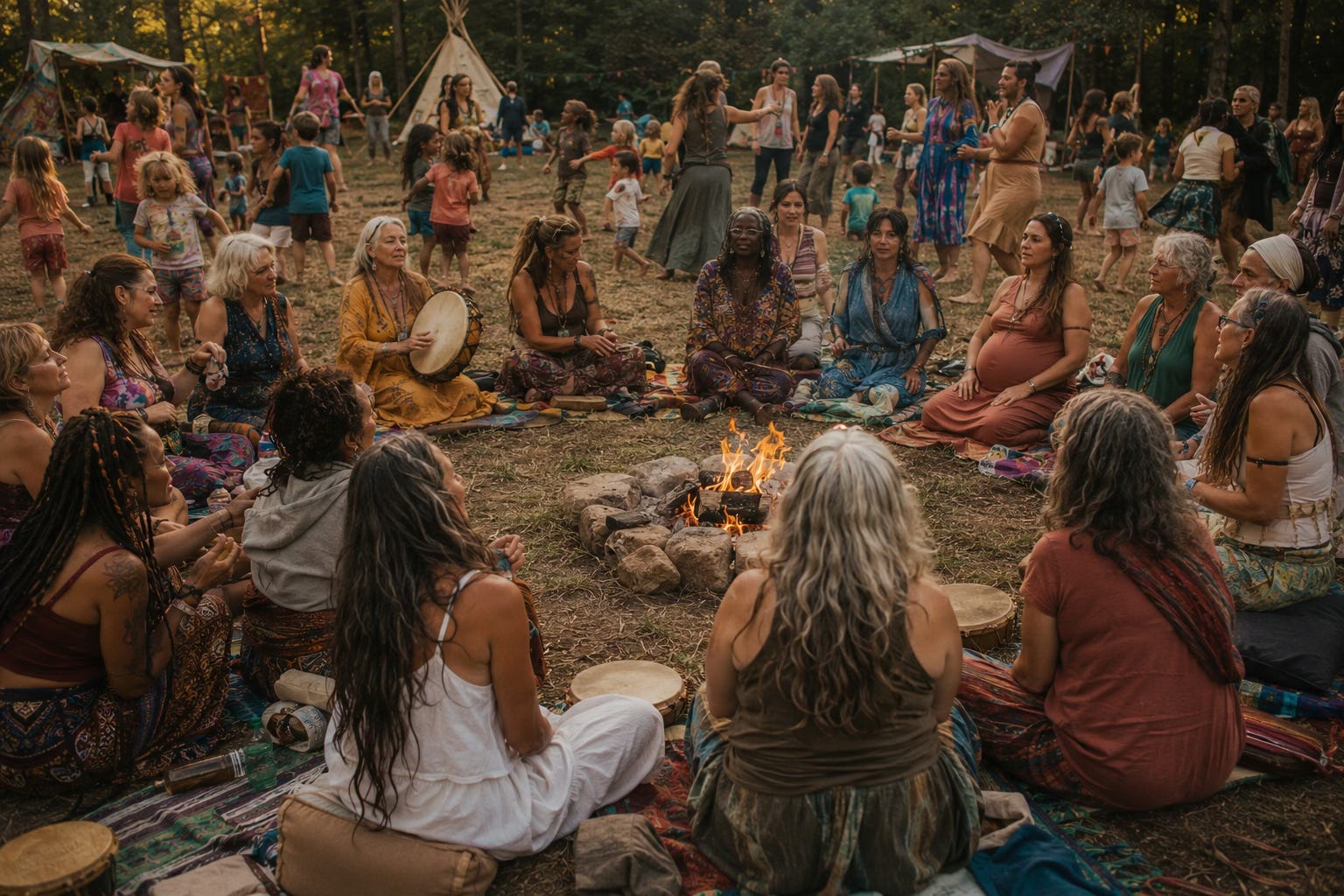
That’s the security, solidarity and purpose of femininity - only through community with men, other women, and children. Isolated femininity trying to operate in the world built for men - even if it’s populated by half or more women now - is not safe. It’s not welcome, it’s not productive or polished or predictable or useful.
And that threat, that not-so-low-grade fight-or-flight - that’s why our bodies are falling apart, from sleep deprivation, insulin resistance and inflammation (guess what triggers glucose release into the bloodstream? Cortisol.) That’s why a quarter of us are on SSRIs. Why almost a million of us get abortions every year - a fifth of our babies.
It’s not safe to be feminine in a world without men. And it’s not safe to be feminine in a world built for men. So we’re not.
By the time we partner up with men, the fight-or-flight is just our personality, and he can’t make us safe or happy. That’s why divorce rates are so high - and why most divorces are initiated by women.
RIP femininity.
Even when I got those things, albeit late in life - a man to defend me and crash my waves on, children to get out of bed for - I was a professional man for most of the day. So the femininity still didn’t really take.
I didn’t realize any of this - cortisol was my constant friend, drug, fuel, bestie - even after I had escaped the battleground of my political career, and was building my business from home in my yoga pants where I should have been safe and self-assured.
And then my business coach, the ethereal Marissa Levin, grabbed my attention and called me out. She said that every single word that came out of my mouth was based in fear.
She demanded that I use different words if I wanted to have different thoughts and create different outcomes. That was the beginning of the end of the walking dead.
Which brings us back to Easter.
I started realizing that even when I should have been safe - no more White House battles, no more lonely dinners for one, no more single filer tax returns - I was still coasting on cortisol fumes.
Cortisol withdrawal was a long and fraught process. It required a hard look at how I sought safety and why. The root cause? What I expected was a festering corpse of femininity inside my soul, with a masculine boss-bitch costume trying to cover up the stench.
That’s when my logos had to make a decision. Was I going to roll away the stone and look at the fetid, putrid fruit of a half-century of rejection and fear and self-hatred?
“But Lord, already there is a stench because he’s been dead for four days,” says the ever helpful Martha to Jesus in the Gospel of St. John. Or four decades, in the case of my feminine soul.
St. John. You know - the same guy who starts his story with this:
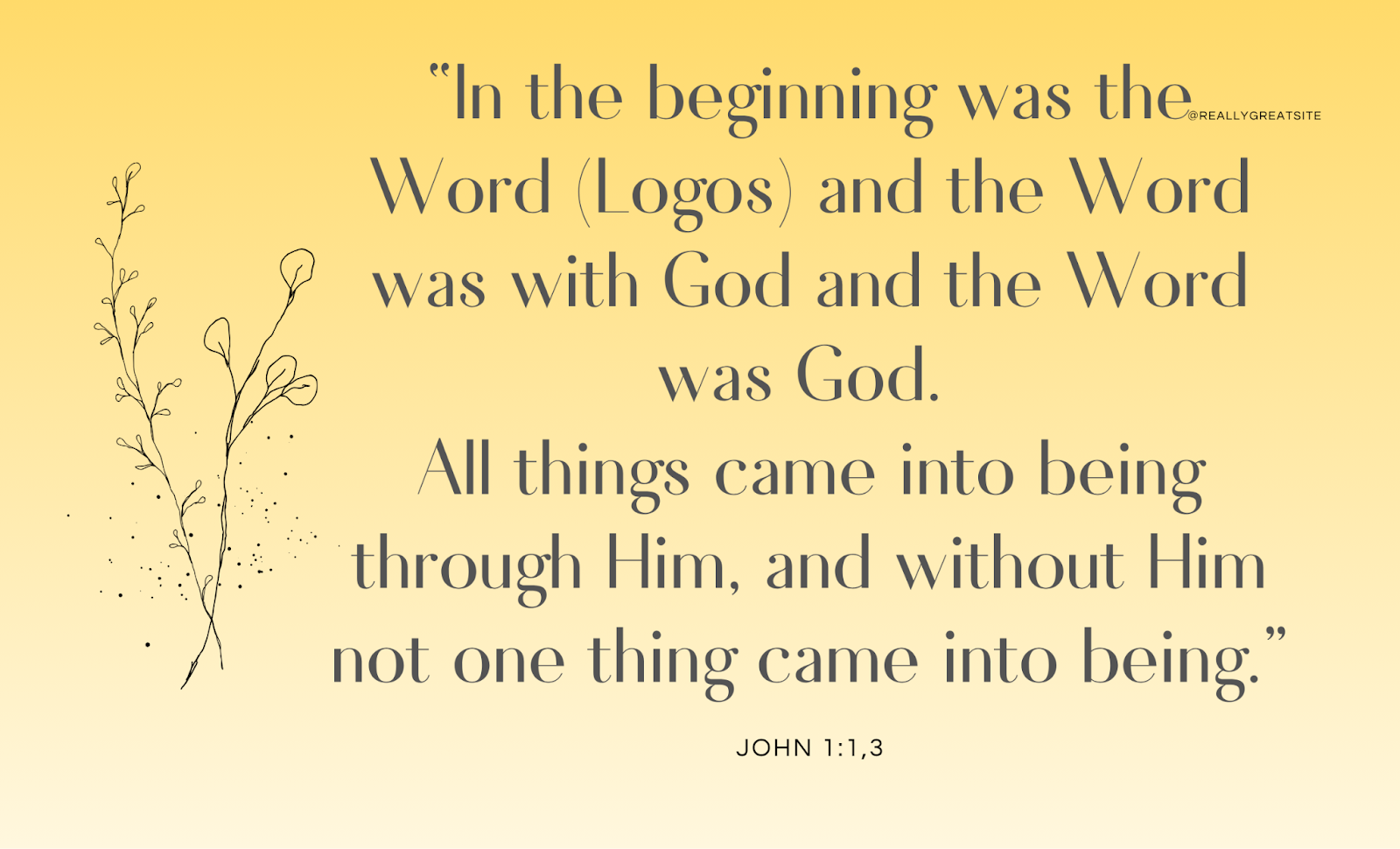
This is the Logos, literally the mind or intellect - in whose image we - man, woman, masculine, feminine - are so fearfully and wonderfully made. If that Logos can raise the dead and it made our own logos, what might our own logos be able to resurrect?
So I started to push that stone one small bit at a time. I used a variety of methods - online programs, coaches, books, retreats, nature. I cleaned up my body - diet (push), movement (push), toxins (push), sleep (push), sunlight (push).
That journey cleared some cobwebs in my biology enough that my logos could start to speak life to my psychology. The need for control (push). The fear of intimacy (push). Viewing money as a scarcity (push). Approval-seeking (push). Victim-mindset (push). Rejection of intuition and feminine knowing. (push)
Eventually, the stone was rolled away enough for me to notice that there was nothing rotting in there at all. Just the folded up man-suit I had worn in a previous life as a security blanket.
My logos had done the impossible.
There’s still a long way to go before the stone is completely rolled away. I swear like a sailor. I argue with my feelings. I’m not as quick with kindness for myself or others. Menopausal weight gain feels like punishment and less like feminine rhythm. I dread birthdays because, “old,” rather than “wise.” I occasionally fall into viewing events as happening to me instead of for me.
After all, I’m just a lowercase logos. Some things require an assist from the Uppercase Version.
For my brothers who love the feminine and would like to see more of her, then be a rock. Affirm and draw out her femininity by making her feel cherished and secure. Give her time and space to nurture beauty, not worry about money, look at the sun, play with babies. Tell her she’s gorgeous (like once an hour). Look at her in wonder like you mean it. Bring her flowers at least once a week. If it won’t bankrupt you, buy her diamonds. Don’t whine about manicures, throw pillows, bird-feeders and essential oils. Remember, she spent the past few decades internalizing that beauty and mysticism and bonding with nature were frivolous at best, and dangerous at worst. Don’t pile on.
And for my sisters, if Feminine-You got stabbed in the heart and shoved in the trunk of the car of life, let this Resurrection season give you a reason to hope. She’s only mostly dead.
I bet if you turn on the Go-Gos and grab a hairbrush, you’ll see some signs of life.
Katy, this piece spoke to my soul. Feminism crushed me in a different way. I spent my 20s and 30s assuming I was a loser because I wasn't sleeping around AND hadn't hit proper boss b*tch status. The common thread seems to be that we were told that no matter who we are or what we're doing, we shouldn't feel 'good enough'. But once we accept what IS, and the love of Someone bigger than us, we realize we are.
I felt so sad for little Katy at the opening, but so nice when she grew big and strong on her own terms (which she had to fight to discover) and can now give everyone the finger (if she wants, of course) 😊