



The largest taxpayer subsidy for abortion in America isn’t for Planned Parenthood.
It’s your paycheck.
Employer-sponsored insurance is entirely tax-free under federal and state law. Employers can – and often do – cover abortion. Some states even mandate it.
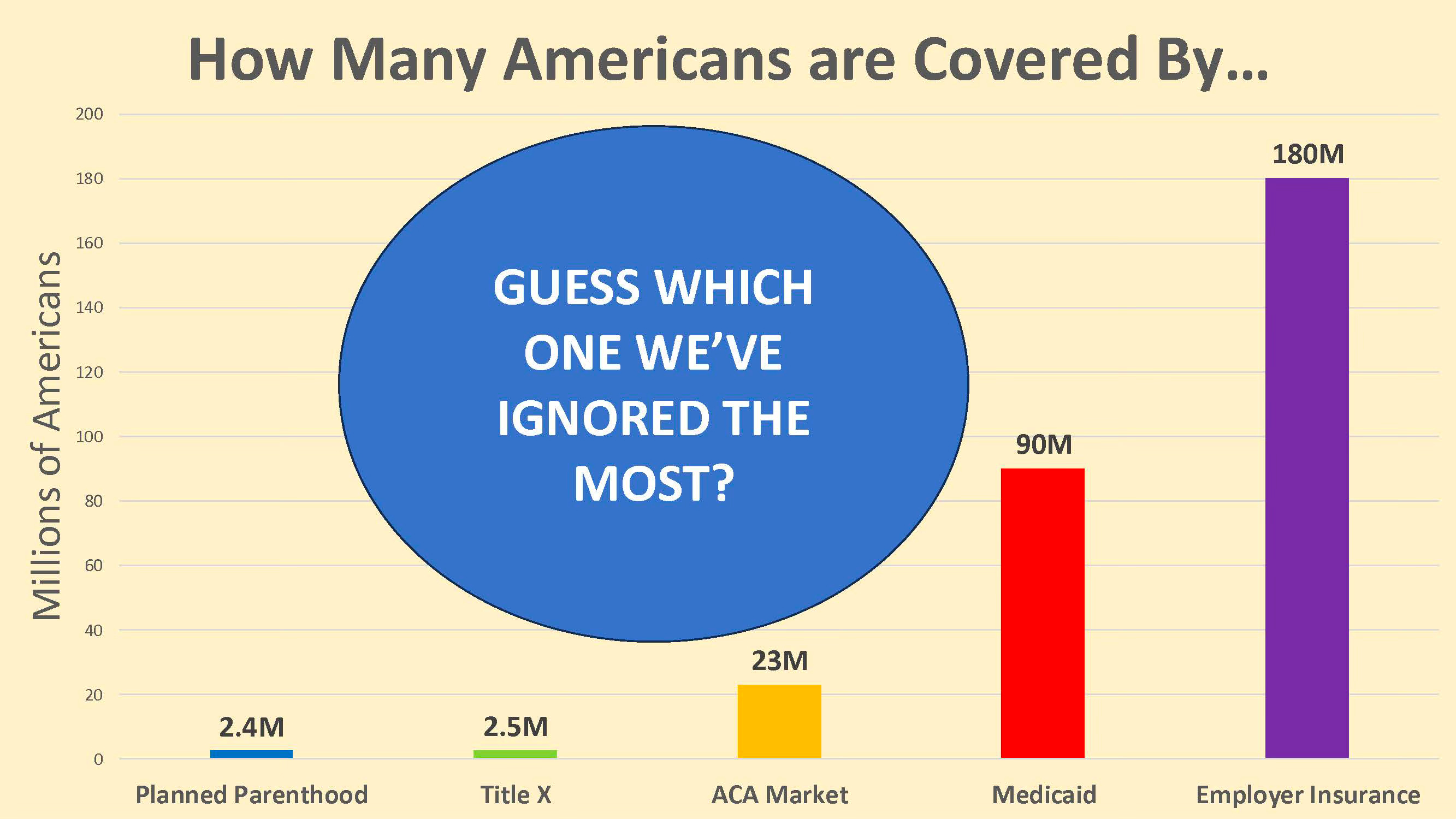
In fact, more than half the country – 180 million Americans – get their health coverage on the job. At least a third of larger employers report that their plans cover abortion. Another forty percent don’t even know, because they can’t interpret the fine print in their policy documents. If even half of those “unknown” plans do cover abortion, that’s 100 million Americans with tax-free abortion coverage today.
This makes employer-sponsored health insurance the largest government subsidy for abortion in the United States.
Awkward Silence.
Larger than Title X. Larger than Medicaid. Larger than Planned Parenthood. And yet those programs consume nearly all pro-life attention at the federal level.
Meanwhile, since Roe v. Wade discovered a constitutional right to abortion in 1973, Congress has repeatedly expanded tax-advantaged insurance or access to it: ERISA in 1974, FSAs in 1978, COBRA in 1985, HIPAA in 1996, and finally HSAs in 2003. Every expansion increased tax-preferred abortion, with little evidence of serious pro-life opposition at the time – certainly none loud enough to cause pro-life legislators to vote no.
This is a hard and heartbreaking truth.
Last week, in The Health Reform Showdown: What’s Actually Happening, I explained the various health reform efforts currently playing out in Washington – the shutdown deadlines, the Moreno deal, the reconciliation opportunity.
(Go read it if you haven’t. I’ll wait here.)
But there’s a reason I wrote that piece first: to show you why none of it will move until Republicans have a family meeting.
Democrats, please step out of the room for a moment.
How Abortion Became A Tax Deduction

Most Americans think abortion policy is set by courts and legislatures. But one of the most consequential decisions was made by IRS bureaucrats in 1973, right after Roe. That's when the IRS decided, by fiat (Revenue Ruling 73-201), that abortion was tax-deductible “medical care.” Medical care, under Section 213(d) of the code is deductible.
That means that:
Individual out-of-pocket spending on medical care, including abortion, is deductible.
Individual health insurance (including abortion coverage) is deductible.
Employer-sponsored insurance (including abortion coverage) is deductible.
Once abortion entered the tax code, its tentacles slithered everywhere.
The reason why we’re thinking about this today, more than half a century later, is because Republicans have always wanted to expand Health Savings Accounts (HSAs) as a way to bring free market principles to health care – let people pay for most medical care and insurance out of HSAs, making their own decisions rather than a government or employer calling the shots.
The laws of economics make it clear that the consumers that pay also choose. Those who choose will be competed for, which will over time increase quality and decrease cost. Our current system has obscured this simple economic proposition with the imposition of a parade of market-distorting middlemen. HSAs are a powerful antidote to this sorry status quo.
There Has to Be a Catch
But HSAs are also tied to this IRS abortion ruling.
HSAs can only be used to pay for “qualified medical expenses” under section 223 of the code. But qualified medical expenses include that same “medical care” under 213(d) — aka abortion.
The law does not call abortion medical care. Congress never went that far. In 1973, they wouldn’t have dared.
Instead, IRS bean-counters forced every American taxpayer to give tax breaks for abortion in every single possible context.
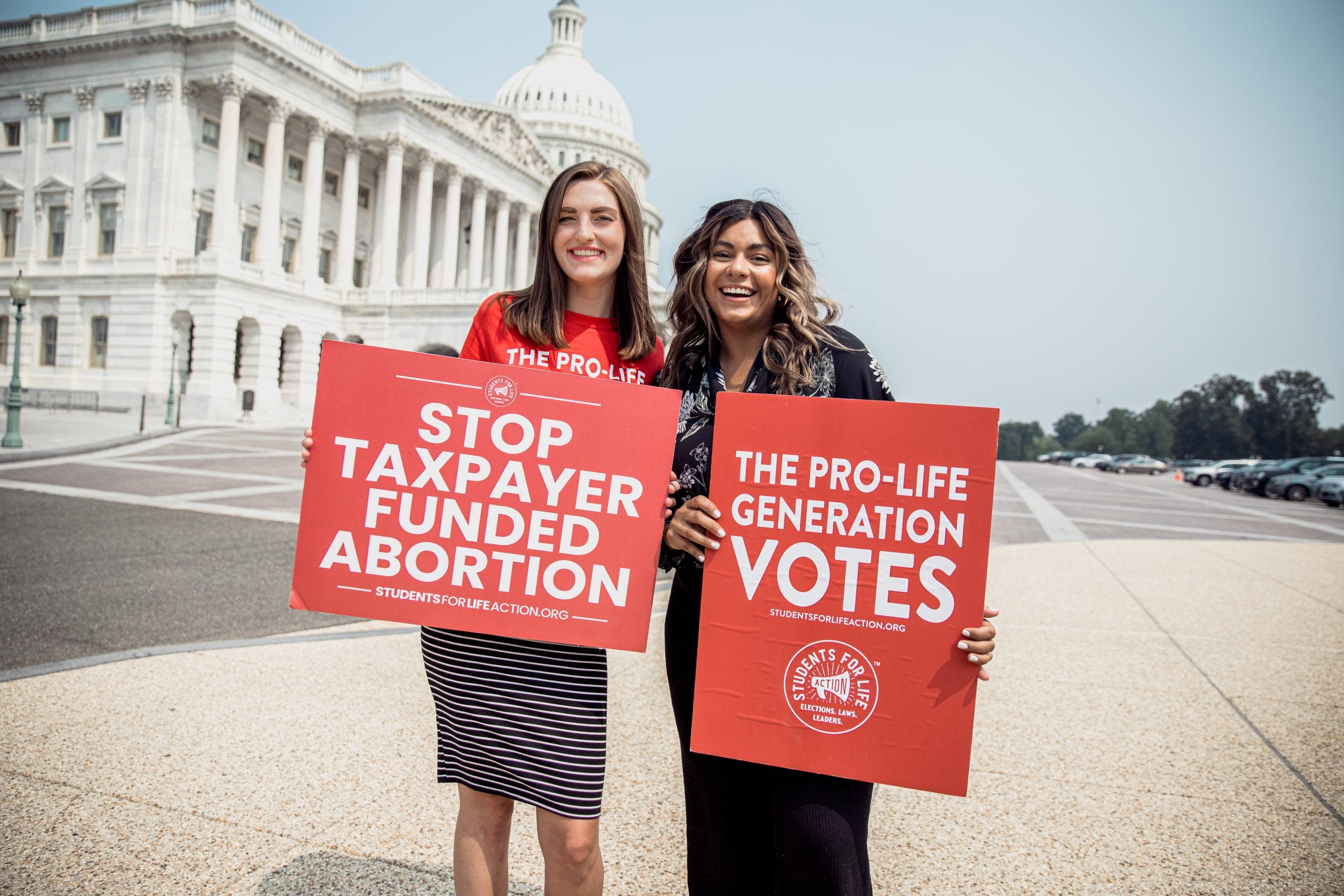
Unelected. Unaccountable. Effective.
That’s why pro-life groups now oppose HSA expansion. As long as unelected, unaccountable IRS bureaucrats say abortion counts as medical care, expanding HSAs = expanding tax-free abortions.
Even though the pro-life movement didn’t raise the alarm in 2003 when HSAs were created.
Or when ERISA dramatically expanded employer-sponsored insurance in 1974.
Or for every coverage-expanding law in between.
And yet, for the past twenty years, this problem surfaces every time Republicans attempt serious health reform.
Health policy – especially in the commercial markets – is tax policy. Whenever Congress wants to do anything that affects insurance, they have to amend the tax code, because payments toward premiums are excluded from income. Employer contributions are tax-free. Credits and deductions move billions. Every reform reshuffles tax advantages.
Since the ACA was enacted (a large part of which was in the tax code), Republicans have been trying to figure out a better way. But every way they proposed involved doing something with subsidies or HSAs or both. And so, pro-life concerns have consistently stopped Republican health reforms at this choke point.
The clean solution would be simple: enact a law that clarifies that abortion isn’t medical care for tax purposes (or any other purpose, obviously). That would collapse this entire conflict. And of course, it’s been tried.
But it’s never had both a House majority and sixty Senate votes. Without the votes to enact the fix, health reforms that do have majority support die because pro-life legislators walk away.
Compliance Theater
Democrats mollified the Catholic bishops back in 2009-10 by adding a provision sold as keeping subsidies from funding plans that covered abortion. But the provision was weak, and Democrat presidents didn’t enforce it.
In the Trump White House, we tried to strengthen enforcement by requiring insurers to bill separately for an unsubsidized abortion “rider” attached to subsidized plans. Life groups appreciated the effort but considered this small abortion “surcharge” to be insufficient protection.
The surcharge was trivial. Expanding coverage to include abortion doesn’t cost more, it costs insurers less. Killing babies is cheaper than delivering them alive. So, carriers charged a few bucks to check the compliance box – hardly a speed bump.
From the pro-life perspective, any proposal that moves ACA subsidies – already usable for plans that cover abortion – into tax-advantaged HSAs that could be used to purchase abortion coverage or abortions outright looks like an expansion of tax-free abortion.
That concern is understandable. But it is also incomplete.
They’re the same cause.
Most people work these issues from one lane – health staffers wish pro-lifers would stand down, and pro-lifers want health policy to bow. I’ve had to straddle both lanes.
I’m better known for advising President Trump on health care, but the other half of my portfolio was pro-life policy and related issues - so much so I made all the right enemies lists. I care deeply and desperately about both causes, because they’re actually the same cause.
Jesus lauded the Good Samaritan’s care for the wounded with just as much fervor as He wished a millstone onto the necks of those who harmed little children.
The pro-life movement has fought for decades in a morally clear and all-encompassing struggle – overturning Roe, waging state-by-state referendum knife fights, building pregnancy resource centers, adopting unwanted or foster children, and standing with women and children when it mattered most.
Fixing a predatory health care system that is crushing the poor and stealing the American Dream from the working class is different - not because the moral high ground is less clear, but because the work is brutally technical and complex. Most people can’t even understand the arcane details of this work, much less appreciate it.
Redeeming health care means clawing incremental gains out of the contracts empowering corporate behemoths, navigating layers of middlemen, protecting patients from bureaucratic abuse without empowering quackery, and forcing a fifth of the American economy to stop preying on the people it’s supposed to heal and the lives it’s supposed to save.

Health care reformers rarely get the emotional satisfaction from such clear-cut victories comparable to how pro-lifers feel when a Planned Parenthood “clinic” closes its doors.
But redeeming the health care system is holy work. It is life-saving, devastating, demoralizing and exhausting work.
It is pro-life work.
It’s time to stop sending it to the back of the legislative bus.
To be clear, pro-lifers didn’t sideline health reform because it wasn’t important or worthy. We sidelined it because the tax code made it messy, imperfect, and politically uncomfortable.
Welcome to health care – a steaming pile of trade-offs that makes everyone want to walk away.
This isn’t the fault of pro-lifers, of course.
Speaking of Steaming Piles of…
It’s the fault of predatory, so-called “charity” hospitals, many of whom perform abortions and are almost never subjected to pro-life protest.
It’s the fault of almost demonic insurance companies who deny care as a business model, hide secret revenue, steal from their employer clients, crush independent physician practices until they sell to the insurers, and then raise prices with impunity.
It’s the fault of shadowy PBMs whose names most normal people don’t even recognize, but who lobby to exempt themselves from anti-corruption laws, charge more for a drug than the uninsured cash price, and sue to avoid price transparency.
To be clear, pro-lifers didn’t sideline health reform because it wasn’t important or worthy. We sidelined it because the tax code made it messy, imperfect, and politically uncomfortable. Welcome to health care – a steaming pile of trade-offs that makes everyone want to walk away.
It’s the fault of giant insurance brokerages pretending to be the consumer’s “agent” while actually taking bribes and kickbacks from insurance companies and PBMs to steer employers and families into bad coverage.
It’s the fault of drug and device manufacturers who hide evidence of harm, evade product liability, stretch patent monopolies, advertise products on the nightly news that are so unaffordable that families are forced to choose between insulin and food.
These “health care” entities present themselves to tax authorities, regulators and the public as white-coated angels devoted to access, quality and innovation.
In reality, they consume a fifth of the American economy, almost half of federal spending, while laughing all the way to the bank. Meanwhile, Americans are still the sickest, fattest, saddest, most depressed, anxious, and infertile population in human history.
Principalities and Powers
Nothing short of radical, sweeping disruption by Congress of these entrenched interests - at every level of law, regulation and business - will be able to tilt the scales back in the direction of the people desperate for healing.
My Democrat colleagues largely agree with this diagnosis. Their solution is for the government to take over the whole mess.
Among the many fears I have about such an eventuality – one we are barreling toward if nothing changes – is that government-funded abortion will become completely normalized.
We’ve seen this movie in Canada, the Netherlands and elsewhere.
When the state pays for death, you get more of it.
But acknowledging that fear does not justify freezing reform that saves even more lives. Nor does fear justify ignoring the far larger, already-existing abortion subsidies embedded in our current system.
That is Why I’m Calling This Family Meeting

I do not believe it is right to hold transformative health reform hostage, simply because the IRS said abortion was health care fifty years ago. Or because not enough members of Congress disagree with them now to change it.
If we were talking about small-ball reform, the trade-offs might look different. But when we have the opportunity to enact reform at a scale that could actually dethrone the kleptocracy that delivers debt bondage and piss-poor health outcomes to American families, I say it’s worth it.
If we have a chance for School Choice for Health Care, direct deals between buyers and sellers of health care without a carrier middleman, price transparency with teeth – we have to take that chance.
Policy makers will answer to God for how and whether they confronted the industry that is raping and pillaging the American countryside.
The real fight isn’t stopping a marginal expansion of HSA-funded abortion when 100 million Americans already have tax-free abortion coverage through their employers.
The real fight is removing abortion from the definition of medical care in the tax code entirely. That would be the most consequential pro-life policy change of our lifetime – far more consequential than blocking any single health reform bill.
Fixing a predatory health care system that is crushing the poor and stealing the American Dream for the working class is different — not because the moral high ground is less clear, but because the work is brutally technical and complex.
We once believed that overturning Roe would be the victory for the ages. I wept on my knees the day it happened. That fight was righteous, necessary and primary.
But there are more abortions today than ever before.
According to the Guttmacher Institute (Planned Parenthood’s research arm), abortion rates have increased since Roe was overturned, driven largely by the explosion of medication abortion – now accounting for nearly two-thirds of all U.S. abortions.
With the same vigor that we fight to defund Planned Parenthood, we also must channel our energy – our persuasion, our door-knocking, our apologetics, our prove-me-wrong tables, our marches and more – toward the next great pro-life fight: starving the abortion industry of its insurance-company blood money.
Not merely on the exchange plans covering 23 million people, but across the commercial market that covers 180 million Americans.
We have a lot of work to do to persuade the public, and from there, the Congress. I will be in this fight, right next to my pro-life friends and mentors. I will do everything I can.
But Doing Nothing Does Things

And as we wage that holy war, we must walk and chew gum - reforming a medical system decaying from moral rot at the core of its corrupt business model. There are real people who are harmed when we decide to leave the field of battle because we can’t stop every bullet.
Like many people, I morally or scientifically object to any number of things that are called “medical care” under current law or even “best practice.” That doesn’t mean I think health care itself should be frozen in place until every dispute is resolved. Refusing to act because we don’t have enough votes to make it perfect doesn’t preserve principle; it simply guarantees that the worst features of the status quo continue to fester.
We already follow this logic in other contexts. We don’t let bridges collapse because some people drive on them recklessly. We don’t block repairs to libraries because we object to certain books they carry. We don’t stop arresting criminals because we can’t catch them all. We reform and repair anyway – because the alternative isn’t more morality, it’s less.
From a prudential standpoint, blocking reform because (albeit grave) moral disputes remain unresolved doesn’t hold the line – it entrenches defeat. It locks in the very definitions, incentives, and access points we object to, while taking off the table the only changes that are actually achievable. The system doesn’t pause while we withhold consent. It just keeps hurting people, predictably and at scale.
This is what makes our current pro-life posture so self-defeating.
We are not being asked to ratify abortions, tax-free or otherwise. We are being asked whether, given the world as it is, we will refuse to make it less cruel because we cannot yet make it just.
I know it sounded off-putting to pro-life ears, but this is why President Trump has intuited that health reform might require us to be “flexible on Hyde,” as he put it.
But only as tactical flexibility, not as surrender.
Some might argue that HSA expansion or, as I call it, “school choice for health care,” is morally trivial compared to the pro-life cause. But is it?
Transferring the power of choice to individual families rather than giant health care conglomerates would fuel competition and innovation that will incentivize higher quality and more affordable care.
At health care’s trillion-dollar scale, those incentives matter: medical errors are the third or fourth leading cause of death. Medical issues are the number one cause of bankruptcy.
We are not being asked to ratify abortions, tax-free or otherwise. We are being asked whether, given the world as it is, we will refuse to make it less cruel because we cannot yet make it just.
The current strategy – blocking health reforms while simultaneously ignoring the massive employer-insurance subsidy for abortion – isn’t protecting the unborn. It’s protecting a status quo that already funds far more abortions than any HSA expansion ever would.
Once real reform is underway, we can and must also refocus pro-life advocacy on this most critical fight – the fight that’s been neglected by our movement for half a century: removing abortion from the definition of medical care in the tax code.
One Last Thing (Before the Dems Come Back In)

The president could do this by executive action - today.
Specifically, by directing the Secretary of the Treasury to revoke Revenue Ruling 73-201. This would take tax-free abortion out of our health plans, HSAs and ACA subsidies.
It might not be permanent without legislation. But it would immediately disrupt the insurance-fueled abortion gravy-train. It’s not a complete solution, but it’s a start – and it’s available right now in the president’s power.
Whaddya say we ask him to use it?
Read Part 1: The Health Reform Showdown for the full context on what’s happening in Washington on health care right now.
Speaking of HSAs, I just checked mine last night and it's up to $36K!
I'm pro-choice, but I appreciate the absence of hypocrisy in your ideas.