


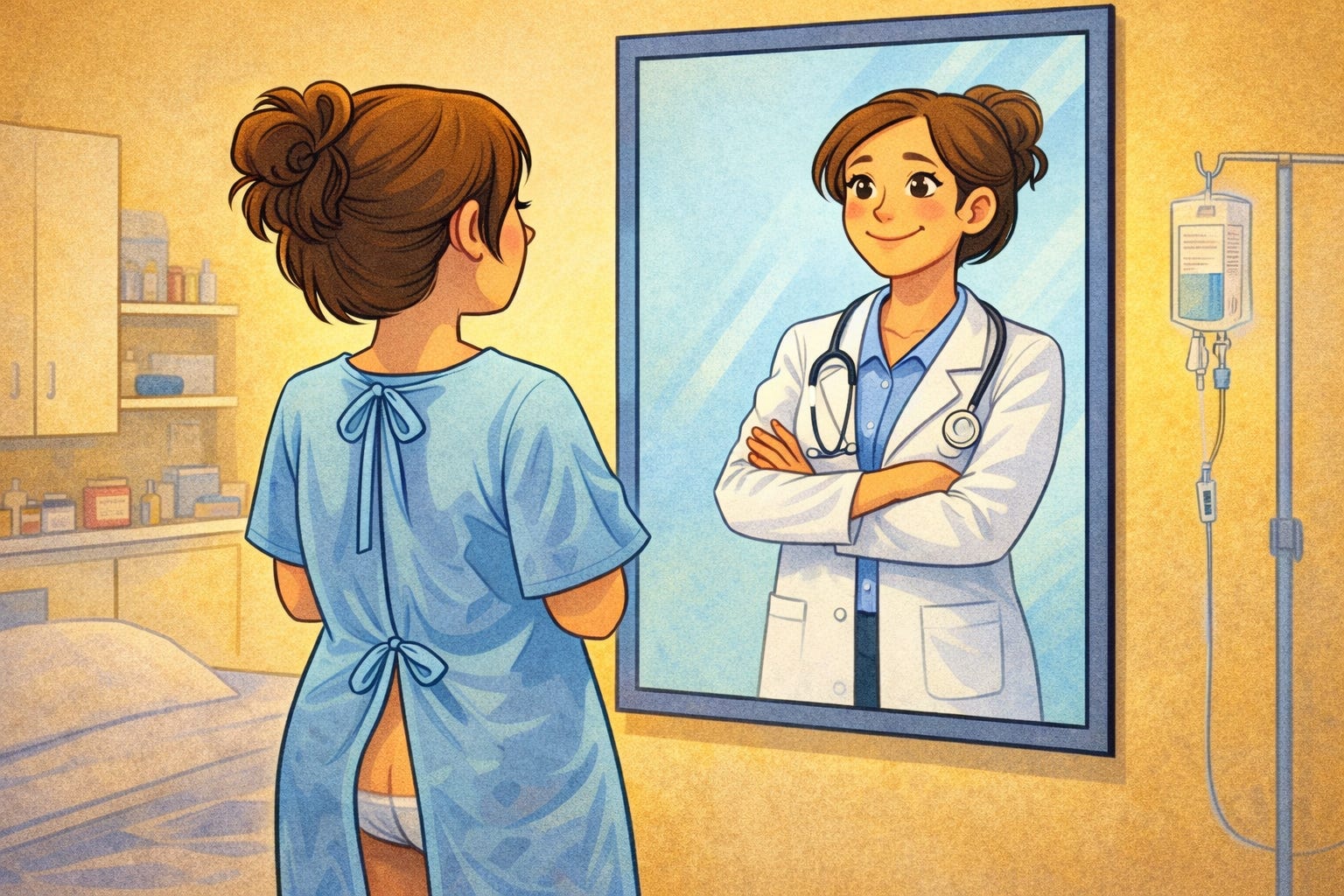
You are and always have been your primary care provider.
It doesn’t matter whose name is on the intake forms, who you call when you’re sick, or how elite your doctor is. Nobody cares about your health more than you (okay, maybe your wife does — I see you, bro).
You’ve lived in your body every minute of your life. You notice subtle changes. You run pattern recognition. You test hypotheses. You already act as the world’s leading expert on your own body.
As we discussed in last week’s article, the placebo effect is one of the most powerful drugs on earth. It works through a three-part cocktail: healing rituals, safety signals, and, most important, trusted authority.
If you accept that you are the most consistent authority on you, you can unlock the rest of the cocktail. Not by rejecting medicine, but by reclaiming agency.
Although the materialist “experts” try to deny knowledge found outside a medical journal, both they and you already rely on inner knowing every day — anticipating danger in traffic, smoking out a teenaged daughter’s lies, knowing that you don’t need to quit your job, you just need to sleep more (or vice versa).
What if you intentionally honored this reliable expertise as part of your healing plan?
And what if you took the other elements of the placebo effect — healing rituals and reassuring safety signals — and crafted your own treatment protocol?
You can tap into your own placebo power, no matter if your illness is anxiety, chronic pain or cancer. There are no guarantees, but the placebo effect is your best leverage in The Art of the Heal.
IMPORTANT NOTE: Your Placebo Playbook may not be the entirety of your plan. There is an important place for conventional medicine for many of us.
Write Your Own Prescription: Intentional Rituals That Signal Healing
When we enter a hospital and go through the rituals of intake, surgery prep, kind welcomes from nurses, stripping of our worldly garments, and hooking up to machines, our subconscious mind is receiving the message that help has arrived and healing is on its way.
That signal is often where recovery begins.
Research on “sham” surgeries shows that people can heal even when the procedure itself does nothing — because the ritual of undergoing what seems like a surgery is good enough for your subconscious mind.
That’s the power of the healing ritual.
When you receive care in a medical facility, you take time out of your work day and your routine schedule, and you do something different. People on chemo or dialysis have very different rhythms in their daily schedules, because they’re following those healing protocols.
To activate the placebo power in your own life, you too need intentional disruption: something that feels like a treatment protocol, even if it’s non-medical.
Important caveat: this is not to say that healing rituals must become your full time job. Live like someone who is healing, but not necessarily like a full-time patient whose identity is wrapped up in a disease label.
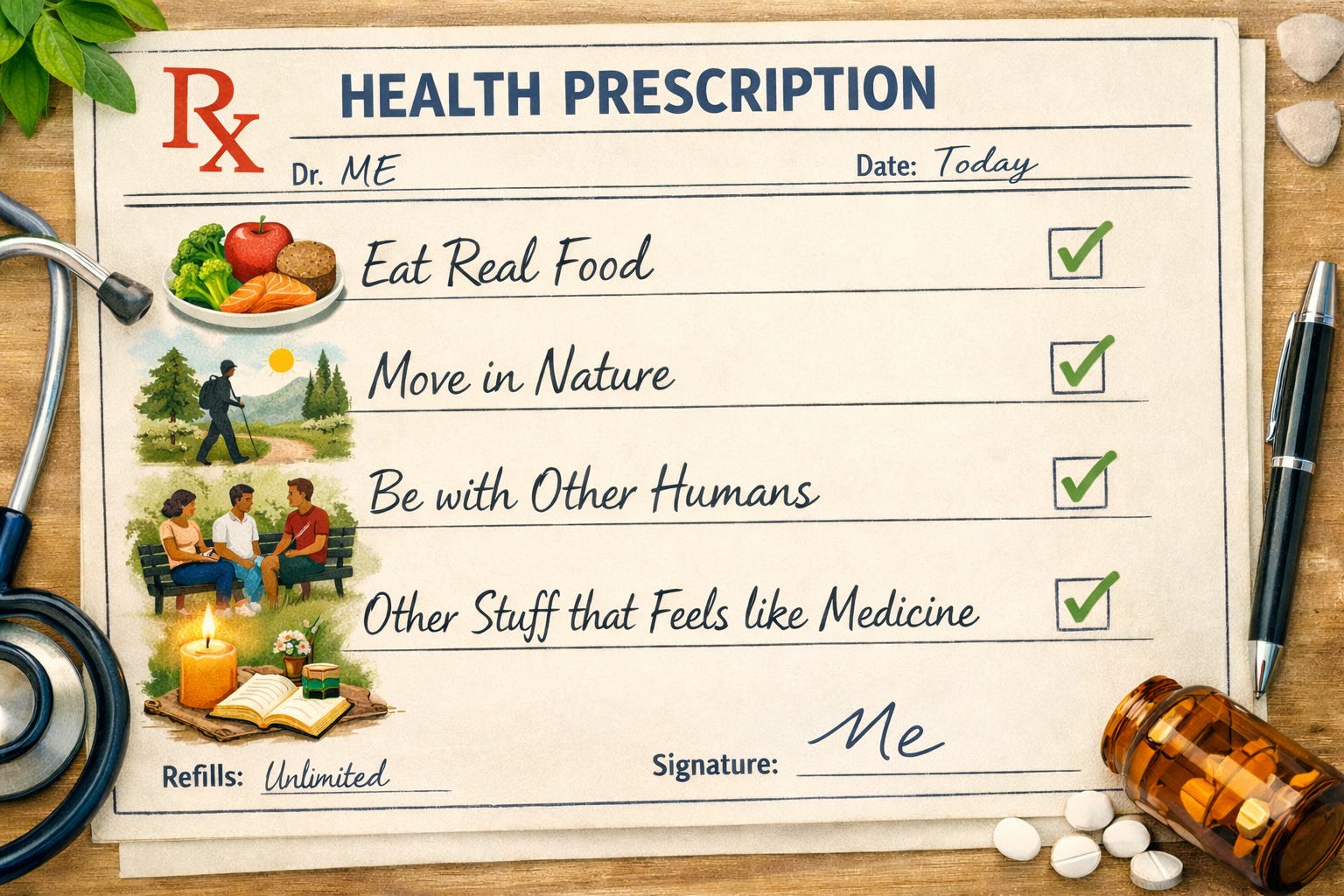
Healing rituals are prescriptions you write for yourself, and can include a number of the following evidence-based elements:
A major dietary shift — whether plant-based, ancestral, keto, carnivore or something else — signals that there’s a new sheriff in town to your body and can turn on healing almost better than anything else. If it’s real food that can be found in nature, rich with nutrients and free of poisons, it’s a win.
Move outside. Humans were made to move about in nature. Only sick or dying people didn’t and our ancient subconscious wiring interprets indoor sedentary days as a death sentence. No matter how serious your symptoms, find a way to move, even a little, outside. The benefits are overwhelmingly documented.
Community and connection. We’re pack animals and we die without a tribe — fact. Loneliness is the new smoking. Facebook friends don’t count – find ways to be in person with other humans, especially ones that support you and make you laugh.
Personalized practices. Consider any other ritual that resonates deeply with you. There’s a podcast or influencer for every biohack out there, so be discerning, whether it’s a sauna, grounding, supplements or tea. Close your eyes and ask for guidance. If it feels like medicine and you believe it’s beneficial, your body is more likely to believe you.
Next: How to switch off the stress physiology that's blocking your healing—and the questions most doctors expect you not to ask.
Safety Signals: Soothe the Lizard Brain and Restart Healing
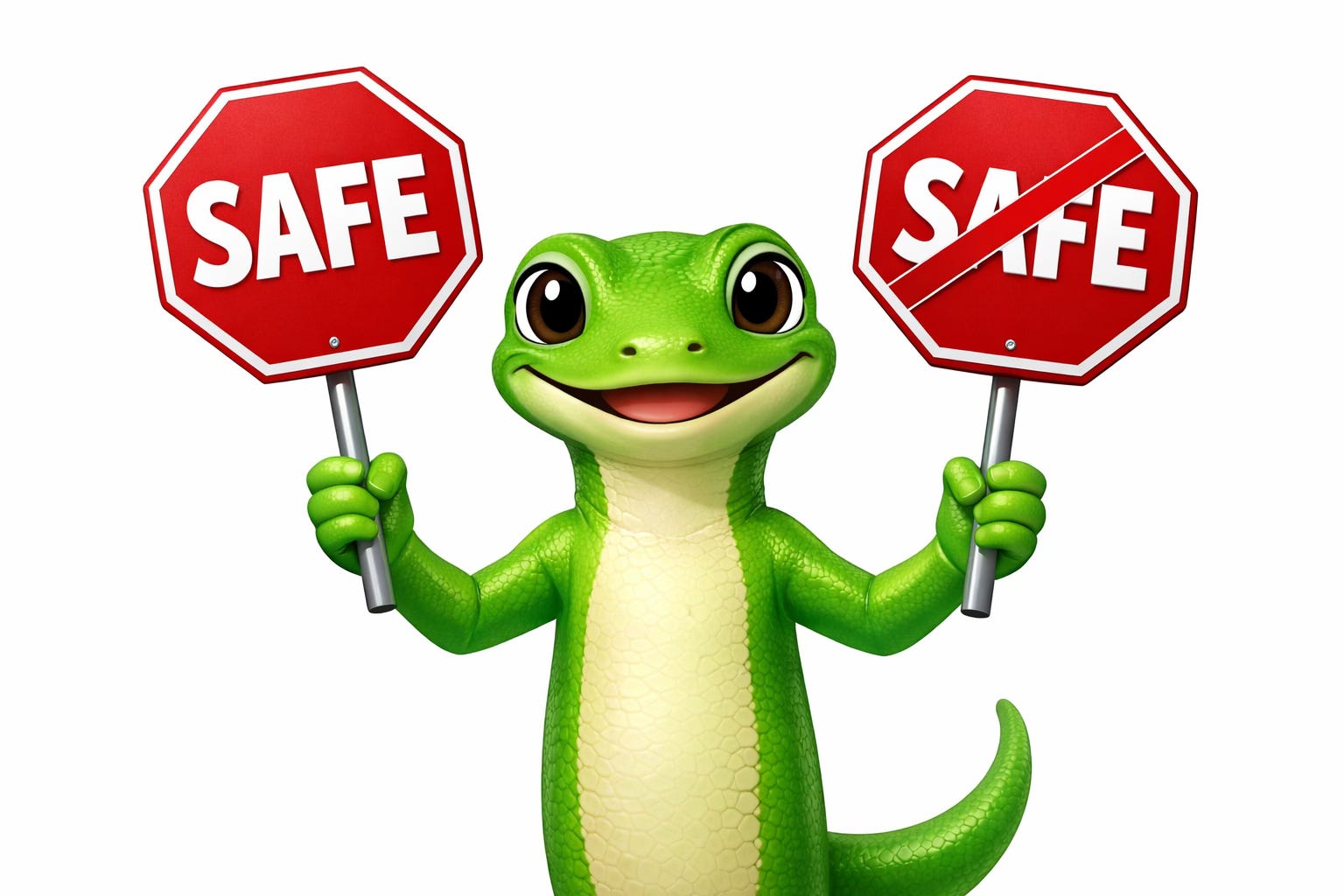
The autonomic nervous system — our lizard brain — has one toggle: “safe” or “unsafe.” It only switches on healing when it feels safe.
Placebo research teaches us that treatment delivered in hospitals works partly because the environment signals safety — smiling staff in special uniforms, calming spaces, the sense that you’re in good hands.
Many of us live with the toggle permanently switched to “unsafe,” and that fight-or-flight stress physiology, often originating in childhood, underlies many pathologies:
Shallow breathing
Increased heart rate
Increased blood pressure
Hypervigilance, pupil dilation
Circulation changes drawing blood away from extremities toward vitals
Adrenal hormones blasting through the body
Glucose and fatty acids flooding the bloodstream
Digestion practically stopping
Detoxification shutting down
Fertility functions turning off
This sequence, designed to outmaneuver a grizzly, is at the root of many disordered processes that can turn into chronic inflammation, pain, tumors, or autoimmunity.
That’s why one of the most important elements of your placebo protocol is to replace (or supplement) the safety signals that we get from being in the medical system with our own set of safety signals.
Create a daily safety protocol from the menu below or your own alternatives.
Meditation or meditative prayer has a physiological effect in the short and long term that has been exhaustively documented. The studies show that personal prayer is more effective than intercessory prayer by others at a distance. Focus your sessions on breathing, trust, and love, rather than pleading, demanding, or negotiating.
Interrupt the obsessive thoughts that take over when we’re struggling with illness. This is a hard-wired survival adaptation designed to help us escape the grizzly. But it’s the opposite of a safety signal and it turns off healing and keeps stress physiology on high alert.
The practical way to rewire that unhelpful thinking is to create a custom set of safety distractions and practice implementing them every time you catch yourself spiraling, or even at the first hint of negativity.
My favorite is singing all three verses of Copacabana, preferably with dancing and acting out the lyrics. I also love wrestling on the floor with my dog. An abbreviated version is picturing my dog adorably bouncing through a meadow, sharing her joy for thirty seconds with my eyes closed and a smile on my face (smiling actually cues the parasympathetic nervous system to relax you).

Lose the SVU. Purge your TV time of all dark, crime/procedurals or anxiety-inducing thrillers. Remember the story of public intellectual Norman Cousins who recovered from a crippling, life-threatening condition with comedy TV and belly laughs. Faithful readers will have noticed that The Princess Bride and Parks and Recreation references make regular appearances in my writing, because, well, they make me happy.
Bullet out your blessings in a daily gratitude log. It may sound cliché, but the research on the impact of gratitude on health is rock solid. It dials down inflammation, insulin resistance and immune suppression caused by fight-or-flight.

Treat your symptoms as a message, not a betrayal.
Most of us understandably just want some white-coat to do something and make our symptoms stop. But our bodies are ecosystems that are part of nature, and nature never randomly goes on the blitz or breaks. Nature adapts.
Symptoms are the check-engine alert that our subconscious mind is sending our conscious mind through our body. Paying a mechanic to turn off that alert without doing anything else is counterproductive in the extreme.
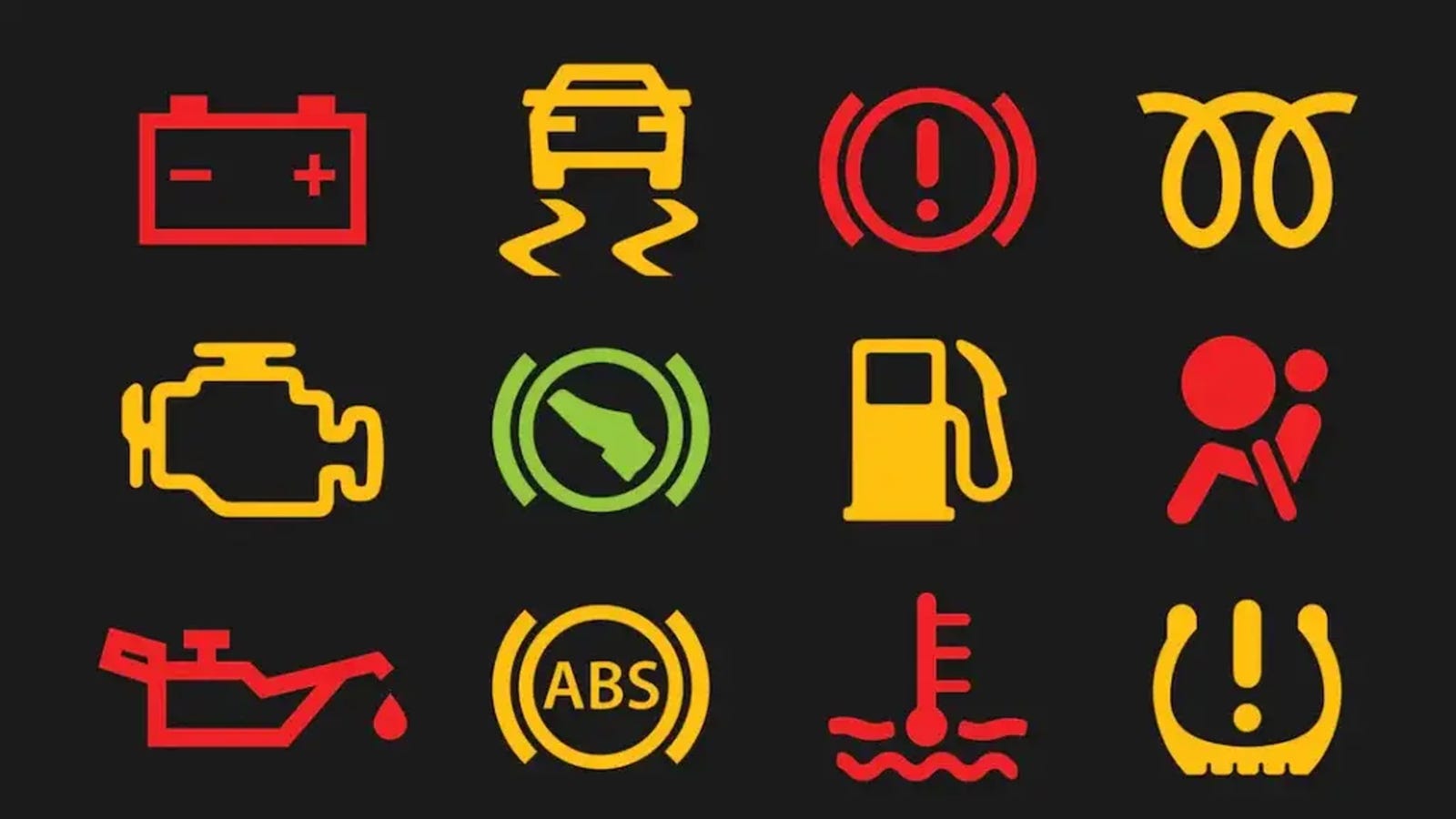
Don’t shoot the messenger. Cultivate curiosity rather than contempt toward your symptoms. Ask yourself:
“If I were a body, what would this symptom be a rational adaptation to?”
Sherlock those symptoms — they might be signaling a toxic exposure, nutritional deficiency, a battery depletion related to sleep, sunlight or nature deprivation, repressed anger, self-devaluation, trauma or childhood pattern.
Symptoms and illnesses can often expose situations in our life that have to change. They might be the way our subconscious mind is telling us to cut the crap, lose the deadweight, break free from toxic people, situations, or jobs. Sometimes the most powerful placebo is taking a tangible step away from whatever is sucking our life-force. In this way, we’ll look back on our illness as an incredible gift.
Watch your language, as your mother would say. Speak about your condition as a “healing phase” and your symptoms as “healing signs.” Call yourself a human and not a [fill-in-disease] patient.
Avoid taking verbal possession of your disease: “my cancer,” “my asthma,” “my bum knee.” If you’re part of an online group that identifies primarily as victims of a certain disease, run.
What About Trusted Authority?
White Coats Are Consultants. You’re the CEO.
We’ve been through how to establish the healing rituals and safety signals. But your subconscious mind won’t trust those rituals and signals enough to actually heal you if it doesn’t trust YOU.
You can’t trick your subconscious mind or lie to it. You have to provide evidence in order for the mind to believe enough to change.
Trusting in yourself as a wise expert authority therefore becomes the foundation of the placebo effect. But most of us don’t trust ourselves — we’ve been conditioned to trust the white coats above all else. As the placebo literature demonstrates, much of the power of a doctor’s orders to initiate healing comes from that trust we have in the doctor, and sometimes less from what was actually ordered.
We must reclaim our own confidence in order to dissolve that victimization vortex or reverse the hex of a scary diagnosis or doomsday prognosis.
Here are some hacks to build trust in your own expertise and power.
Trust your gut. Your intuition is guiding you every day. But so often we ignore that little voice inside. That email you know you shouldn’t send. The weird vibe you’re getting from your teenager. The inexplicable sense that this is the year to replace the roof.
Scripture speaks of a logos – the Greek word for the immaterial and powerful mind that lives in all of us and is connected to the absolute Logos that created everything. If you’re made in the image of an omniscient God, then your intuitions might be far more worthy of attention than you think.
Set an intention to obey your intuitions, starting right now. I’ve never regretted doing so, and have regretted many times that I didn’t. Honoring your inner wisdom signals to your brain that you’re not a victim, you’re a BOSS.
Log your wins. I like coupling those I’m-grateful-for bullets each day that we talked about earlier with a few more bullets of daily wins. This provides evidence to your subconscious mind that you are crushing this healing business.
Maybe it’s that you got through two verses of Copacabana today. Maybe it’s that you didn’t murder your brother-in-law. Maybe today you downed one less Diet Coke than yesterday (that one’s for me). Maybe it’s that you got three minutes of sunlight before the cold made you want to cry and run inside.
The point is, you’re honoring your own agency. That converts to placebo-powered greatness.
Honor the white-coats as useful mechanics. Doctors have useful but limited tools — drugs and surgery, for the most part. Receive their orders or recommendations as offerings to be evaluated.
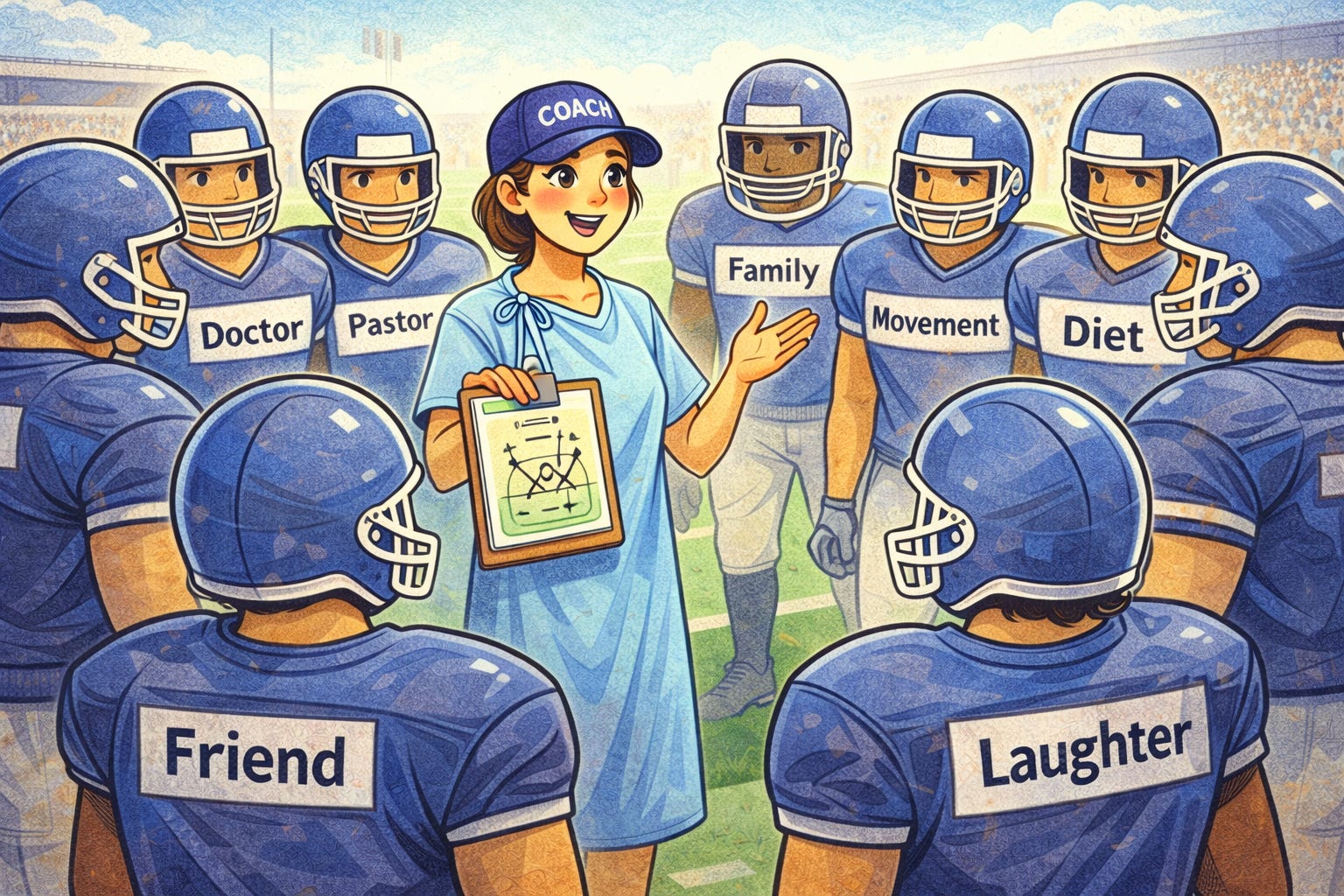
You are not there to be infantilized, shamed, fearmongered or otherwise under their thumb. Good doctors will position themselves as supporting players on your team, rather than as the coach.
For the others, your attitude of disinterested observer of their recommendations — rather than groveling peasant — can be disorienting and may cause unpleasant reactions.
Bless their hearts.
Grit your teeth and ask:
What are the data and literature behind your recommendations?
How many cases have you seen with my similar symptoms and history?
How often do you perform the procedure you’re recommending?
What is the absolute number, percent, and nature of successes you’ve had with your recommended protocols?
What is the duration of the relief the protocols provided to your other patients?
What do you know about the root causes of my symptoms?
What was the improvement rate in the placebo group in clinical trials of your recommended protocol?
How much greater was improvement in the treated group compared to the control group — in other words, how much of the treated group’s improvement was likely attributable to placebo?
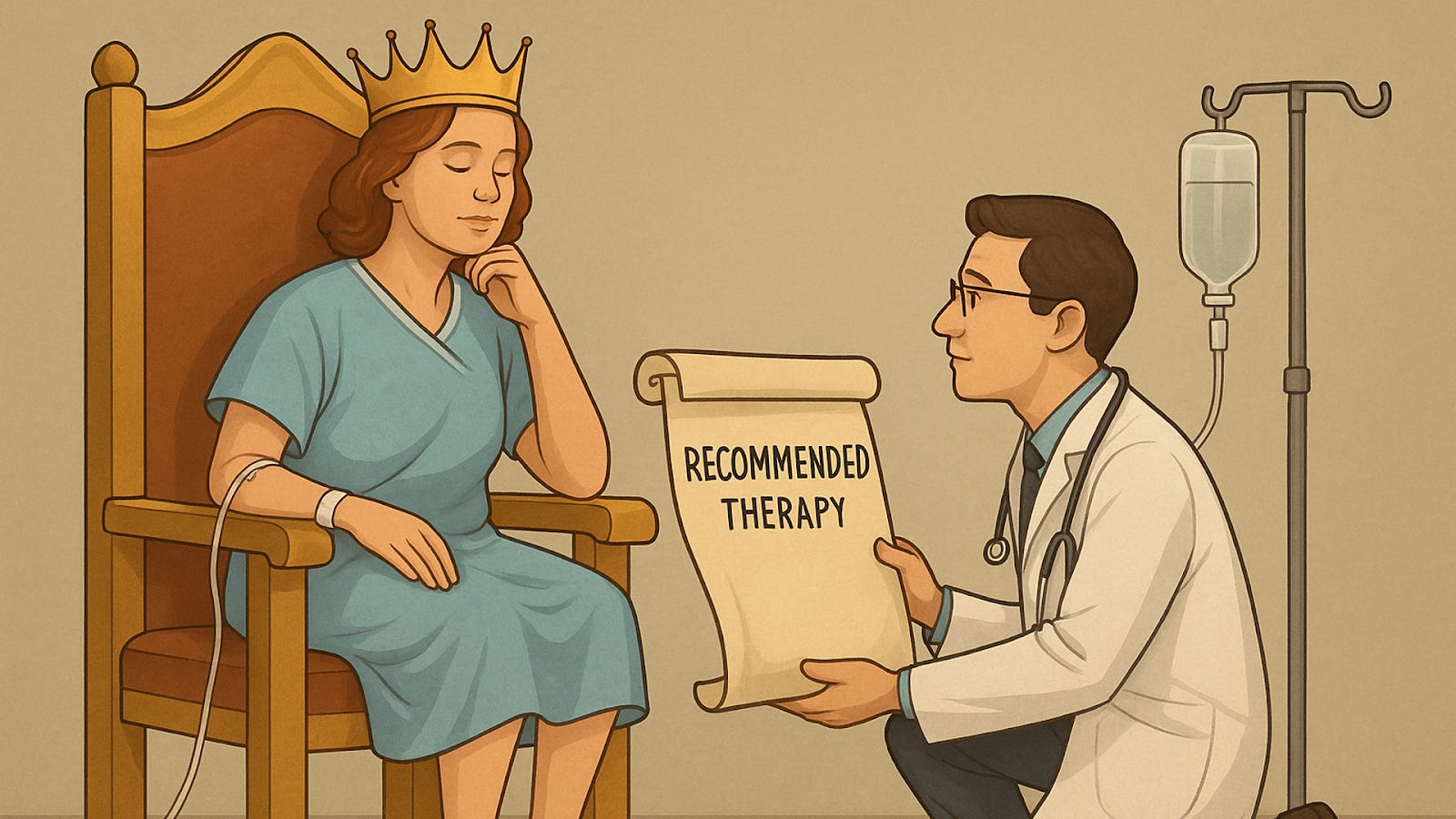
Your secret weapon here is the ability to thank the doctor for the suggestions and promise to take them under advisement.
And then walk away.
Not because you’re going to do nothing. But because you’re going to consider the doctor’s offering as part of a larger menu of placebo-powered options. Because you’re the BOSS.
You don’t have to be rude — this role reversal can sometimes be primarily a mental shift, especially when your doctor is a decent human.
But this shift is a powerful message to your subconscious mind that you are the trusted authority, recruiting and quarterbacking a variety of consultants and subject matter experts to your team as they present their offerings, opinions and tools. The team might include doctors, holistic practitioners, nutritionists, pastors, family members, the bowling league, puppies, comedians, among others. All have healing powers that might be right for you.
You get to choose the tools that resonate with you. You leave the rest, because you are your primary care provider.
The Secret Ingredient
You’ve trusted in your own authority and prescribed yourself healing rituals and safety signals. That’s the placebo playbook. Well, almost.
There’s one last thing — vision.
Scripture teaches that “faith is the assurance of things hoped for, the conviction of things not seen.” (Hebrews 11:1).
When the placebo effect works, it’s because the patient envisions that the package of healing rituals, safety signals and submission to trusted authority are going to work.
The superpower here is your own imagination. Create an intentional daydream.
I don’t mean just closing your eyes and repeating some mantras.
Instead, concentrate your attention on imagining how it will feel to be healed.
Name those emotions — the freedom you’ll feel, the things you’ll do when you’re healed. Let yourself bask in the joy, the delight you’ll take in health, the time you’ll get back and how you’ll spend it.
This can be as little as doing this for 30 seconds every time you go to the bathroom — using that throne time to feel all the healing feels, smiling the whole time, visualizing your life.

It can also be an hour-long guided meditation or a week-long retreat. I like to write out this vision, record myself saying it and replay it regularly, using an app like Think Up. The details are all up to you.
But don’t skip it.
Your immaterial mind — like the divine Logos whose image it bears — lives outside of time and space. Your subconscious mind does not know the difference between what’s happening tangibly in space and time and what’s just taking place in your imagination. It experiences them both as equally real.
Healing and already-healed people inhale life and exhale joy, even in small ways. Even in the face of seemingly impossible odds.
So sing at the top of your lungs.
Binge Parks and Recreation, Blades of Glory or Monty Python.
Snuggle with a dog or a cat or a husband or a toddler.
Build in all the chicken soup you can — the nutrient-dense kind and the for-your-soul kind.
Listen to the doctors and evaluate their offerings with detachment.
Honor your symptoms with curiosity and patience.
And let the placebo-powered healing begin.

You're here because you believe healing belongs to you, not the system. Please consider sharing this publication with one person in your life that needs to hear that message.
Epilogue: Just to prove I mean it…
I had to become my own doctor about five years ago. I realized the medical system was starting to cannibalize me thru the constant testing. Luckily I ran into a smart, old-fashioned university MD that helped me escape a dangerous diagnosis. I realized that the system was all about convincing me that I was ill. Although I pay a monthly fee to a natural osteopath, she acts more like her allopathically trained counterparts ; I avoid her like death itself. I have weighed the risks.
Food = Medicine
Found this from your confession article. Adding on - Be your own Farmer. Living in a Manhattan Tower, that means direct access to local Farmers who avoid Glyphosate and similar - https://outsidein51.substack.com/p/avoiding-glyphosate-in-2026-from