



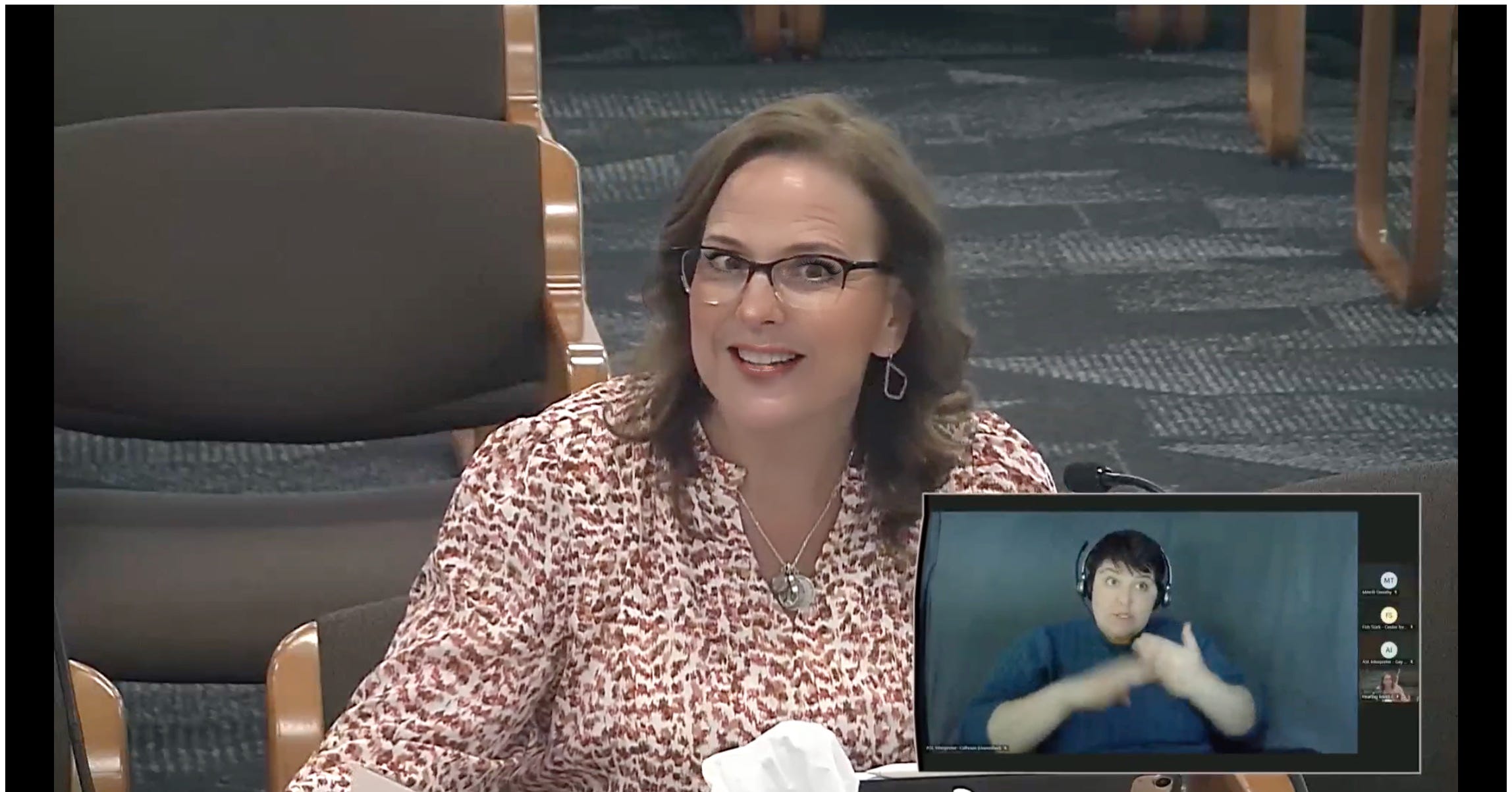
The national atheist group was testifying against me that day. Well, against my cause. Which, I guess, bodes well for me in the heavenly brownie points ledger.
I was at the witness table at a state legislative hearing in one of those hyper-blue states it’s easy to complain about. The chairman of the committee had introduced a bill, written by the atheists, that, if passed, would impose an ungodly (and unconstitutional) amount of requirements on health care sharing ministries operating in the state.
The atheists were testifying virtually - on the jumbo screen to my left. I was there in person, because I have learned that when a fight is on, something very important can give you an advantage as your electromagnetic field overlaps with someone else’s. Human connection matters. (Maybe someone could let Fauci’s diary in on that).
The national atheist group was going around to a variety of blue states and finding legislators with hostile records on religious liberty, and getting them to rubber stamp their “model” bill persecuting Christians who come together to share medical bills.
One problem with the bill in this particular state: it had laughably over-the-top provisions, like requiring health care sharing members to be finger-printed by the state. One other problem for the atheists: the bill sponsor didn’t even realize what was in his bill. He got flummoxed when I pointed out the fingerprinting. Denied it. Had to correct himself when we pointed out the chapter and verse. Whoops!
How to properly staff a committee chairman is a class I’ve actually taught to graduate students, but I’ll leave that for another day. The point is, the atheists lost that battle, the bill stalled out (for now), and we lived to fight another day.
I bring this up not to toot my own horn - there were plenty of less awesome hearings during the six years I ran this trade group - but because it’s a pretty good encapsulation of where health care sharing ministries sit in this country right now: growing fast, confusing regulators and legislators, occasionally infuriating them, occasionally deserving to infuriate them, and almost never explained well to the people actually trying to decide whether to join one.
Ask me how I know
I’ve been inside this fight from more angles than almost anyone alive.
I worked on health care sharing policy from inside the government - both in the Senate and the White House - back when most of official Washington couldn’t have told you the difference between a health care sharing ministry and a health savings account. Then I left government and ran the trade association for the handful of ACA-recognized, nonprofit religious ministries for six years. That meant testifying, lobbying, and even getting deposed, in front of the continuum of regulators - from hostile to confused to friendly - in dozens of state capitals and DC.
I have patiently explained the concept of “this is not insurance, and here is why that’s legal” more times than I’ve explained anything else in my career (including why ending secret health care prices doesn’t drive up health care prices, which I thought had maxed out my tolerance for repetition).
Herding cats doesn’t begin to cover it.
Some of these ministries have deeply held, decades-old convictions about how they operate and would rather close their doors than change a comma. Others want to move fast and disrupt the health care status quo. My job was to get all of them rowing in the same direction toward the same regulators without anyone getting walked down the plank. Mostly, I succeeded. Sometimes I did not, and I have the scars - and the rolodex full of lawyers - to prove it.
Full disclosure, I currently sit on the board of one of the largest brands in the health care sharing world. So you should know, going in, that I have skin in this game, and that I like the model enough to put my own name on it. That also means that this isn’t a takedown piece. But it is the truth, the way I’d explain it to a friend who just texted me “hey is one of these things legit or is it a scam?” - which, incidentally, is a text I get about once a month.
So, What Actually Is a Health Care Sharing Ministry?
Strip away the logos and the theology, and here’s the mechanism: a health care sharing ministry is a nonprofit religious charity where members - bound by a shared set of faith convictions - agree to help pay each other’s medical bills.
Not “insure.” Help pay.
Each month, you send a fixed monthly amount to another member with a medical bill. For big bills, multiple members contribute. The ministry makes the match and facilitates the transfer. This isn’t a premium. There’s no insurance contract, because there’s no insurance company. When you get sick or hurt, you (or your health care provider) submit the bill, the ministry checks it against a public set of sharing guidelines that the membership itself agreed to in advance, and then the ministry facilitates moving money from enough other members to assist with that need.
Nobody is legally guaranteeing they’ll pay you a dime. This is the whole design: you are voluntarily, prayerfully, financially showing up for people you’ve never met, and trusting that they’ll show up for you.
Some of these communities are tiny - a few hundred people in a closed Anabaptist or Mennonite fellowship who’ve been doing this for a century. Others are bigger - nationwide, open to any believer who adopts the statement of faith, with memberships in the hundreds of thousands. In between, you’ve got dozens of others of every size and flavor. Roughly a hundred organizations nationwide - mostly the tiny variety - currently meet the federal government’s technical definition of a health care sharing ministry. Only a handful of the big national ones account for the overwhelming majority of actual members.
Congress weighed in
The Affordable Care Act (ACA) recognizes health care sharing ministries who meet a (limited) set of good-actor criteria and members of such ministries get a get-out-tax-jail-free card. To get that credential, an organization has to have been sharing bills a long time (since 1999), have a religious or ethical basis for membership, independent audits, and so forth. All of this was Congress’ way of saying “no, you can’t just spin one of these up next week and declare yourself exempt from insurance law.”
Once certified, members of that ministry are exempt from the ACA’s individual mandate (a largely academic point now that Congress zeroed out the mandate penalty for everyone in 2019). It also means that the ministries aren’t insurance and don’t have to comply with the rest of the law telling insurers what to do - what they have to cover, what it has to cost, making healthy people pay the same as sick people at the starting line, and so forth.
That last part is the whole ballgame, legally speaking.
It’s also exactly why some state regulators - hi, Colorado - keep circling back with new reporting requirements, because “not insurance” makes them nervous, even when it’s Congress, not a loophole, that put it there.
Can This Actually Get Me Out of My ACA Premium?
So while nobody needs an exemption from the ACA anymore, what you’re still trying to escape these days is the price on that monthly premium bill, which, if you’re anywhere near the upper end of the subsidy cliff, just got a lot uglier now that the pandemic-era enhanced subsidies expired at the end of 2025. A lot of middle-class families who got used to a manageable premium are staring at a bill two or three times higher this year, for a plan they barely use because of good health, high deductibles or narrow networks.
Health care sharing ministry memberships generally cost between 50-70 percent of what insurance costs. If this model might be a good fit for you (more on that later), it is WELL worth serious consideration.
Some come for the cost and stay for the faith. Others come for the faith - if you’re a regular reader, you know that I think insurance carriers are largely doing the devil’s work, and it shows. Having a solution for expensive medical bills without feeding the bureaucratic, profiteering United, Cigna or Blue Cross Borg feels like a gift of the Holy Spirit.
Here’s the honest version of what a ministry can and can’t do for you.
It can, for many families and individuals with genuine religious conviction, meaningfully lower your monthly outlay to manage your medical bills - especially compared to an unsubsidized ACA plan - sometimes dramatically. It can connect you to a community that will actually pray for you and check in on you when you’re sick, which no insurance company is known for.
One of the ministries sends care packages to families who experienced a miscarriage. Another one shows up in person when a member passes away, to personally hand a donation check to the family to help with funeral costs. Most ministries have extra charity funds outside their regular sharing programs to help members with hardships of various kinds. That community feels quite different from insurance.
Still, these are charities, and as such, they don’t promise you anything. Not legally, not contractually. There is no regulator you can appeal to if the ministry decides your bill isn’t shareable under its guidelines. There’s typically a waiting period, or an outright exclusion, for pre-existing conditions - every reputable ministry discloses this up front, but it will absolutely matter to you if you have one. You are agreeing, in writing, to certain lifestyle commitments consistent with the ministry’s faith statement, and yes, they can and do check if you happen to accidentally slice your finger off when sacrificing a goat (looking at you, my atheist-lobbyist friends!). And when your bill comes in super high for that cancer treatment, you are relying entirely on the ministry’s governance, transparency, the cash position of its members, and its integrity - not on state guaranty funds or federal law.
This may sound risky to those outside the fold.
And depending on just how far outside the fold you go, it very well could be risky. Christians in community are used to relying on each other, though - that’s not a foreign concept for us. When a family in my Catholic circle has a baby, they can take it to the bank that there will be five casseroles that show up on their doorstep within a week. Churches enter into million-dollar construction projects on the reliability of the faithful’s pledges in a capital campaign.

Christians also know that you don’t send your tithe by carrier pigeon to a PO box owned by some storefront “church” that hung a shingle in the strip mall down the street last Saturday. We do our due diligence. We ask around, we check the pastor’s credentials, we check charitable records, we google for scandals, we donate through a secure portal that we’ve used before, dedicated solely to churches.

Which brings us to the actual point of this article.
The Four Kinds of Sharing (Not All Involve Jesus)
After twenty-some years of watching this space from all angles, I’ve come to sort health care sharing organizations into one of four buckets.
Jesus in Action

This category is the real deal, doing exactly what they say on the label. A church, an association of churches, or a nonprofit with the IRS paperwork to prove it. Religiously grounded, and not as a marketing veneer. Actual Christians that you know in real life who have experience as members. Transparent sharing guidelines, published where anyone can read them before they join. HHS-certified, meaning they’ve been continuously operating since the last century - not a shell that filed paperwork last spring. Audited financials that are available to anyone who asks, because they’ve got nothing to hide.
Increasingly, the best of these have also gone through independent, voluntary accreditation - a process launched a few years back (with my help, full disclosure) specifically because the good actors in this space got tired of being lumped in with the bad ones, and wanted a way to prove their integrity. That accreditation digs into governance, conflicts of interest, related-party transactions, how fast they actually share bills, what percentage of your dollar goes to overhead versus actual member need. It’s not required by law. The ministries that volunteer for that level of scrutiny are telling you something important about who they are.
This is obviously the category of ministries where I’d point my own family.
Jesus-Adjacent

This bucket includes two sub-buckets, both of which are organizations that appear - to me, anyway - to be good organizations trying to do things right. First are the HHS-certified, honest-to-goodness nonprofit ministries. Real faith community, real sharing, nobody’s running off with your money. Probably.
The reason for the “probably” is that they haven’t sought outside accreditation. It might be fine - nothing illegal, nothing fraudulent — just less independent tire-kickers checking the boxes. Maybe they’re a newer organization and therefore don’t have the HHS certification (HHS stopped certifying a while ago). Maybe they’re small and accreditation is expensive (it is, but not that expensive for an organization that exists to help with medical bills - the most expensive bills on the planet).
The other sub-bucket of Jesus-adjacent organizations is for those organized around ethical principles rather than religious beliefs. In other words, they take all comers. They’re non-profit orgs that are in this game for a noble purpose - to disrupt health insurance with a radical, non-insurance model - but not a Biblical purpose (to operationalize Acts 2:45, for instance). There are three organizations in this bucket that I’m aware of that are reputable and do a good job, and that are run by good humans who care. But still, they’re relatively new, and as far as I know, don’t have any independent third parties scrutinizing their operations. Also, without the religious exercise defense, they tend to have a thinner legal/constitutional shield when hostile regulators come at them. As such, they don’t operate in all fifty states and some members in unfriendly states could find themselves out of luck if their healthshare gets on the wrong insurance commissioner’s radar. But to be clear, I absolutely am pulling for them and wish them success!
Jesus, Inc.

Health care sharing organizations are generally not-for-profit. But a few try to turn this model into a money-making machine, either directly or indirectly, and they make everyone else look bad. Either they’re legally not-for-profit organizations but they spin off for-profit entities as vendors serving the ministry, which happen to be owned by friends and family, or they’re just for-profit entities from the get-go. I far prefer the latter - if you’re going to be a for-profit, Christian company, go ahead. (After all, my own businesses are for-profit, Christian companies.)
When the organization itself is technically not-for-profit, but the profit motive is pursued through for-profit vendors enriching the founders or their families, it can be the hardest kind of risk for an outsider to spot. The 501(c)(3) letter looks the same. The HHS certification looks the same. The prayer newsletter looks the same. The self-dealing is buried in a related-party footnote most members will never read, if it’s disclosed at all.
The other sub-bucket - sharing organizations that are openly for-profit companies - has many of the same risks that any for-profit endeavor in health care can - misaligned incentives. Equating saving money with denying or delaying care, choosing vendors that pay them better rather than serve their members better, cutting corners with staff ratios or AI bots, and on and on.
I feel strongly that, for a cooperative sharing model to work best, it needs to be a nonprofit community of people who share the same goals: helping each other get the best care at the lowest cost, not enriching owners or founders. The IRS has a robust set of rules around governance and conflicts of interest for tax-exempt organizations, and that framework, when followed scrupulously, helps protect the model.
Jesus Front Groups

And then there’s outright fraud.
These aren’t sharing organizations at all. They’re for-profit insurance-adjacent schemes that borrow “sharing ministry” language purely to dodge state insurance regulation, with zero intention of running an actual faith community or honoring sharing guidelines. Health care sharing ministries get unfairly criticized for being “unregulated.” That’s not true - they’re regulated by every state’s Attorney General, who is responsible for making sure charitable organizations don’t lie, cheat or steal from the citizenry. Fraud is illegal everywhere and when it happens, the AG can and should get involved.
The worst case of this involved a front group that reportedly siphoned 84 cents of every member dollar toward a for-profit venture owned by its founding family, while routinely denying the medical bills it was supposedly there to help pay. Eventually, a dozen or so state AGs caught up with the scheme. The subsequent bankruptcy left tens of thousands of members on the hook with medical debt. This is what regulators picture every single time a real ministry walks into a hearing room. It’s exhausting. It’s also, I’ll admit through gritted teeth, quite reasonable of them to want to prevent.
So How Do You Tell the Difference?
You don’t need a law degree. You need to ask specific questions and actually demand the paperwork, the same way I taught state regulators to ask them.
☐ Can you produce an HHS certification letter? This is an older credential, but at the very least it confirms the organization has actually been around for a quarter-century, and meets the most basic criteria laid out in the ACA (not-for-profit, independent audits, etc).
☐ Have you received, or are you actively pursuing, independent accreditation? Ask which accreditation body, look at their website and the standards they use. An organization that’s opened its books to outside scrutiny is telling on itself in the best way.
☐ Do you have an IRS (c)(3) determination letter and, if applicable, are you filing Form 990s? Every legitimate ministry above a certain size has one and you can find the info at the IRS charitable organization search tool. One of the biggest ministries, though, is actually an association of churches not required to file 990s, so you won’t find the form for them.
☐ Are your sharing guidelines public, in plain English, before I pay you a dime? Not a sales call. Not a PDF that materializes after you’ve enrolled. The entire program is posted publicly in writing, for everyone to see.
☐ What happens with my pre-existing condition, specifically? Get any waiting period, exclusion or dollar limit in writing. If you aren’t sure about whether bills arising from your pre-existing condition are shareable, be sure to ask specifically about that. The ministry may need to look at your health records to sort out exactly what will be excluded and what will be shareable, so give them time to do this. You want the answer to be correct and for your future to be predictable before you make any decision.
☐ What percentage of my monthly share actually goes to paying member medical needs, versus overhead? A real ministry will know this number cold and tell you without blinking. Bigger ministries will have numbers like 70-80 percent or higher. Smaller ministries can still be doing a great job at 55 percent or higher - their lower number of sharing requests compared to their payroll expenses can skew the ratio - as long as the other good-actor boxes are checked for them.
☐ Are you a member of the Alliance of Health Care Sharing Ministries? This is the trade group I mentioned earlier. Their members are the handful of large, nationwide ministries that are the most reputable, religiously based, and HHS-certified. They are the standard-setters and are generally the group advocating for the freedom of all health care sharing organizations to operate, interfacing with governments at the state and federal level. The Alliance is pretty insistent that their members behave, so membership is a good sign.
What are the Blaring Red Flags?

Anyone on the phone describing it as “just like insurance, but cheaper.”
Anyone who says it’s “ACA-compliant” without producing an HHS certification letter.
No published sharing guidelines you can find on your own before you call.
A broker coming on strong like a used car salesman and deflecting when you ask about insurance options so you can weigh whether insurance or a healthshare is best for you.
“Ministry” language with no religious affirmation or lifestyle commitment required at all - that’s a tell that the “ministry” part is decorative.
And this one’s free - if it feels like buying a timeshare more than joining a church, run.
Assuming the HealthShare is Reputable, Why Wouldn’t Everyone Join?

Health care sharing is an amazing and affordable solution - IF:
You’re generally healthy without significant pre-existing conditions requiring treatment or medications that you can’t afford to pay cash for. (Looking at you, MAHA Moms!) Most sharing organizations don’t share in bills arising from conditions you have when you join. That includes pregnancy, FYI. They are designed to help you with illness or injury that arises after you join. Some ministries have health coaching programs that they encourage or require you to participate in if you enter the community with certain conditions that can be reversed with lifestyle interventions.
You take ongoing medications, but they’re generic. Most sharing programs don’t share in long-term medications, so if you’re on BP or cholesterol meds, an asthma inhaler, an SSRI or hormone replacement therapy, be sure that you know the cash price and can afford it. If you or someone in your family needs a $9,000/mo drug like Skyrizi for psoriasis, this model is not for you.
You have conscience objections to what most insurance plans cover - especially in states that require insurance plans to cover (and enrollees’ premium dollars to subsidize) killing unborn babies and trans-ing kids. Religious health care sharing ministries are not going to spend your money on immoral stuff. (I mean, except for price-gouging hospitals pretending to be charities. There’s no escape from that degeneracy.)
You are a committed Christian or, if the sharing organization isn’t religious, you are truly committed to the non-insurance model. Most ministries require more paperwork or bill negotiation, or dialogue with providers around cash pay. That kind of extra effort means that you have to really believe in what you’re doing. But if you do, you’ve found your people - the ministry community allows opportunities for prayer, socializing and additional service between members.
I Want to Offer This for My Employees!

Everything above was written for an individual or a family shopping for themselves.
Alternatively, if you’re an employer looking to facilitate or subsidize access to ministry memberships for your team, health care sharing can be a great fit. But there are lots of caveats and compliance requirements, as every HR leader is all too familiar with. The most important advice I can give you is to work with an independent benefits advisor who does not have a financial relationship or other conflict of interest with the sharing organization, beyond any transparently-disclosed commissions. I’ve seen churches get caught up in schemes where their spending on an insurance offering and their health care sharing offering were co-mingled inappropriately into one confusing, noncompliant benefit created by a legally unsophisticated sharing organization trying to do too much. This can attract unwanted attention from a state insurance commissioner, or a lawsuit by a disgruntled employee.
Being Different is Worth It
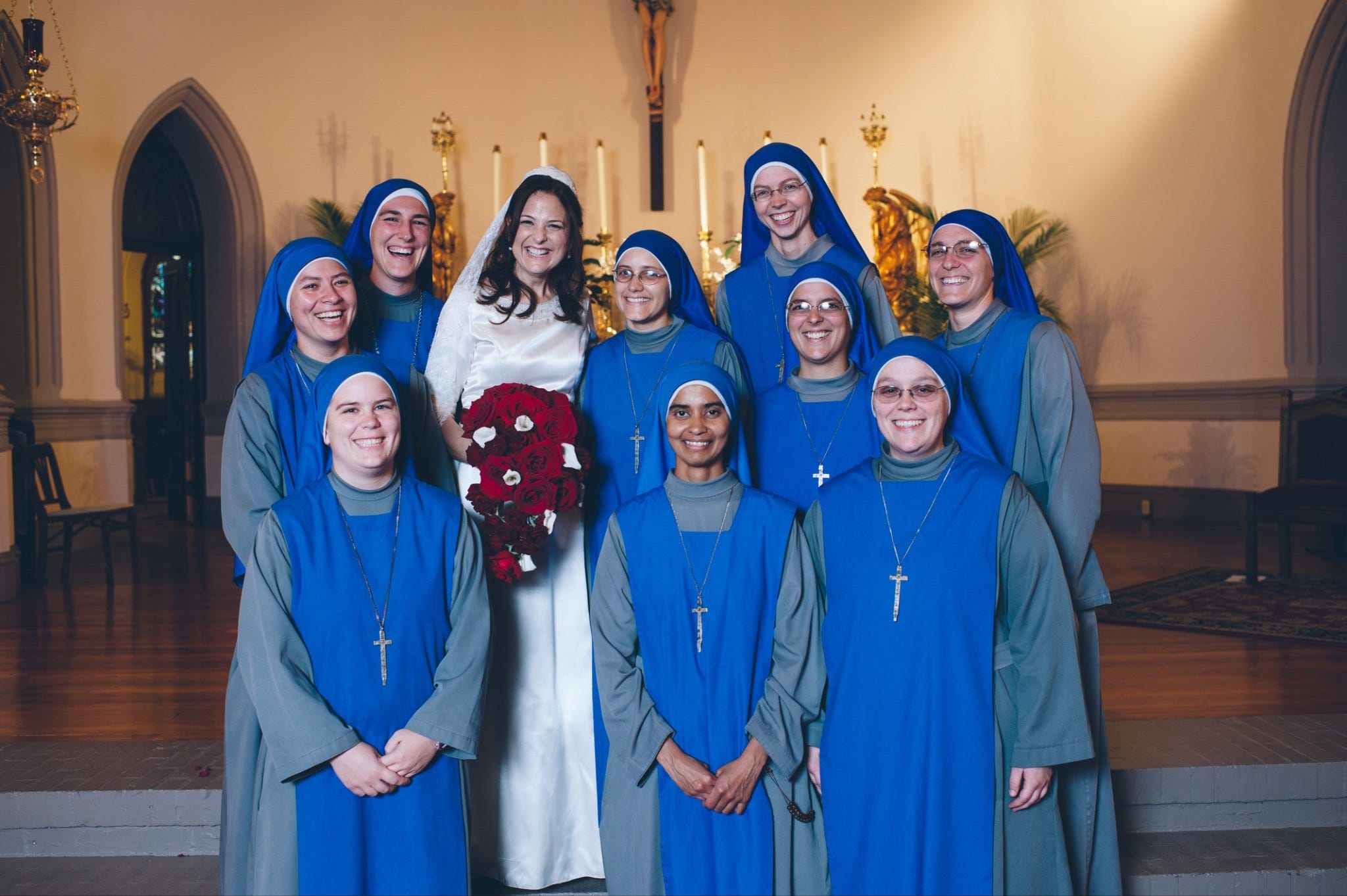
I’ve been deposed by state attorneys general as a plaintiff defending the constitutional rights of health care sharing ministries. I’ve been grilled by insurance commissioners, Hill staffers for the atheist caucus (yeah, there’s a caucus for that), and hostile producers from the John Oliver Show. The reason why the enemies of the faith keep coming for health care sharing ministries is because they are truly subversive to the insurance Leviathan.
Some people truly need an insurance policy. But not everyone.
There are at least a million Americans who are members of a health care sharing ministry today. I’ve heard hundreds of their testimonies, from a variety of different ministries, describing how their faith community came through for them when they were scared, vulnerable, and suffering.
Many of us are working hard to treat our bodies right, stave off chronic illness, and remain squarely outside the conventional medical system almost all the time - but we’d like the peace of mind that, when we have emergencies, there’s a community holding a safety net underneath us. For us - health care sharing is a fantastic fit.
So yeah, I believe in this model.
Not blindly - there have been Bucket Four baddies scamming innocent people. But I’ve also watched truck drivers, small business owners, and young families who can’t afford a $2,200/month ACA premium find something beautiful in health care sharing that no insurance company has ever once offered them: a community that actually shows up, prays and pays.
Do your homework. Ask the hard questions. And if and when you find your match, stick it to Big Insurance in the best way possible - by opting out.

What about healthy people who are older? 50’s and 60’s who don’t qualify for Medicare? Is this a viable alternative to paying the large insurance premiums when you never get sick or have health issues but are “older”?
100% right on with everything you've written. Glad to see Samaritan Ministries in the alliance - no surprise really.
I did go my homework prior to jumping off the BCBS insurance racket. I like Samaritan bc they are pro-alternative treatments. In other words, many are shareable. Also, I'd had an open heart surgery for aortic valve replacement in 2010 (I was waking up to see President Obama signing the ACA). So I got all my premium's back covering that surgery. So in 2018 when I thinking of getting out of the insurance racket ($1800/mo for just me alone, not even my wife), I tripled checked about existing conditions and Samaritan had a 5 year wait on previous heart conditions. So I went with them and in 2022 when I needed another aortic valve due to a bacteremia from a dog bite, Samaritan members covered it all, every last penny (cash price was almost $80,000). The best part I think are the notes with each person's donation. I really enjoy praying before about the condition of person in need before I write the check. And I write a personalized note with that prayer.
I think your article really hits the nail on the head and the photo of the Amish barn raising is perfect. I worked as a farm vet in the Lancaster Amish community and they walk the walk and truly do take care of each other. I'm grateful there are non-Amish groups that have been organized to do the same.
Thank you, Katy, for being in it and speaking about it as you are.