


Editor’s note: This is Part 2 of a two-part series interrogating the foundational evidence behind modern virology. If you haven’t read Part 1 on viral isolation, start there. It matters for everything that follows.
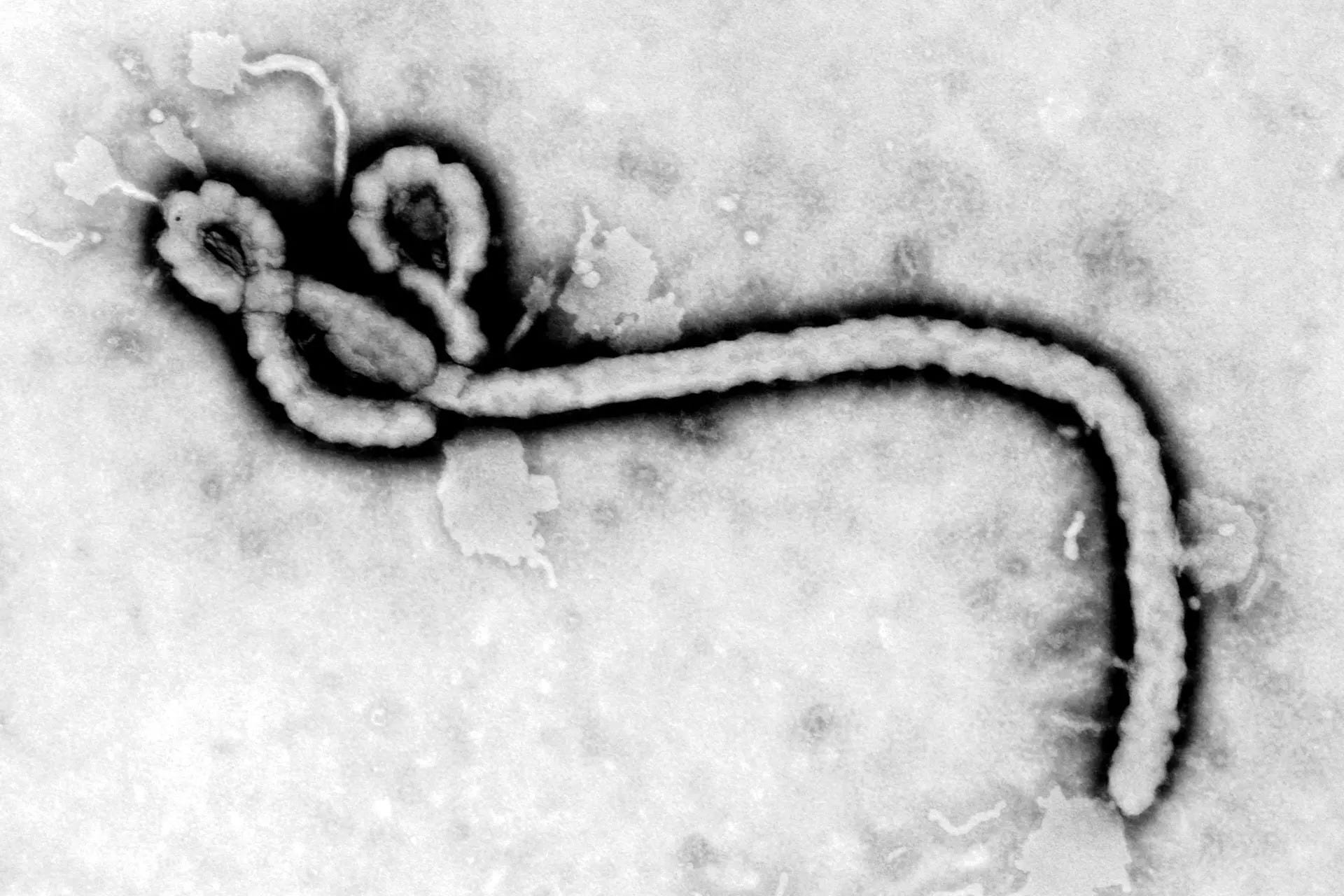
Last week we established that virologists have never actually isolated a virus - they’ve just assumed the particles they see in electron micrographs are viruses and moved on.
But there’s supposed to be a safety net. Genetic sequencing.
If you can read the blueprint - the actual DNA or RNA - surely that proves what you’re looking at is real, right?
It doesn’t.
Every time there’s a new virus announced, The Authorities quickly rush to “sequence the viral genome.” After all, if the premise here is that viruses are just made out of DNA or RNA and some proteins, then it makes sense that we should be able to identify them by reading their genetic sequence - a string of nucleotides represented by A’s, G’s, C’s, and T’s (or U’s in the case of RNA).
If you weren’t impressed with the viral culture “isolation” process described last week, you might be looking for some reassurance that, at least once we have that centrifuged pellet of stuff of a certain size/density, and we’re seeing things in the electron microscope that we’re told is a virus, we can fill in some of the scientific uncertainty with genomic sequencing.
Well, brace yourself.
I wish I had better news, but the sequencing process trying to make sense of the genetic alphabet soup isn’t reassuring.
How We Got “Viral Genomes”
In 1981, a scientist named David Baltimore (who would later become famous for reasons having absolutely nothing to do with viral sequencing and everything to do with one of science’s messiest misconduct scandals), took the poliovirus, or at least the contaminated mixture of dead cells, exosomes, and genetic debris that he was calling the poliovirus, extracted fragments of genetic material, and assembled them into a computer model. The computer took all the fragments and guessed about how they might fit together if they were all one long chain. Then, Baltimore published his conclusion that the poliovirus genome was 7,440 nucleotides long.
He never proved that this sequence came from a single virus particle. He never isolated a pure virus. He just made his best guess from a contaminated mixture. And that guess became the reference genome for poliovirus.
And so in 2002, when Cello, Paul, and Wimmer reconstructed something capable of damaging cells and killing rodents using Baltimore’s published genome sequence, mail-ordered DNA, human cervical cancer cells and other cell culture sludge, many took it as confirmation that the sequence he’d found was indeed the virus. Never mind that they injected the brains of mice with this toxic cell culture sludge and genetic material we discussed in detail last week (except instead of using monkey kidney cells they used human cervical cancer cells, which I’m sure are super non-toxic and create no immune response). Also never mind that there were no control mice who received brain injections of the same sludge, but without the genetic material assumed to be the virus (whereby it might have been demonstrated that the sludge-injected controls didn’t die and therefore the only difference between the live control mice and the dead mice was the presence of the so-called virus).
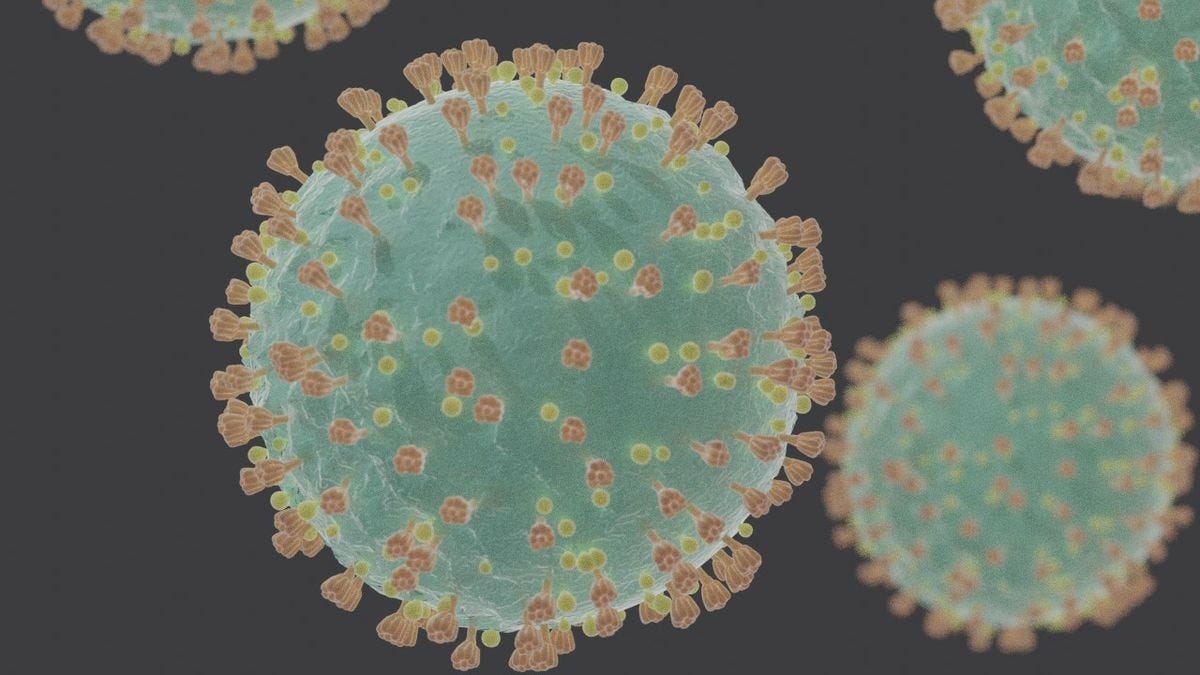
Other viruses like influenza and measles followed the same process. Then, when new versions of coronavirus, like the 2002 SARS-CoV and the 2020 SARS-CoV2 virus appeared, they just used the original coronavirus reference genome, and kept building on that one.
The Game of Telephone That Never Ends
Imagine Susie is on a crappy cell phone connection with Jenny. Susie whispers a message, and the connection is cutting in and out. Based on the fragments Jenny hears, she guesses that Susie said, “THE QUICK BROWN FOX.” Jenny isn’t sure she guessed right, but she emails Betty that message. She also calls Betty - with her same crappy connection. Betty hears, “BRAVO, QUITE THE SOX.” But since Betty has the email from Jenny too, she throws out the letters that don’t match the email (the reference genome) and fills in the remaining gaps to be THE QUICK BROWN FOX. She definitely didn’t hear that message, but instead tortures what she did hear to match what she thought she should have heard. Got it?
If Jenny’s original guess about Susie’s message is wrong, everyone downstream is copying her mistake.
This goes on ad infinitum, every time someone tries to sequence the virus in what they think is the viral isolate (actually a pellet from the centrifuge of the part of the cell culture sludge that has particles all the same size and density). You can imagine with computer models and now AI, that this becomes quite algorithmic, but also, less and less tied to actual reality, as the mistakes build on themselves over and over again, in the pursuit of “consensus” with the reference genome.
That’s exactly what happened with viral genomes. Jenny (like Baltimore in 1981) made a guess from confusing material. Everyone since has just been confirming that guess by using it as a reference.
Why We Can’t Just Sequence What We See in the Electron Microscope
Now, you might be wondering, why do we have to use computer models - if we can visualize the squiggly line or spiky sphere that we’re calling a virus (because it definitely isn’t cellular debris) using the electron microscope? Why can’t we just grab that particular thing that we’re looking at and sequence its genetic material directly?
Unfortunately, this isn’t possible - the particle we see in the microscope is too tiny for our current technology to sequence. Think of it like analyzing a single grain of sand. You can see it under a microscope - it looks like quartz. But to know its exact chemical composition, you need at least a tablespoon of it to run experiments on. One grain contains too little material.
So instead, you:
Collect millions of grains of sand (hoping they’re all like the one you saw)
Throw in some debris from other sources - dirt, contamination, debris
Blend it all together into a pile
Use a reference sample of “quartz” to filter out anything that doesn’t have what looks like parts of the reference, i.e. what “shouldn’t be there”
Analyze what’s left over
Announce: “That grain is quartz!”
But you never proved the original grain was quartz. You just proved that, in a contaminated pile, you can separate something that looks like parts of your reference.
This is exactly what happens with virus sequencing:
Culture millions of particles from toxic sludge that are centrifuged into layers of same-sized particles.
Put the sludge into an electron microscope and identify a particle that you’ve decided is a virus.
Grab all the genetic material (fragments of fetal cow, monkey kidneys, infected sample) in one of the layers, throw the rest away.
Sequence the fragments in the mixture, regardless of their origin and throw the sequences into computer software.
In a computer model, disregard any sequences that don’t match a fragment of the reference genome for whatever virus you think you have.
Assemble the remaining fragments into a computer-generated long chain.
Announce: “Virus genome sequenced!”
You never proved those sequences came from the particle you saw in the electron micrograph. You just proved that filtering out fragments in a conglomerated mixture that do not match a reference genome produces some sequences similar to that reference.
To prove that this is just algorithmic voodoo, researchers actually studied individual cells that were supposedly “infected” with a bunch of particles of the same virus. Turns out their genomes were all different from each other. So they concluded that the reference genomes are actually more like averages of the sequences of all the genetic material sloshing around in the pellets of cell culture sludge.
When scientists announce “virus genome sequenced,” what they actually mean is:
“We took genetic material from a sick person mixed with cell culture debris. We compared it to a reference genome that was itself created from contaminated material decades ago. We kept the fragments that matched part of the reference. We discarded everything else as “contamination.” A computer assembled the fragments. We got a sequence similar to our reference.”
They call it a match to a known virus (or, if it’s not quite similar enough to a reference genome, then a “novel” virus). It’s really just a replication of a guess that was never independently verified.
The confidence with which viral genomes are presented - as definitive proof of viral existence - doesn’t match the fact that every single one ultimately rests on a foundation that was built from contaminated material, using methods that were never validated with proper controls.
And the one time researchers looked closely at what was actually in infected cells? They found a mixture of genetic material, not a single clean genome.
Which is exactly what you’d expect if the whole thing was based on a guess that nobody ever checked.
So all this doesn’t bode well for those PCR tests that told us we had COVID or not, does it?
Remember when you had to get a COVID PCR test or an antibody test (more on that in a bit) to see if you could come to work or get cleared for a surgery? PCR stands for Polymerase Chain Reaction. It’s a copy machine for genetic material.
Here’s the process: You get the brain swab with the long-ass Q-tip. That swab contains a bunch of sludge - your human cells, bacterial DNA, skin cells from your spouse that you just inhaled, whatever little fragments of those four letters in the DNA alphabet might be present. The lab extracts this mixture and puts it in a machine that repeatedly copies genetic sequences. Each cycle, the amount of target sequence ideally doubles. If there’s a lot of a certain genetic sequence, then the machine can detect it after 15-20 cycles. But if you can’t detect it after 30 or 40 cycles, it’s deemed to not be there.
Even if it is detected after many cycles, it may just be trace amounts that don’t really represent actual infection. Nonetheless, when the machine does detect these sequences matching what scientists think a coronavirus looks like - based on the voodoo reference genome we just described above - the lab still confidently reports: “Positive for COVID-19.” The problem is, we use that positive result to claim “You are infected with a virus.” These are not the same.
The test measured one thing: the presence of genetic sequences matching part of a reference.
The test did NOT measure:
Whether those sequences came from a living virus, dead virus fragments or any other material
Whether you actually have what we call a “viral infection”
Whether you’re sick or completely asymptomatic
Whether you’re contagious or non-contagious
Whether this genetic material will harm you
Whether you need treatment of any sort
Anything meaningful about your health
A positive PCR test could mean any of those things. Or none of them. The test can’t tell.
Even using virology’s own terms and assumptions, you could test positive and be:
Recovering from infection (no longer contagious, genetic debris still detectable)
Asymptomatic but carrying live virus
Asymptomatic with only dead virus fragments
Not-exposed at all but your sample was contaminated in the lab or during the swab process
The test doesn’t distinguish between these scenarios.
For decades, PCR was used in labs for research - to find and copy specific genetic sequences. It worked great for that purpose, and everyone working in The Science™ understood its limitations. Then it got repurposed as a diagnostic test - to tell you if you’re “infected.” As in, do you have a disease or don’t you? But PCR doesn’t do that. It tells you: “We found genetic sequences matching our (voodoo) reference.” Those are completely different statements - one is about your health status and the other is about the alphabet that found its way into your nose.
We took a tool designed to detect genetic material and used it to make claims about infection, disease, contagiousness, and the need for quarantine or medical intervention. And then The Authorities used PCR-positive counts as “case numbers,” and the mistake gets exponentiated into decisions about population-wide lockdowns and vaccine mandates.
But wait, what about antibody testing?
Remember how we were taught in science class that people develop antibodies after they’ve been infected with a virus, and that these antibodies create “natural immunity” (that was so ignored by The Authorities)?
It turns out that the evidence that virus-specific antibodies develop in response to a given virus is based on the same cell culture “isolate” that everything else in virology is based on. So if you inject cell culture sludge that you’re calling a virus into people, how do you know exactly which proteins that you later find in their blood are the actual antibodies that their bodies created in response to this virus?
And even if you do know that, how do you know the antibodies are to the actual virus that they’ll supposedly encounter in the wild as a purified virion particle they ingest somehow? Well, it turns out that all the testing to confirm this requires “isolating” the virus, and pulling viral proteins out of the isolate, and then doing another procedure to see if some patient proteins (antibodies) bind the viral proteins, using what’s called an ELISA, a Western blot or flow cytometry.
But remember, our “isolate” (cell culture sludge pellet) hasn’t been proven to actually isolate a virus, so how do we know that the proteins we’re extracting out of it and calling “viral proteins” are in fact viral proteins? And how do we know that any proteins (antibodies) in patient blood that bind to those viral proteins are doing so because they were created after exposure to the virus in the body?
I’m not going to go down the full antibody rabbit trail - this article is about viruses, not antibodies, but hopefully you can see that these mysteries are related and that the same types of foundational experimental gaps may characterize both fields of inquiry.
Summary of Founding Myths
What virology treats as “settled science” has never been nailed down with the rigor other sciences take for granted. Physics doesn’t accept a theory because the model is elegant - it demands measurement, independent replication, and a result that holds when someone hostile tries to break it.
Virology runs on “science” that is much softer.
Every claim starts with the same toxic soup: monkey kidney cells, fetal bovine serum (cow blood), antibiotics, a culture stressed until something dies. Whatever is being claimed came from that origin.
“Isolation” in virology never means isolation from nothing. It means a particle spun out of a broth nobody fully accounts for, then a genome stitched together by software guessing how the fragments fit. It’s a model.
Nobody who claims to have seen all of the things that viruses supposedly are and do has ever confirmed it using a scientific method that avoids this house of cards.
Nobody has confirmed that little strands of genes wrapped in proteins that we call viruses aren’t just cellular debris caught by the electron microscope. Nobody has cleanly separated antibodies against the supposed virus from antibodies against the sludge - and we know the sludge alone, cow blood and all, provokes them.
Nobody has proven that the cell chaos and death (cytopathic effect) is caused by anything other than stress, toxic antibiotic exposure and starvation rather than a killer virus.
And nobody has actually sequenced genetic material after physically isolating pure viral particles, without algorithmic modeling of course. And so on.
Think about how you first ever heard the word “virus.” How did you learn what viruses are? For me it was in the context of a doctor’s office. Is the snot the right color? If not, it’s a virus. Does it respond to antibiotics? If not, it’s a virus. If you don’t know where it came from, it’s probably that you just picked up a virus.
In other words, the common knowledge about viruses is really just a catch-all incantation for when we don’t have a better answer. It’s the modern equivalent of assuming that the sound of thunder must be Thor riding wildly in the sky on his chariot.
Epilogue: But What About Contagion?
The first question arising when we realize the virus paradigm may not be as evidence-based as we’ve been led to believe is “but what about how people get sick when they’re around people with measles, chickenpox, influenza? What about the spread of HIV, or the common cold?”
In fact, during the 1918 Spanish Flu pandemic, researchers conducted an experiment most people have never heard of: they exposed healthy Navy volunteers to every imaginable transmission route from sick patients - coughing directly in their faces, blood transfusions, and injected mucus. Nothing took. Not one volunteer got sick. If contagion via viral particles is how disease spreads, this experiment should have worked to infect healthy people exposed to sick people. It didn’t.
So the question of how to explain what appears to be contagion - people getting sick together or in quick succession after contact with each other - is an important one.
Women’s menstrual cycles sometimes seem to sync up when they spend time together. Obviously, nobody thinks all the cancers that people living in Nagasaki in 1945 got were due to a “virus.” Or the many afflictions faced by the people of East Palestine, Ohio, after the train derailment caused a toxic chemical spill. The hyper-spread of gender dysphoria among teen girls in the past five years has not been postulated as a “virus” (well maybe a mind virus). Pheromones that biochemically signal attraction or other messages between animals like humans, or frequencies and resonance associated with the 6-foot electromagnetic field around the human body and its core - the heart - offer some interesting avenues to explore. In other words - people in close proximity to each other can experience similar symptoms at the same time or in quick succession for a bunch of possible reasons that don’t have to be viral contagion.
The question of apparent contagion is an important one for science to explore. I don’t know the answer - and neither do virologists. The lack of a certain answer does not mean that the viral paradigm must therefore be right. It just means that we’ve believed in Thor so long that we haven’t done the hard work of understanding exactly where the sound of thunder comes from. (Let’s explore that in a future post!)

In the meantime, one of the best questions you can ask yourself or your doctor or The Authorities is, “how do you know that the fundamental concepts you’re assuming were already proven long ago actually were?”
As I’ve mentioned before, I was gaslit in public health school about the safety profile of vaccines and the adequacy of the clinical trial design that led to the FDA licensure of these products. A lot of dogma was communicated the way all dogma is - it’s just spoken about by authority figures as if it’s a given truth, over and over until you’ve forgotten that you never asked for details.
Most Christians don’t do deep dives on apologetics exploring the philosophical proofs for God, for Jesus, the Resurrection, subsequent miracles, and so forth - but they can take comfort in the fact that some of the smartest and savviest Christians over 2,000 years have in fact kicked the tires on those fundamental questions and arrived at logical and satisfying answers. In the case of the viral paradigm, the tire-kicking hasn’t actually been done. Even the most expert virologists have been relying on an evidence base that is riddled with illogical leaps and circular reasoning.
It’s dangerous, of course, to recognize and call out that virology’s founding myths are built on shaky ground. And likely to get you branded a heretic and kicked out of the science club.
But that’s ok.
I’m more interested in reality than consensus. If that’s you too, then welcome - you’ve found a home here.
Once you realize that one thing you've been taught is a total farce, it becomes necessary to investigate absolutely everything you've been taught, one by one. Not to say that all fundamental 'truths' are false, but many are. And THAT is a truth that has been proven in oh-so-many areas of my life. I'm a better person for asking the questions we aren't allowed to ask. I think we all are.