


Bias alert: I’m on a side. I’m not impartial or fair. I’m biased with a punch-anyone-in-the-face-who-talks-shit-about-my-family kind of bias. But I hope that this piece can help explain some of the reasons for my loyalty.
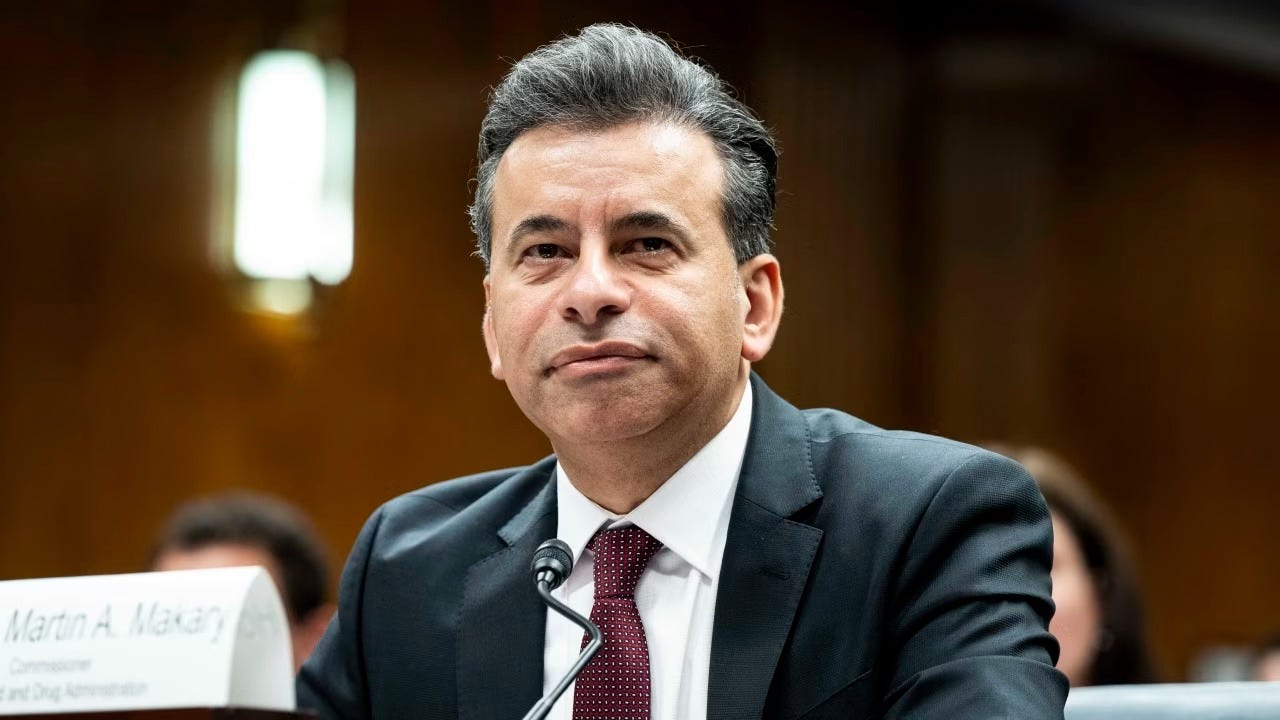
My group of grad-school pals, forged in the decrepit (but cheap!) Harvard medical campus dorm in the mid-1990s had a running joke about our friend Marty. Whenever someone noticed he wasn’t with us, we’d surmise that, while we were goofing off or decompressing, he was cranking out another peer-reviewed research paper.
We marveled at how he somehow found countless hours the rest of us couldn’t, cozying up to the faculty’s brightest lights and figuring out a research question aligned with their interests. He knew no journal would publish a study authored only by a student, so he would network with these researchers, learn from them, and collaborate on an interesting project. The rest of us were just trying to figure out logistic regression or the Krebs cycle, and we good-naturedly ribbed him for being an over-achiever that was making us all look bad.
By the late 1990s, Marty and I were in our first post-graduate jobs - both having landed at Georgetown University in DC - he was in his surgical residency, I was on the research faculty. We were so poor in those days, and I could always count on Marty to let me know where we could score free food at some Pharma-funded reception on campus. Probably the last time either of us benefited from Pharma influence-peddling.
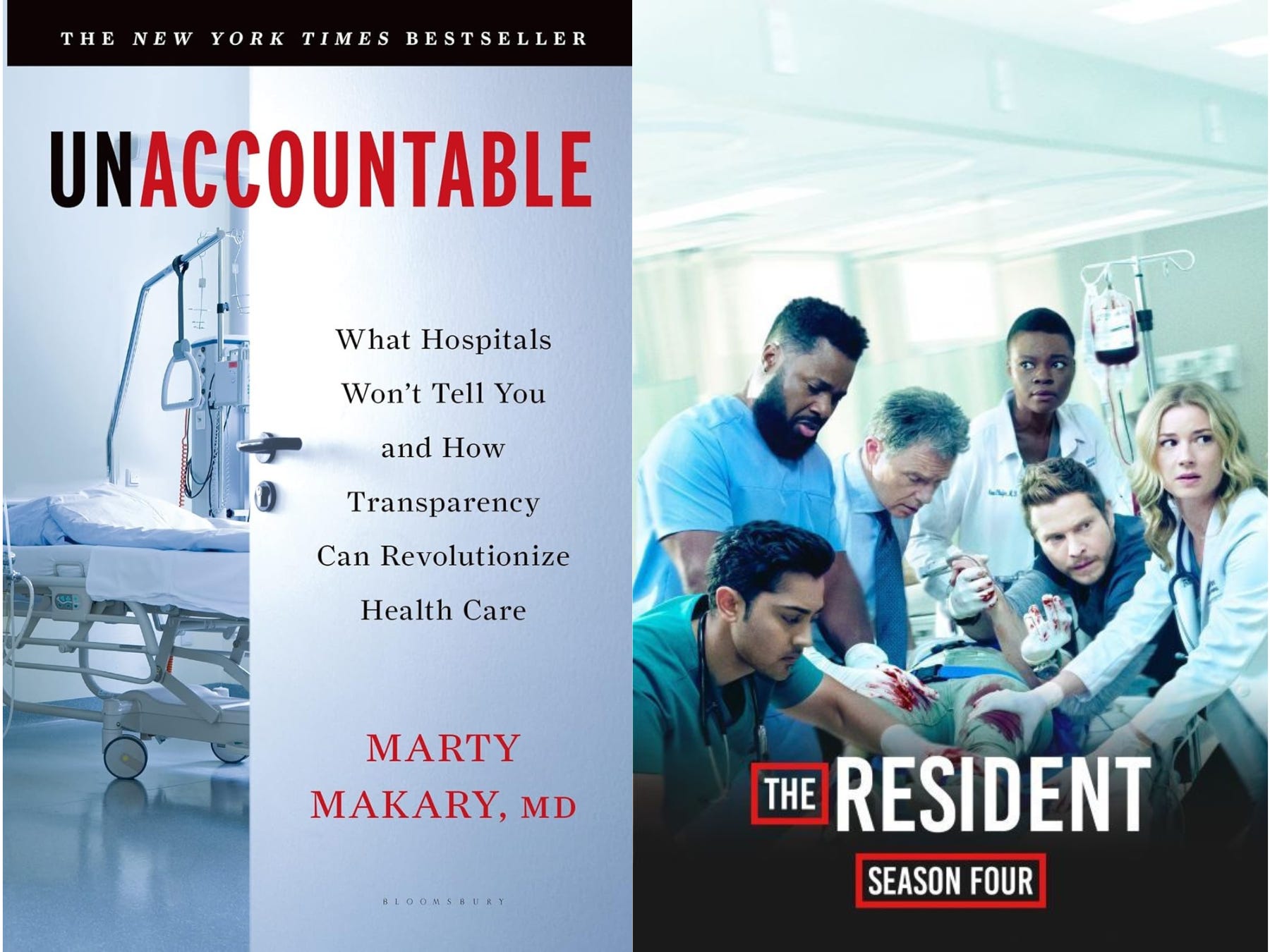
Over the years, our careers were different but we ran in the same church circles in the city and stayed friends as our professional paths overlapped more and more. He wrote his first book, Unaccountable, about his ridiculous experiences during residency, which placed him squarely at odds with the broken status quo of Big Hospital’s underbelly. That book, published in 2012, was eventually adapted to become the TV show, The Resident (with Manish Dayal playing the Marty-type character).
Continuing in that vein of calling out corrupt systems, Marty’s research interests at Johns Hopkins started to intersect more with my professional interests as well. By then, he had settled down as a pancreatic surgeon and public health professor, and I had left full-time epidemiology for the Senate staff. His work involved developing the patient safety checklist in the OR (so you don’t operate on the wrong knee or leave a surgical instrument in the patient’s belly - yup, that happens). He had a knack for attracting the smartest people to work with him on his research, like health care quality guru Christi Walsh, CRNP, the most prolific health financing expert Dr. Ge Bai, PhD, and applied health quality business leader Dr. Will Bruhn, MD.
It was Marty who first turned me on to the absolute degeneracy of the Health Care Swamp. While I was still spouting Republican talking points about how we have to protect the “free market” in health care (editor’s note: health care is neither free nor a market), he was exposing just how failed and distorted that market was. He was publishing on how doctors in different specialties were reimbursed for the volume of their procedures, not the quality of their care, at great cost and risk to patients. He and his team convened groups of expert physicians in every specialty and facilitated their development of a new type of quality metric, asking them to agree on the most indefensible types of overtreatment in their specialty and then using Medicare data to provide every doctor in that specialty his or her rate of that overtreatment. This idea morphed into his team’s creation of a powerful set of “appropriateness” measures that are now used across the country (including in my business helping employers steer their workers to high quality care).

Around this same time, Marty co-wrote a book, Mama Maggie, about his Aunt Maggie Gobran, the Egyptian Coptic Christian humanitarian and Nobel Peace Prize nominee known as Cairo’s Mother Teresa. I suspect that her example of unconditional love for the forgotten children of the Cairo garbage slums helped form Marty’s acute sense of justice. There is often a sort of simmering anger just under the surface when he talks about those who would exploit the weak. Indeed, vulnerable populations became the focus of much of his research, and a theme he wrote about in his books.
Fast-forward to 2018 or so, I was working in the Trump White House and joined Marty and his colleagues at a courthouse in Fredericksburg, Virginia. I was alarmed to discover that, every other Friday of the month, the courtroom docket was reserved exclusively for lawsuits being brought by the local academic medical center, tax-exempt Mary Washington Health, against their own patients who couldn’t afford to pay their medical bills. On this day, like all such Fridays, Marty and his team would stand at the door and intercept the defendants as they filed in. These were working class people, often showing up in their job uniform, embarrassed, not knowing what to expect but grim-faced with the recognition that they were in deep trouble.
Marty offered to serve each one as a medical expert on their case, reviewing their bills and offering to testify on their behalf - if, as was almost always the case, the bill was unfair or predatory, riddled with upcoding, inappropriate care, and other contradictions. The team included a local lawyer, the young whipper-snapper Joey Kirchgessner, who would argue the case until the hospital cried uncle. They helped a lot of people every time they were there. I was so proud of Marty and felt honored to be with the team that day.
Not too long after that, Marty was finishing up his next book, The Price We Pay, about the predatory practices of the health care industry that exploit the poor and sick in our country.
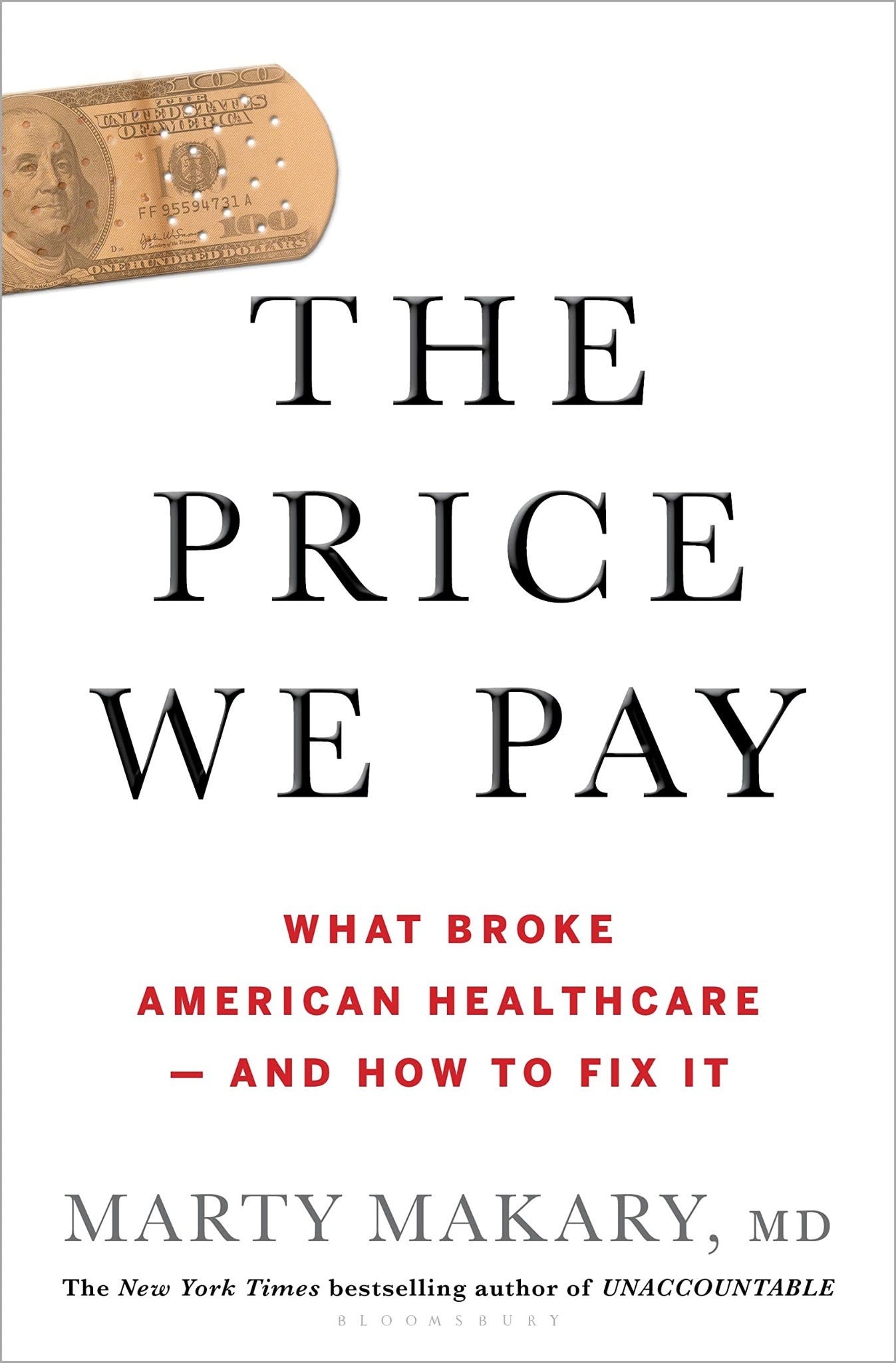
This problem had my full attention, because I was drafting an executive order on ending secret health care prices. So naturally, it was Marty I called to kick the tires on ideas and help me think through the issue. Later, when the draft order was circulated around the White House and HHS, and was facing internal resistance, I sent Marty’s book to about a dozen key officials and insisted (begged) forcefully that they read it. I might have been imagining it, but their objections seemed to take a less strident tone as they read story after story of ways that the ordinary incentives created by the health care system produced extraordinary harm for everyday people.
When I left government, I looked around at the apocalyptic health care system and despaired at the idea of having anything to do with the corrupt industries fleecing the American people. Most people with my resume end up shilling for this or that special interest from Big Pharma to Big Hospital, helping them lobby to keep the taxpayer gravy train rolling. I just couldn’t do it.
It was Marty who told me about a remarkable organization called Health Rosetta, a growing tribe of insurgent, honest benefits advisors helping employers fire the big carriers and PBMs and build re-humanized health plans. These advisors - whose business model was differentiated on radical transparency and independence from the usual conflicts of interest that ruined the rest of the industry - were the only bright light that I could see in the health care landscape. They took me under their wing, and the most generous among them mentored me as I built my business on Health Rosetta principles.
Marty and I occasionally edited each other’s writing or speeches, and collaborated on academic papers here and there. When I was invited to give a keynote somewhere, he mercilessly mocked my slides: “nobody wants to read your bulleted notes to yourself on a slide. Use pictures only.” My speechifying has improved significantly since.
When he was nominated for FDA Commissioner, I gave him a warning as serious as a heart attack: “You’d better get right with God, buddy, because you’ll be taking on the most demonic, most powerful industry on earth.”
I meant it.
I reminded him that my friend and colleague Daniel Best, the first-term HHS official in charge of developing the president’s plan to lower drug prices - a plan that the pharmaceutical industry despised - mysteriously fell to his death off a balcony. It was ruled a suicide. He had a wife and young kids and no apparent sign of depression. There was shell-shocked chatter about how none of us had seen it coming, but maybe that’s because it hadn’t been coming. Everyone around me seemed to accept the approved narrative, for reasons I never understood.
Although the forces allied against reform of FDA-regulated industries are first and foremost spiritual - early in the process, Marty faced more earthly obstacles. As he tried to assemble a team during the presidential transition period and during the pre-confirmation process, he struggled with how the personnel vetting system made it next to impossible to recruit qualified people who didn’t have demonstrated Republican or Trumpian bona fides - even though many people who make their careers outside of politics do so successfully only by keeping their political loyalties on the down-low.
There is another structural flaw in staffing up to execute the MAHA agenda:
There are the MAHA experts - activists, scientists, researchers and practitioners who have been toiling in the MAHA vineyard of the Lord for decades.
And there are skilled and experienced government operators, who know how to drive an agenda through the deep state bureaucracy, industry opposition, Congressional bed-wetting and White House political hackery.
These two circles on the Venn diagram do not overlap.
The president learned the hard way in his first term the importance of having loyal people in office, who can beat back the deep state and drive his agenda. So it’s understandable that the Presidential Personnel Office (PPO) - the White House unit responsible for vetting and recruiting the 4,000 or so political appointees placed throughout the administration to serve at the president’s pleasure - would prioritize MAGA or at least traditional Republican street cred over almost anything else.
But traditional Republicans often didn’t have any sort of MAHA street creds. And to make matters worse, the hiring process at the beginning of the second term strangely excluded many first-term Trump appointees - loyal soldiers who had stayed through COVID, through the election chaos, through January 6th, and turned the lights off on Jan 20th, 2021. I can’t tell you how many friends and former colleagues who wanted to return (I liked my life too much to join them!) - experienced operatives and MAHA friendly, absolutely loyal to the president - who found themselves on some blacklist for some reason. Many of them were never hired. Some only found their way in after heroic efforts, many months after the Inauguration. I don’t know about other agencies, but I do know that this problem was especially acute at HHS, and as a result, there has been a massive vacuum in the department’s policy operation - lacking the skilled policy experts to drive the MAHA agenda, surrounding the agency heads like the Secretary, Marty and NIH Director Dr Jay. Bhattacharya.
Almost every advisor or deputy Marty wanted was rejected by this political machine. Worse, lawyers at HHS schemed and undermined him from the beginning. They, as well as the pharmaceutical industry and a particular social media influencer who can get the president’s attention (and who I suspect was paid by a certain drug company), went after his most trusted deputy, the incomparable Dr. Vinay Prasad MD. Dr. Prasad was widely respected for being a take-no-prisoners expert on how most studies utterly fail to answer the questions they intend to, and how medical practice guidelines can go deeply off the rails as a result. Of course, when he started bringing this much-needed bullshit-meter to the FDA, they naturally ran him out of town.
Other deputies and trusted aides that Marty appointed were under attack from the get-go. His counsel Hillary Perkins was accused of being inadequately pro-life (this was defamatory) and run out after two days on the job. Dr. Tracy Beth Høeg, MD, PhD, an epidemiologist who saw the truth during COVID and said so, was criticized most of her tenure until being fired in a perp-walk kinda way last week, with no reason given.
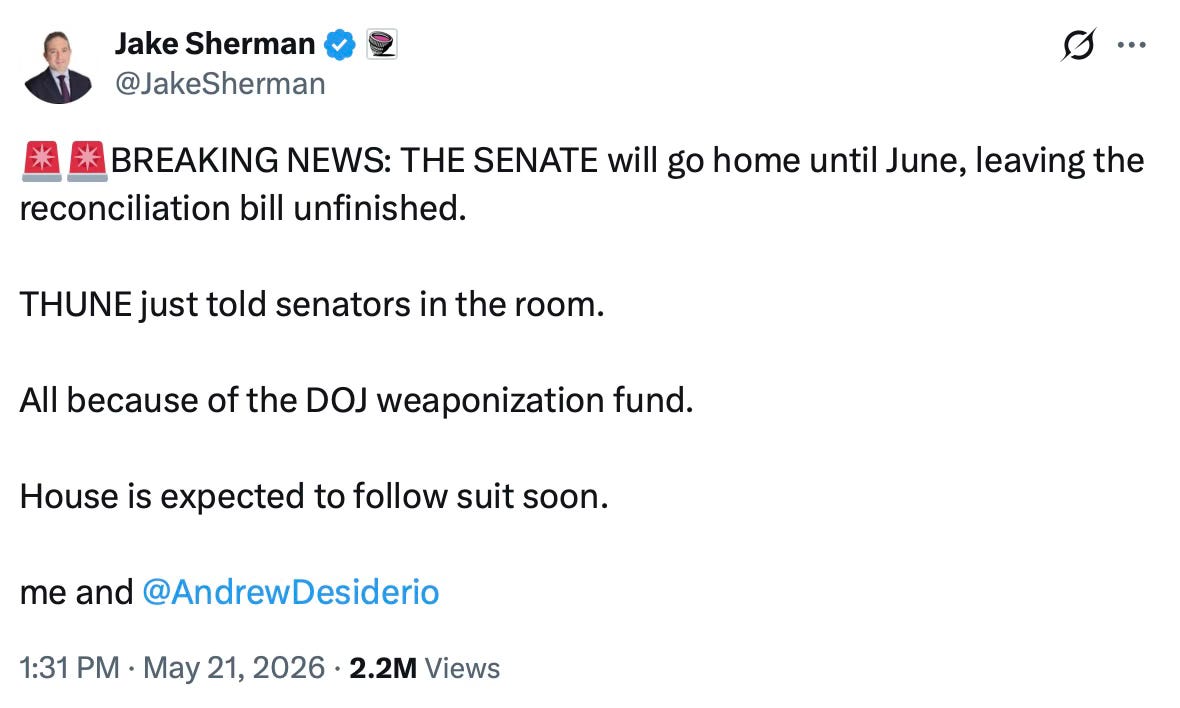
The job is hard enough when the administration has your back, but when they’re never satisfied with you or your people, it makes it very difficult to persevere in doing good. I will also note that this administration has a particularly obnoxious pattern of putting tons of effort and agony into getting people through Senate confirmation, and then driving out these Senate confirmed people within a year. There is something that feels inappropriate about this waste of Senate time (that the Senate could be using to fix health care), though of course, they’re perfectly good at wasting their own time:
That said, to be honest, no matter how many competent staffers, no matter who is president, the Commissioner job is impossible for anyone. Even if a Commissioner were totally committed to rubber-stamping industry wish-lists and pom-pomming the status quo, that too would create massive headwinds from a variety of anti-status-quo quarters (though not as powerful). Those headwinds obviously become Category-5 for someone who wants to actually drive reform.
Nobody who comes into this job has ever run anything as life-or-death important, complex, politically charged, and many-mastered as the FDA. The agency regulates a fifth of the economy, including, as I mentioned above, some of the most powerful industries on earth: Big Pharma, Big Food, Big Tobacco. Pharma alone employs almost three lobbyists per member of Congress, and believe me, those lobbyists make life a living hell for any Commissioner.
A CEO who runs in elite, business-leader circles, recently recounted for me a conversation with two pharma and biotech executives, a couple months ago. They were bragging that “our cabal is planning to eliminate Makary. We have a plan and we will replace him, Bobby (Secretary Kennedy), and their deputies with our people.”
It’s clear the plan is executing on schedule.
Just peruse the almost dozen op-eds in the Wall Street Journal since last Fall, haranguing Marty for not approving a drug by Replimune that has unreliable data coming out of its flawed trials - you can see the strategy at work (three independent scientific teams at the FDA recommended against approval. Marty defended the scientists). Scan the political trade press daily and you’ll see chatter about the constant whining from the industry to the White House office established to placate aggrieved donors. Or the disgruntled former FDA employees serving as sources for every media hit, even though what they perceived as draconian DOGE layoffs happened before Marty took office. The rare-disease patient groups, being told by Pharma about how the FDA is delaying their new wonder-drug that could cure Huntington’s disease (even though the actual study methodology was at best controversial), ginned up anti-FDA grievance on social media and to the White House office established to placate aggrieved stakeholder groups (yes, there’s a relationship-babysitter WH office for everything).
Now, if you ask some insiders - even some of the non-corrupt ones - the story that you might hear is that Marty was partly to blame for his own downfall. All I can say is that when someone pushes the envelope and doesn’t trust the people who have presided over the status quo, they often look like the problem instead of the solution.
I wasn’t in the meetings. I couldn’t have witnessed anything that took place at FDA, HHS or at the White House between Marty and anyone else. So I can’t know the exact facts.
But I have checked in with Marty pretty regularly during his year and a half journey, and over that time, watched him go from sounding enthusiastic and hopeful during the pre-confirmation process to frustrated and disappointed by government corruption. The let-down has been palpable over not being able to fully reverse the agency capture and put the public back in public health.
I know that people who know us both are saying I only see the best side of Marty. That’s true - I do. But I’ve loved him like a brother since we were both bright-eyed kids and it has pained me to watch the dream for Making America Healthy Again that we both shared for so long cut brutally short.
Still, FDA under Marty’s leadership managed to eek out important reforms that we can all celebrate. Here are some of my favorites:
Took the black box warning off of menopausal hormone therapy
Removed artificial dyes from food
Flipped the Food Pyramid to promote real food rather than processed crap at the base of the old pyramid.
Cracked down on misleading Big Pharma advertising
Reduced cruel animal testing
Implemented surprise inspections of manufacturing facilities (rather than pre-announced, pre-warned and therefore useless scheduled inspections)
First real-time clinical trial where regulators watch data signals in the cloud rather than waiting years for researchers to report results
Made drug rejection letters public
No matter how you hear Marty’s record characterized, who likes him or who hates him, never forget this: the industries that FDA regulates are not your friends.
They do not profit from you being healthy. They have long, scandalous histories of knowingly peddling deadly products, rather than coming clean for the sake of patient safety. They have paid tens of billions in enforcement penalties for fraud, cover-ups and other violations. They will spend and are spending more money than God to thwart FDA’s scrutiny and oversight and any effort to reform their ways.
As their market share and bottom lines have grown to almost $2 trillion over the past century, FDA has presided over the American people becoming sicker, fatter, sadder, more infertile, more addicted - but more medicated - than we’ve ever been in our country’s history. The agency’s long decades of regulatory capture have contributed to our extinction-level chronic disease crisis.
The FDA exists to protect the American public from the depravity and corruption of the regulated industries, not to protect them from public scrutiny or accountability, or to cheerlead their products.
That’s why we have to continue to demand that the FDA take your side over corporations - everyday and always. Leaders who try to do this will get painted by the industry and its allies as radicals, cowboys and assholes. It’s a kamakazi suicide mission that you’d have to be crazy even to consider. But what choice do we have but to keep trying to recruit them and support them in office?
None of us is perfect, and no one has ever been truly prepared to take on this mother-of-all-jobs as FDA Commissioner. But win or lose, my brother-in-arms Marty has always been on your side.
I know he’ll continue to fight for you in his future endeavors.
PS: It’s muh-CARE-ee, not MACK-uh-ree or muh-KAH-ree. You’re welcome.
I’m just so grateful Marty is out of that horrific dumpster! His book The Price We Pay changed my life in ways I never could’ve imagined. In a world where patients are gaslit and told that the system is looking out for them and they should just trust, having someone brave enough to say the truth out loud (or publish it in a book) is invaluable. This article brought tears to my eyes and allowed me to feel so much gratitude. Thank you for writing it Katy.
It was a highlight of my professional life to meet Dr. Makary at an in-person meeting when he was the Commissioner (despite nothing coming of it). He's genuinely a friendly guy and not just "a suit".
The truth is that the FDA exists to protect the approvals of drugs that it has reviewed. And they do it zealously, with the club of Pharma reminding them of the approval. Anything else about helping to keep the food supply safe is honestly secondary and window dressing unfortunately.
Keeping the food supply safe *could* be primary IF the approval processed were to be outsourced to accredited 3rd party reviewers. A long shot but it would save the government money and then the FDA could actually act like a policeman for its current secondary goal of keeping the food supply safe, as well as policing drugs better than it has (until pushed by obvious problem in post-marketing surveillance). Interestingly, the original Food and Drug Administration and the Bureau before it was nestled within the Department of Agriculture.
I wish Dr. Makary well and hope he continues to be an independent voice in the medical realm.