


Back in the first Trump administration, I had a habit of bringing strange guests to government meetings.
Two of my favorites were companies almost no one in the building had heard of. One was MyMedicalShopper, now called Talon and still led by Mark Galvin. The other was Amino Health, and its co-founder David Vivero. Both were doing something that sounded like science fiction to a lot of the officials around the table: taking whatever scraps of price data they could find and using them to steer patients and employers toward cheaper, better care.
I remember the looks on people’s faces. The general vibe was “huh, people can do that?” Yes, they could, and they could do a whole lot more if the government would just make the secret prices public.
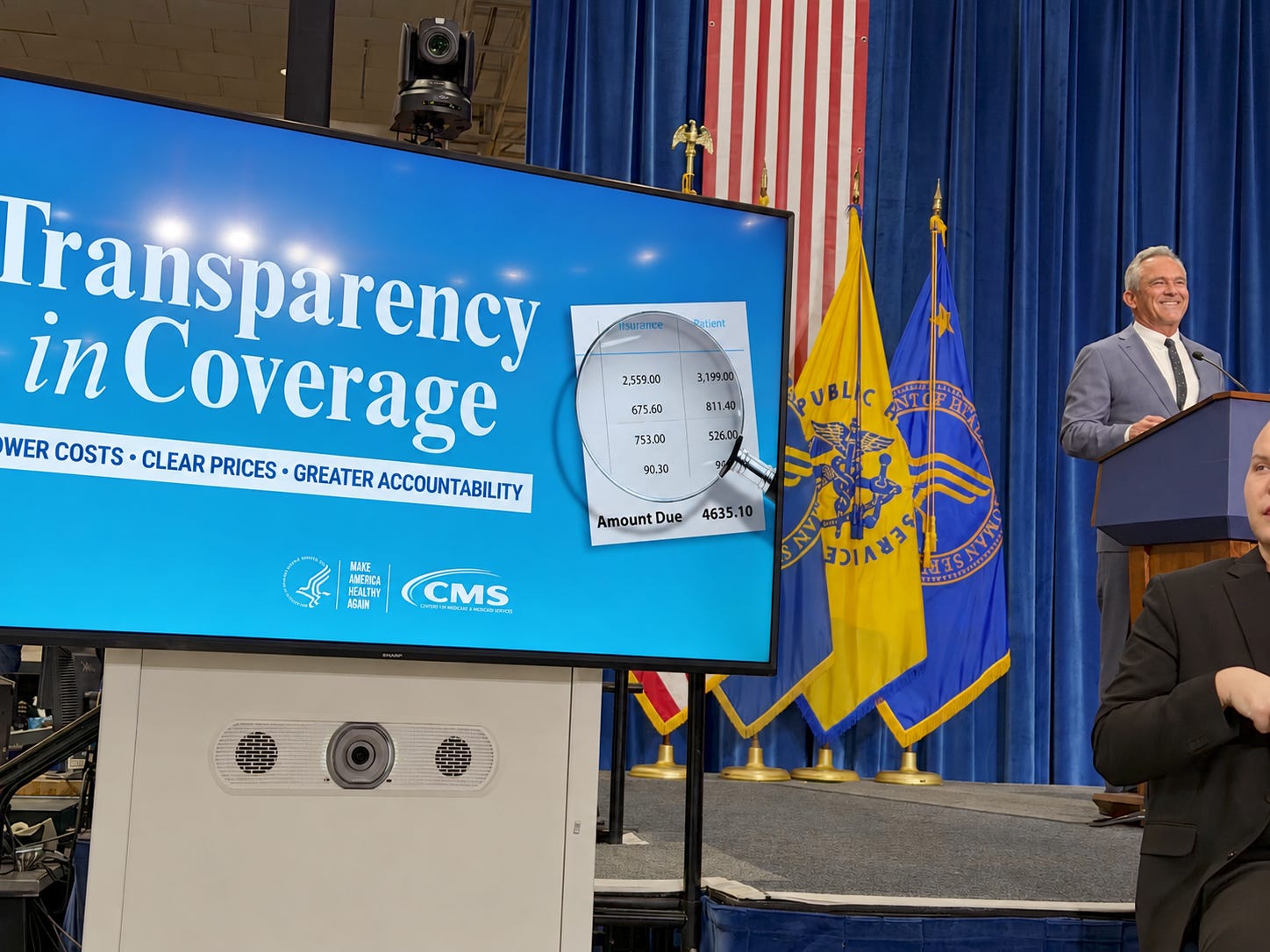
So forgive me for getting a little misty last Monday in the Great Hall of the Humphrey Building.
HHS Finally Learned How to Throw a Party
The occasion was the final Transparency in Coverage rule, the sequel to the health plan price transparency rule produced pursuant to an Executive Order I helped craft in the first term (more on that agony here). HHS, Labor and Treasury rolled it out together, and the FTC came along for the ride (more on that in a minute, because it’s a big deal).
The stage was stacked: Secretary Kennedy, Dr. Oz, Labor Secretary Keith Sonderling, Treasury Deputy Secretary Francis Brooke and FTC Chairman Andrew Ferguson. They also brought up Peter Nelson, who helped write the original rule and now runs CCIIO, the shop at CMS that oversees private insurance and has to make all of this actually work.
The speeches were great, but it didn’t stop there. There were panels of awesome.
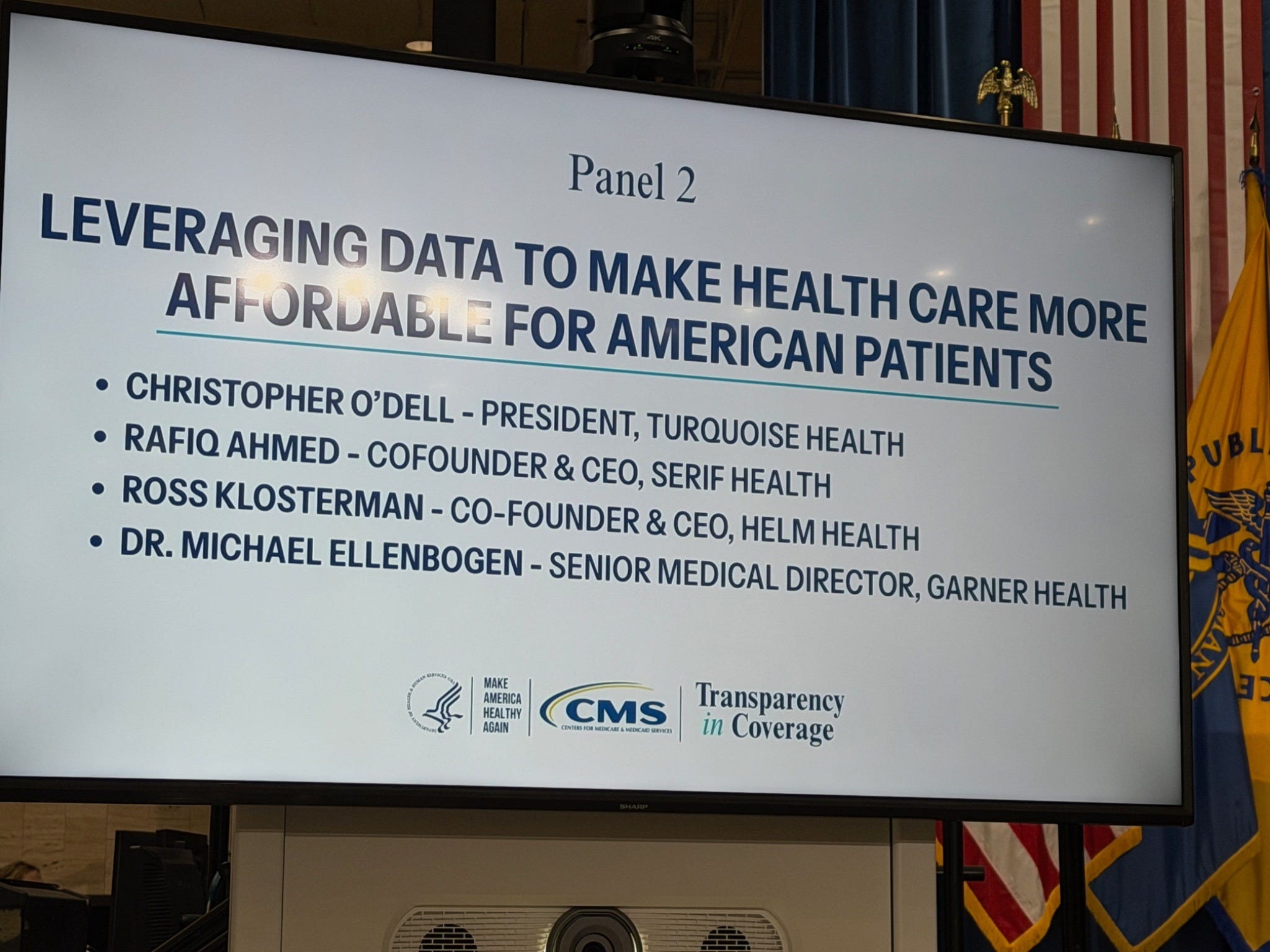
One panel was called “Leveraging Data to Make Health Care More Affordable for American Patients.”
On stage were Christopher O’Dell, president of Turquoise Health; Rafiq Ahmed, cofounder and CEO of Serif Health; Ross Klosterman, cofounder and CEO of Helm Health; and Dr. Michael Ellenbogen, senior medical director at Garner Health.
These are companies that use price transparency files to help patients and employers.
These guys were also mentioned in the rule itself. When the government estimated how much junk was clogging the insurers’ price files, it cited Serif Health’s finding that so-called zombie rates can make up more than 80 percent of the data. When it went looking for evidence that transparency is already working, it cited a Turquoise Health analysis showing the highest negotiated hospital prices falling 6.3 percent a year.
The type of companies I used to sneak into meetings are proliferating and are now in the footnotes of the Federal Register.
The Grown-Ups’ Table
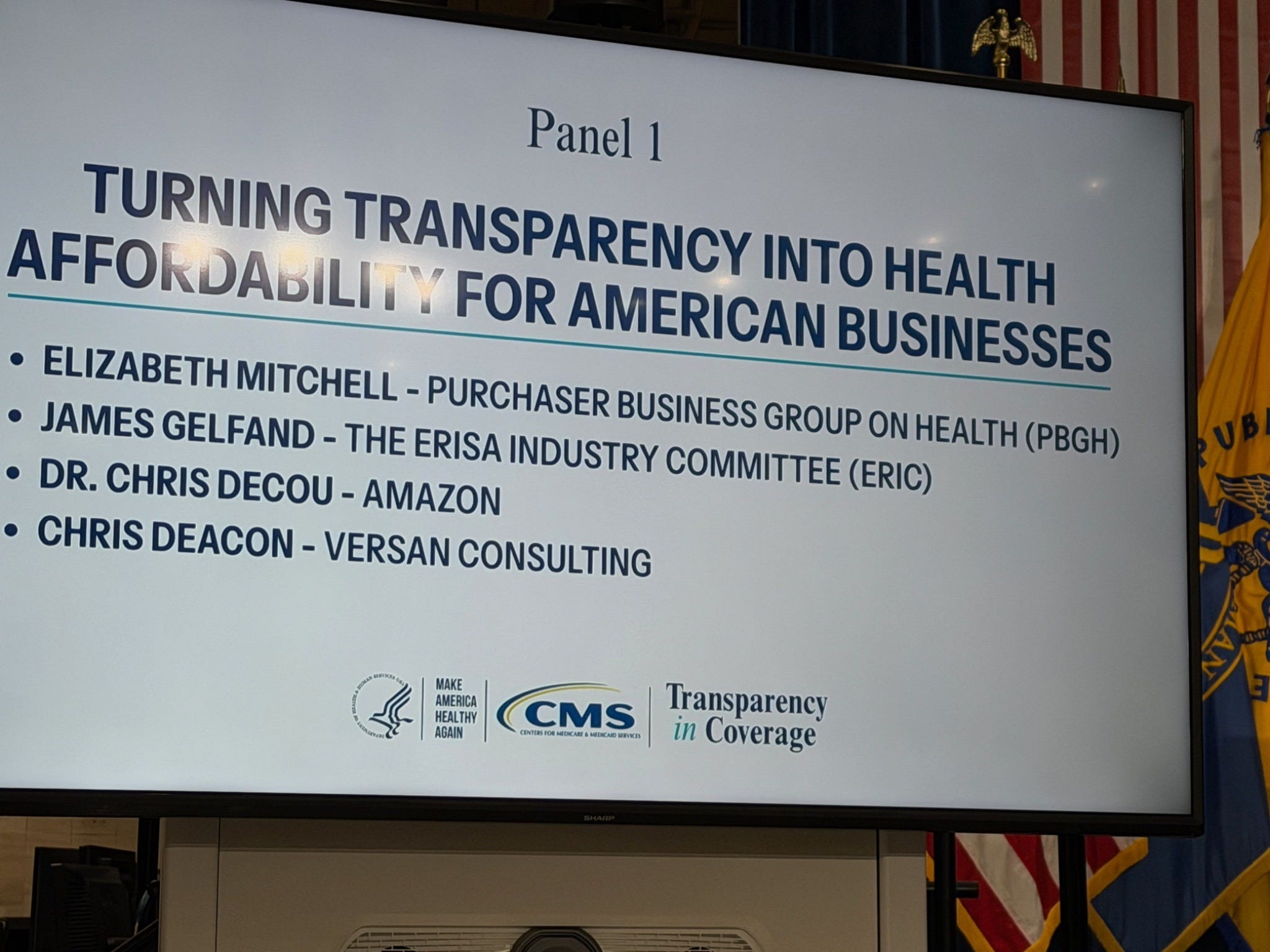
The other panel belonged to the people who actually pay the bills: “Turning Transparency into Health Affordability for American Businesses.” Daniel Aronowitz (first on right), who runs the Labor Department’s Employee Benefits Security Administration (the agency that polices employer health plans), moderated. He opened with a line I’d like printed on the cover of every benefits committee binder in America: “Every dollar in excess health care is $1 that can go into wages for American workers.”
Then the panelists took turns explaining, with varying degrees of politeness, that they’ve had it with the insurance carriers.
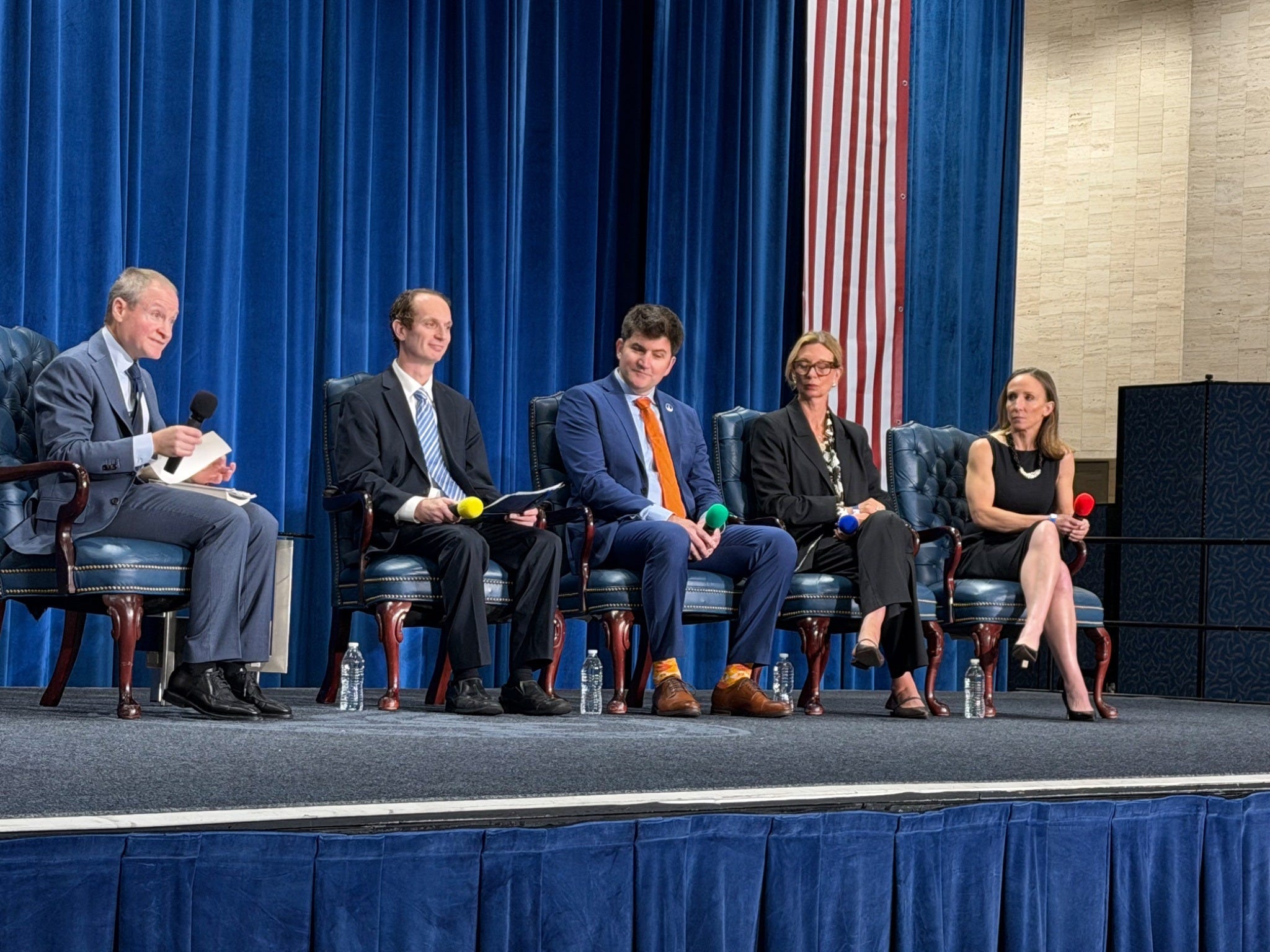
James Gelfand (second from left) runs ERIC, the ERISA Industry Committee, which speaks for the country’s largest self-funded employers. James and I go back to our days as staffers for the late, great Sen. Tom Coburn. He is one of the smartest and most effective operators in Washington, and he’s largely responsible for the PBM and TPA disclosure requirements Congress passed in CAA 2026, the ones I called a nuclear bomb on the status quo. His diagnosis: “the health care industrial complex absolutely thrives on opacity.” His prognosis: “the game’s over.”
Chris Deacon of Versan Consulting (furthest right) is a warrior worth watching. She summed up my entire post-network manifesto in one sentence when she said employers need to “move from buying a network as a product to looking behind the network.” She also argued that the biggest winners from this data could be smaller employers, who have never had the analytics budgets of the jumbos.
Elizabeth Mitchell (second from right) runs the Purchaser Business Group on Health. I’ve never met her, but I’ve been cheering on her work helping big employers use price data to hold their carriers accountable. Her verdict: “Affordability in the commercial market is at a crisis level.”
And Dr. Chris DeCou (middle), who runs health benefits at Amazon, described pairing the price files with quality data to “make apples-to-apples comparisons.” When Amazon starts comparison shopping, the carriers should get nervous.
When I was in the White House, major business groups came in to lobby us in opposition to price transparency, if you can believe it. The U.S. Chamber of Commerce and the Business Roundtable delegated their entire health care agenda to, yes, their health care industry members. Rather than the rest of their members who were systematically being raped and pillaged by their health care industry members.
Finally, the business community is showing up, ready to break things.
The Rule, in Two Minutes
I’ll keep this short, because the rule is mostly a cleanup job. But it’s a good cleanup, and the preamble is a delicious read if you enjoy watching the government admit things.
As the original 2019 rule was being written, the hospitals and insurers swore to me that publishing their prices would crash the internet. It didn’t. But the government now estimates the insurers’ files were running about a petabyte a month across the industry. That’s a million gigabytes, every month, and a lot of it was garbage. (I wrote about that here.)

The government’s own favorite example of the garbage is a negotiated rate for a podiatrist to perform heart surgery. The insurer’s claims system would never pay that claim, but the rate stayed in the file anyway, bloating it and confusing everyone who tried to use it.
Here’s what changes:
Zombie rates go. Plans have to strip out provider and service pairings their own claims systems would deny. The government expects files to shrink by about 70 percent.
Someone signs. Every file needs an attestation that it is “true, accurate, and complete,” with the name of the CEO, president or designated senior official encoded right in it. If you run a self-funded plan, check your TPA contract, because if the TPA botches the files, your plan is the one in violation.
The out-of-network files finally get data. Plans used to report out-of-network payments only for services with at least 20 claims, which left most of those files close to empty. The new threshold is 11 claims, over a longer window.
Patients can call. Starting with plan years that begin on or after January 1, 2027, plans have to give members their personalized cost-sharing over the phone.
Updates go quarterly. Files refresh four times a year instead of monthly, which the insurers asked for and the data folks grumbled about.
Some of it frustrates me. Insurers can still post certain rates as a percentage of billed charges, which means a percentage of a made-up sticker price, and the government dropped a few proposals the industry whined about. But it’s a real improvement, and I said so on the day it came out.

I stand by the Amen. But the even bigger news came from the announcements around the rule.
No Safe Harbor
FTC Chairman Ferguson used the occasion to announce that the FTC had sent warning letters to 24 of the largest health systems in the country. The FTC hasn’t said which ones. I have guesses, and I bet you do too.
The letters lay out a theory that should send every hospital general counsel reaching for the antacids. Section 5 of the FTC Act prohibits unfair and deceptive business practices, and the FTC says a hospital may be violating it when it fails to disclose prices for scheduled care, quotes a price that leaves out the physician or facility fees, prices only part of the expected course of care, gives inaccurate prices, or provides prices too late for patients to shop around.
Then comes the kicker:
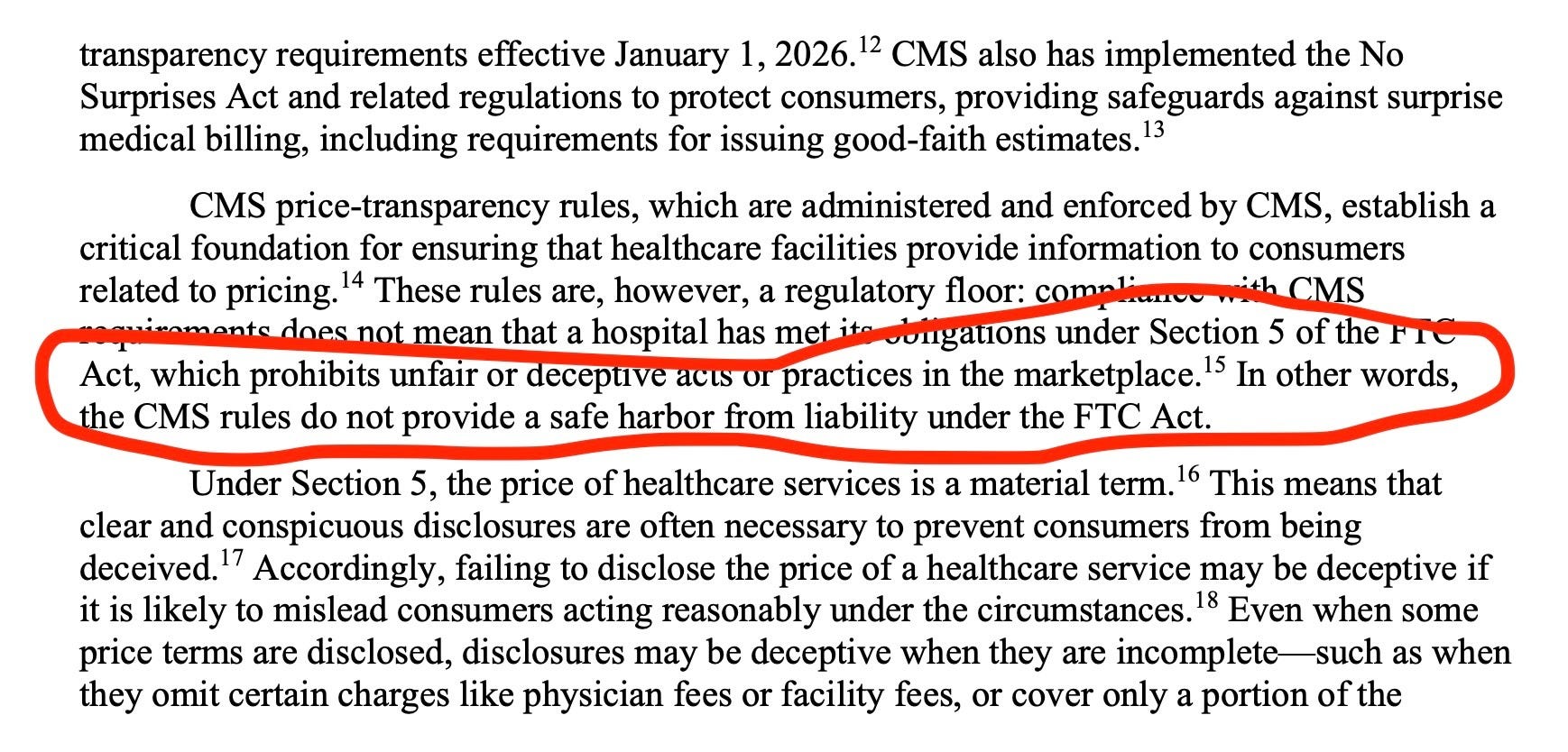
For years, hospitals have played malicious compliance with the CMS price transparency rules, posting files in technically the right format that are practically useless, and risking the occasional CMS fine as a cost of doing business.
The FTC just told them that checking CMS’s boxes won’t protect them anymore. And from the stage, Ferguson made it plain that if they don’t clean up their act, he’ll see them in court.
There’s a second sheriff in town, and this one sues people for a living.
Loyal readers will remember the hospital that quoted one of my nuns $80,000 for a joint replacement Medicare pays about $16,000 for, after we offered to pay cash up front. As far as I know, spite pricing isn’t illegal yet. But hiding the price, or quoting half of it and springing the rest on the patient later, may soon be a federal case. The independent practices and surgery centers that already put their cash price on the wall, have nothing to worry about. The systems whose business model depends on the patient finding out afterward should be very worried.
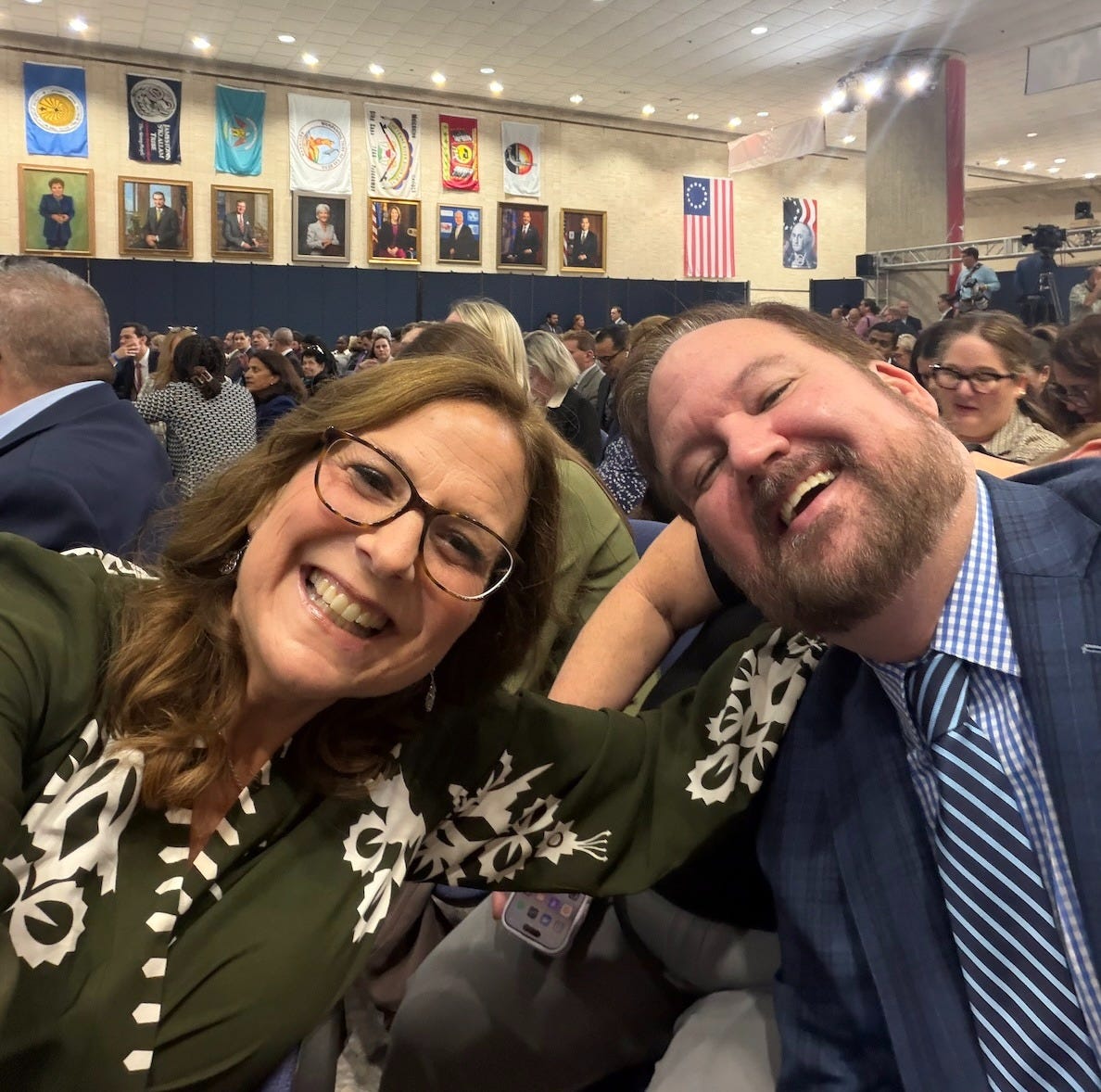
The OGs - Randy Pate was head of CCIIO (the job Peter Nelson has now) during the first rule’s rollout and has been a staunch supporter of price transparency ever since. We’re very happy about sticking it to PBMs!
Below the paywall: the PBMs' worst nightmare just came back from the dead, and I'll tell you how it got killed the first time. Paid subscribers also get the calendar and playbook for making sure it stays alive. Everyone else, forward this to your CFO.
